Dragon
龙纹 · longwen
The dragon is the most heavily regulated motif in Chinese textile ornament. Across the reigns of the Qing dynasty its form shifts in ways that are consistent and legible enough to serve as a tool for dating.
Historical development
Dragons appear on Chinese textiles over a long span, and by the Ming and Qing their use had been drawn into a strict system of dress regulation. Qing rules distinguish the five-clawed long from the four-clawed mang, and fix the number, placement and treatment permitted to each rank.
In surviving objects, however, the Qing dragon is anything but static. The proportion of head to body, the density and direction of the mane, the spread of the claws, the drawing of eye and snout, and the way the body is spaced against the surrounding clouds all change over time.
These features cannot be read in isolation. The same motif is rendered differently in kesi, zhuanghua, embroidery and couched gold, so comparison is only meaningful within a single technique and a single object type.
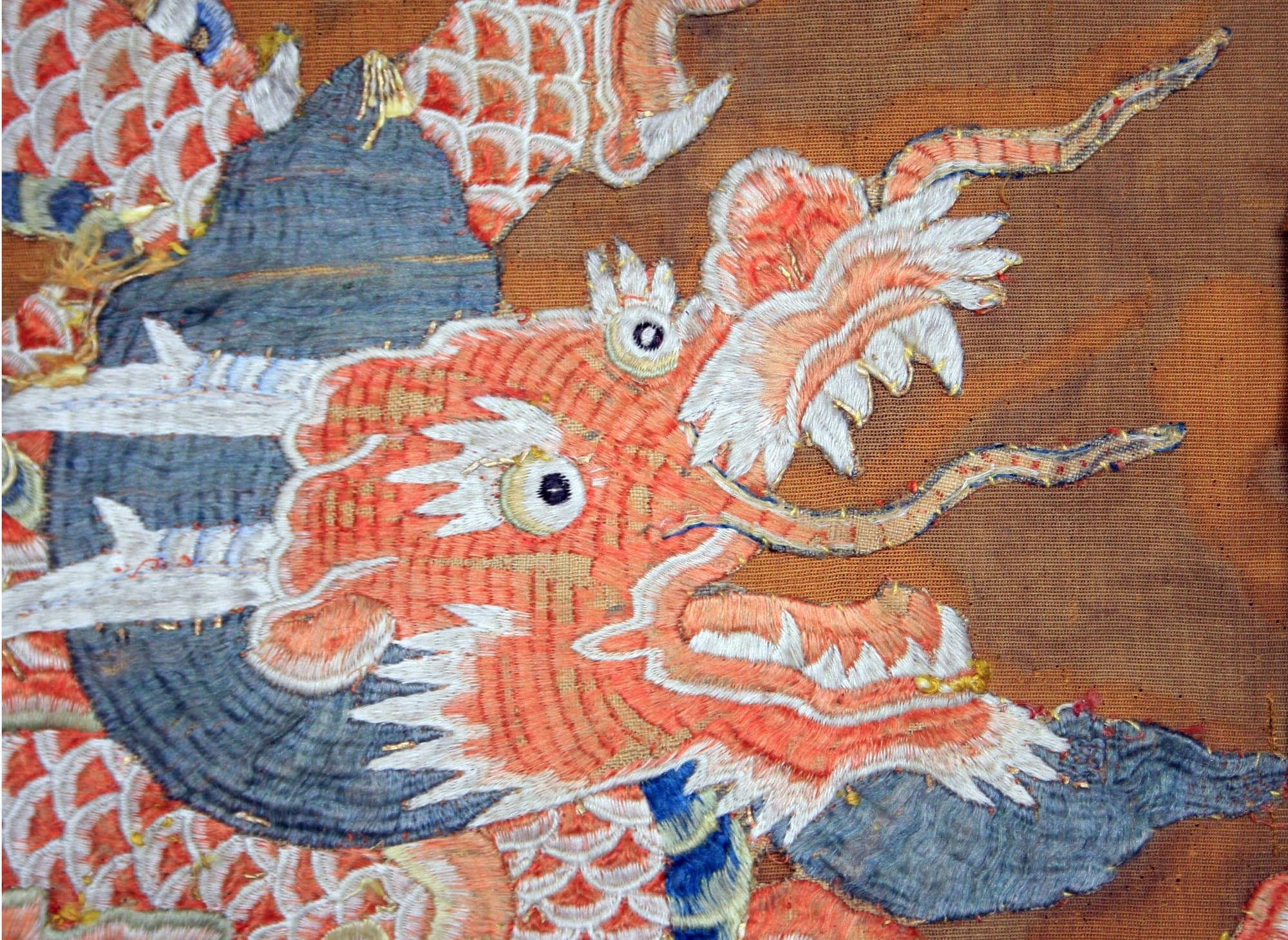
Scales in couched gold have their own method: laid in staggered rows, each worked as a fan advancing inward from its widest edge, with the outer edge of the next scale pressing down the turn of the one before so that the rim stands slightly proud. The belly is outlined in a darker gold to give relief.
Cultural meaning
On dress the dragon functions first as a marker of rank and identity, its symbolism bound up with imperial authority and the mandate to rule.
Combined with the wave-and-mountain border and cloud bands, the dragon becomes part of a complete scheme that reads less as a single creature than as a diagram of order.
Plates
The same motif as it appears on different objects, gathered for comparison. Dates and provenance for each example are to be established and added.
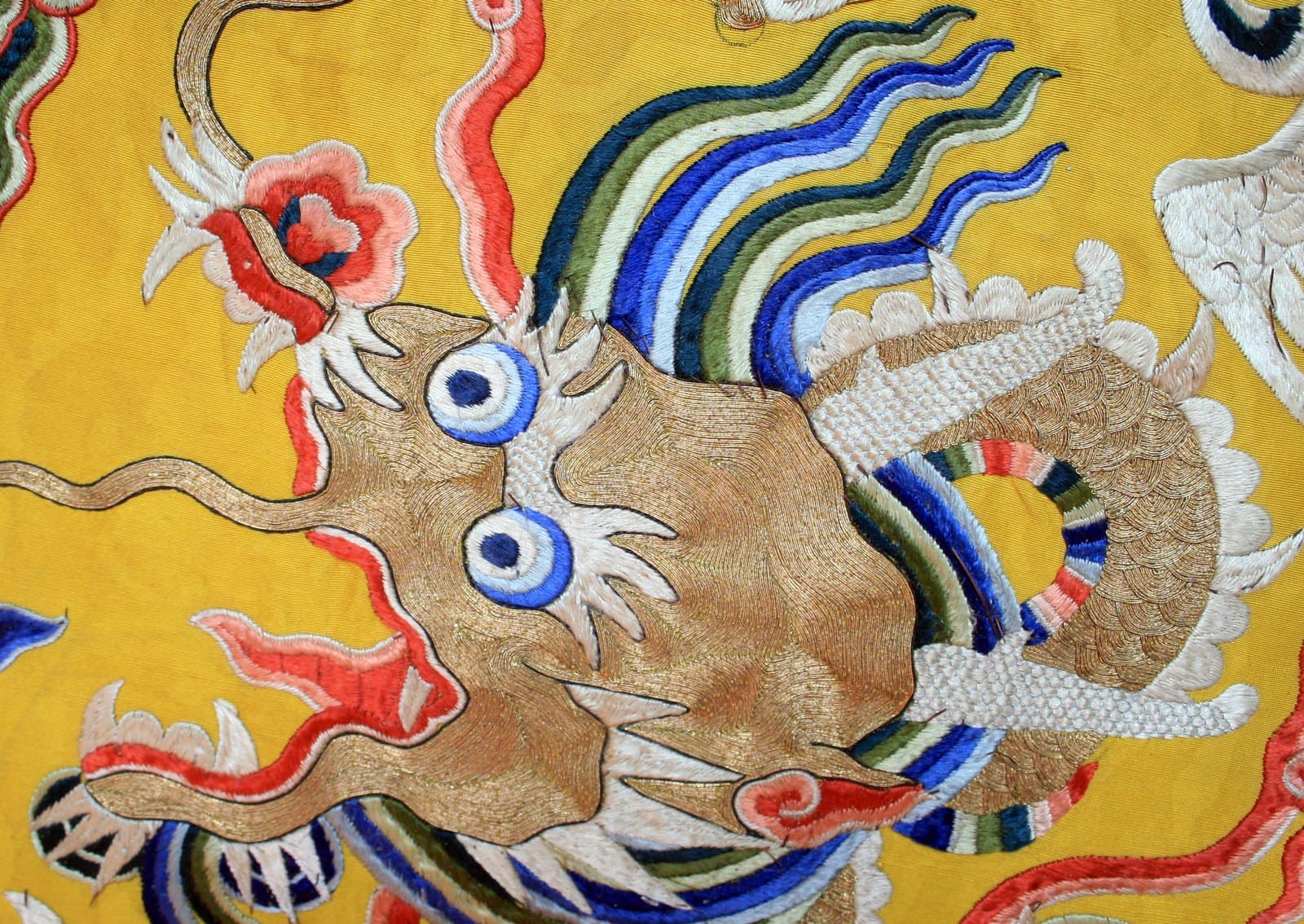
Density and direction of the mane
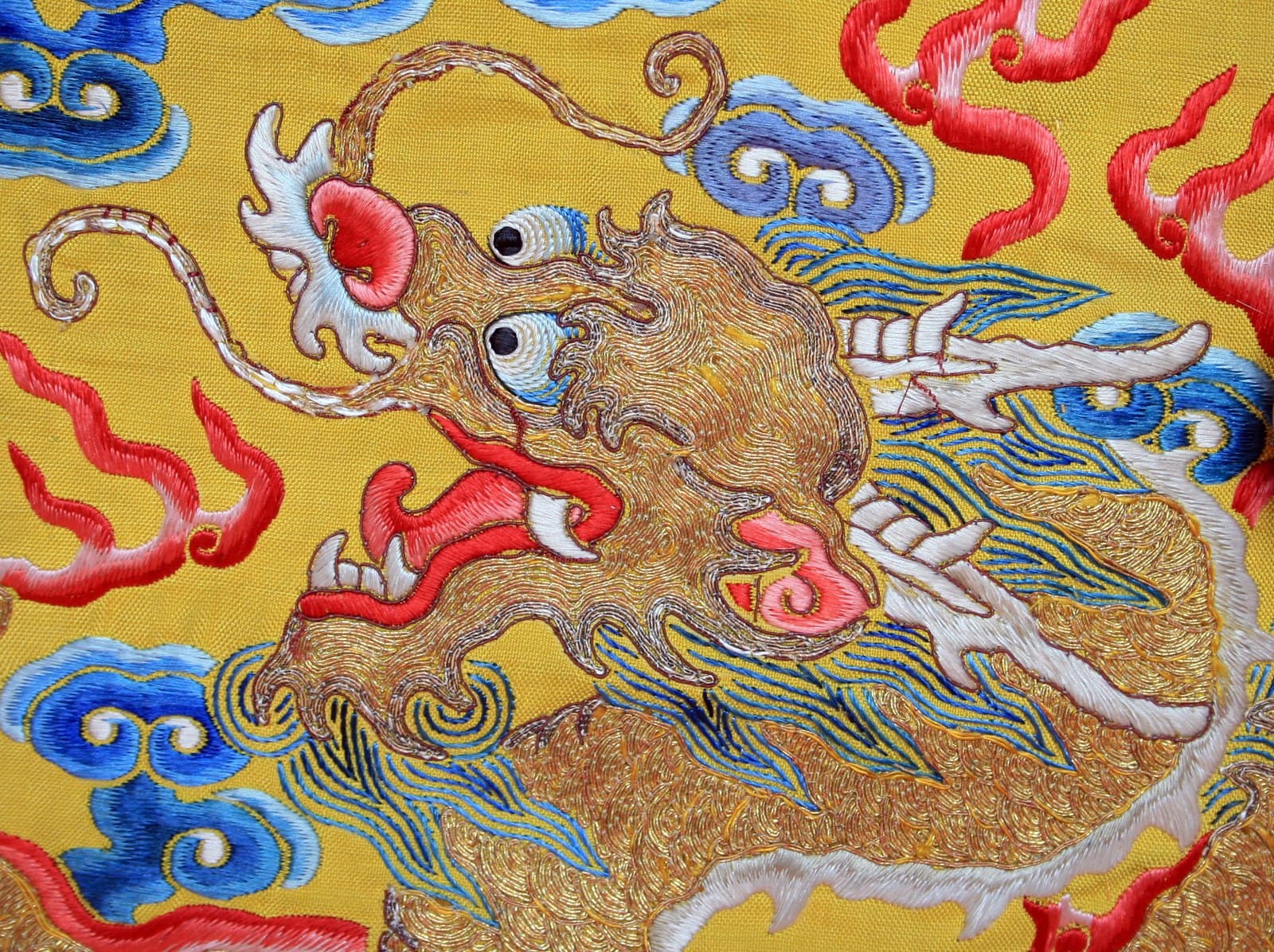
Treatment of eye, snout and brow
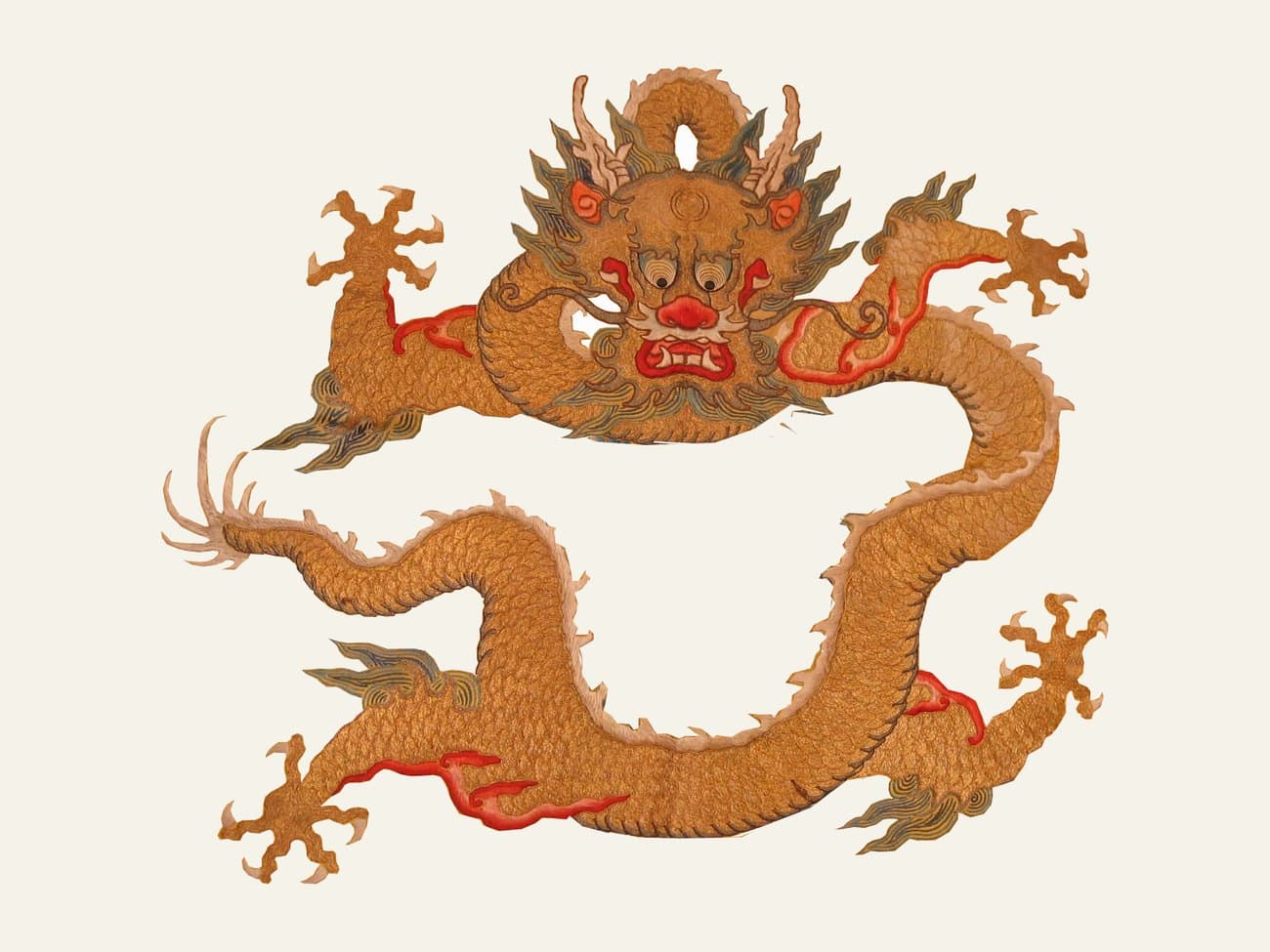
Body extended, ample ground between body and cloud
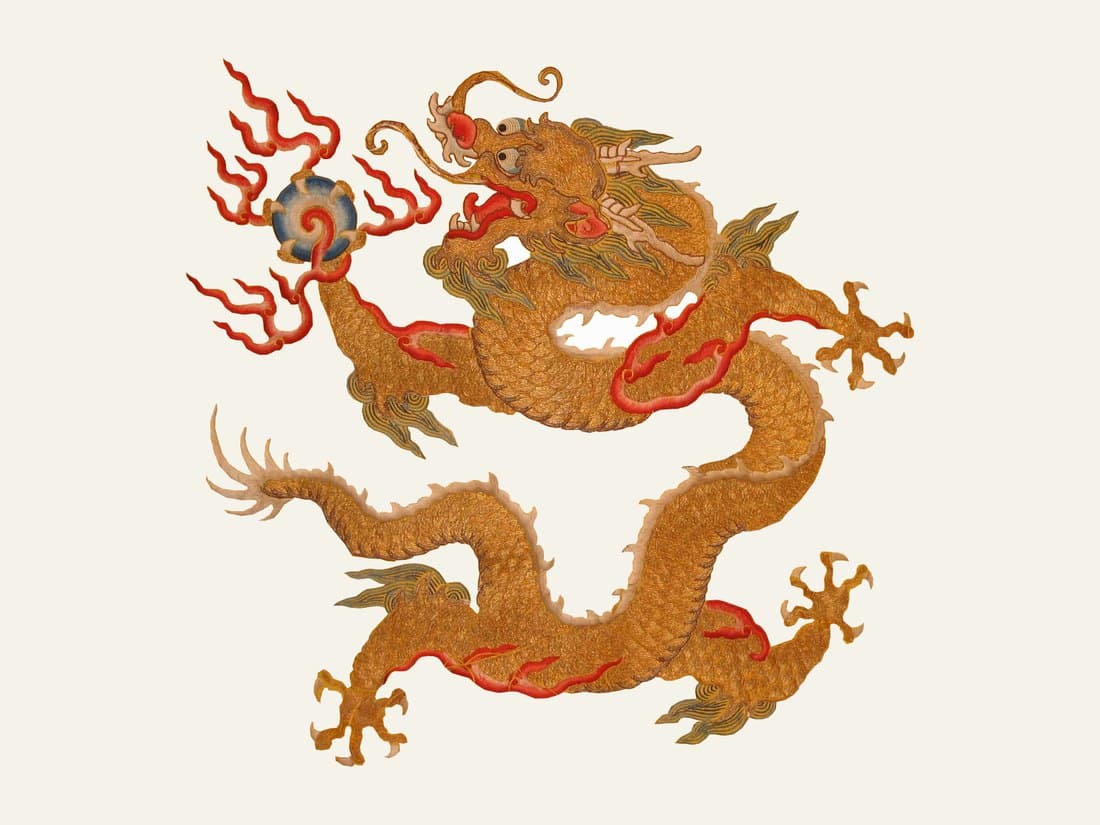
Profile dragon (ii)
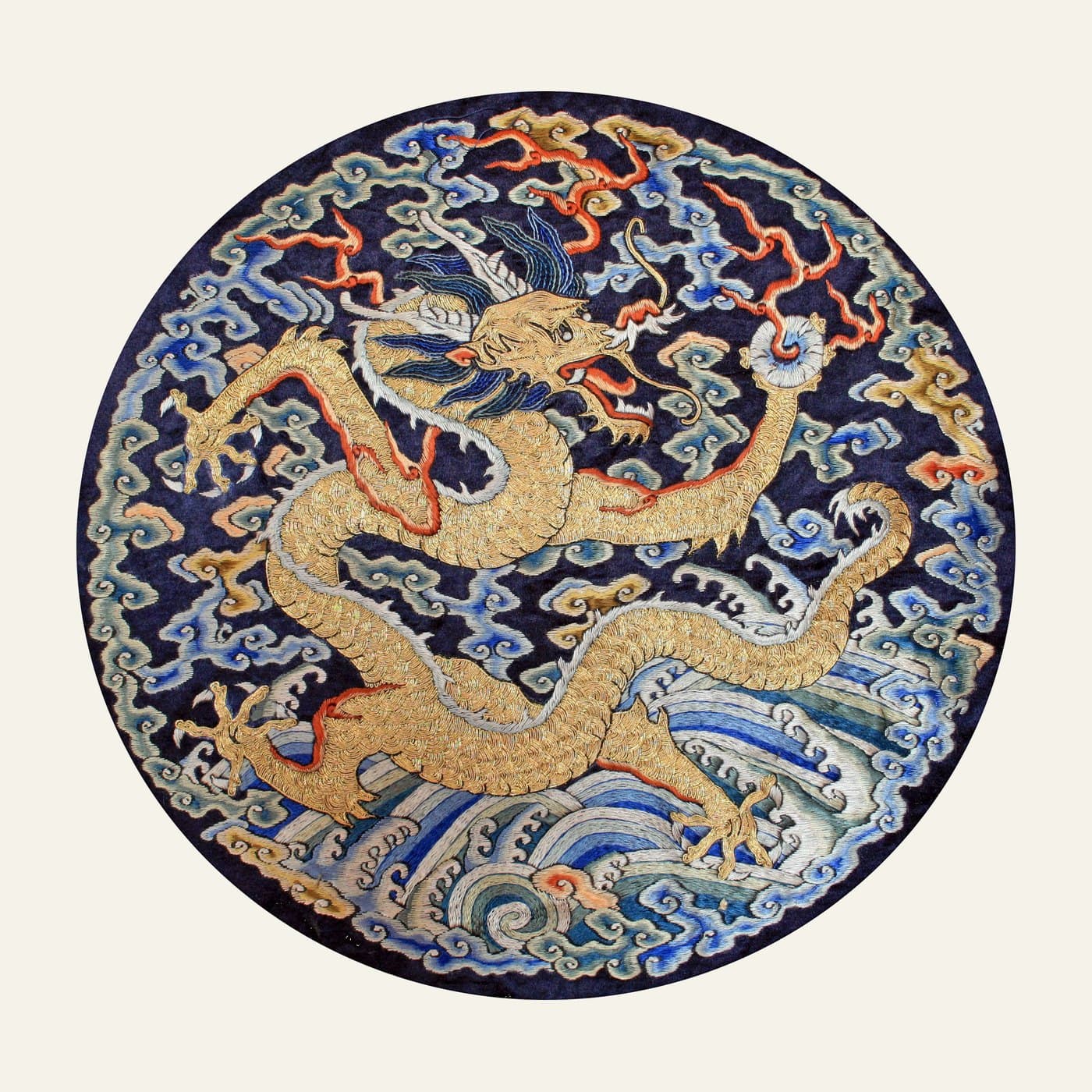
Frontal dragon centred, clouds around, wave-and-mountain below
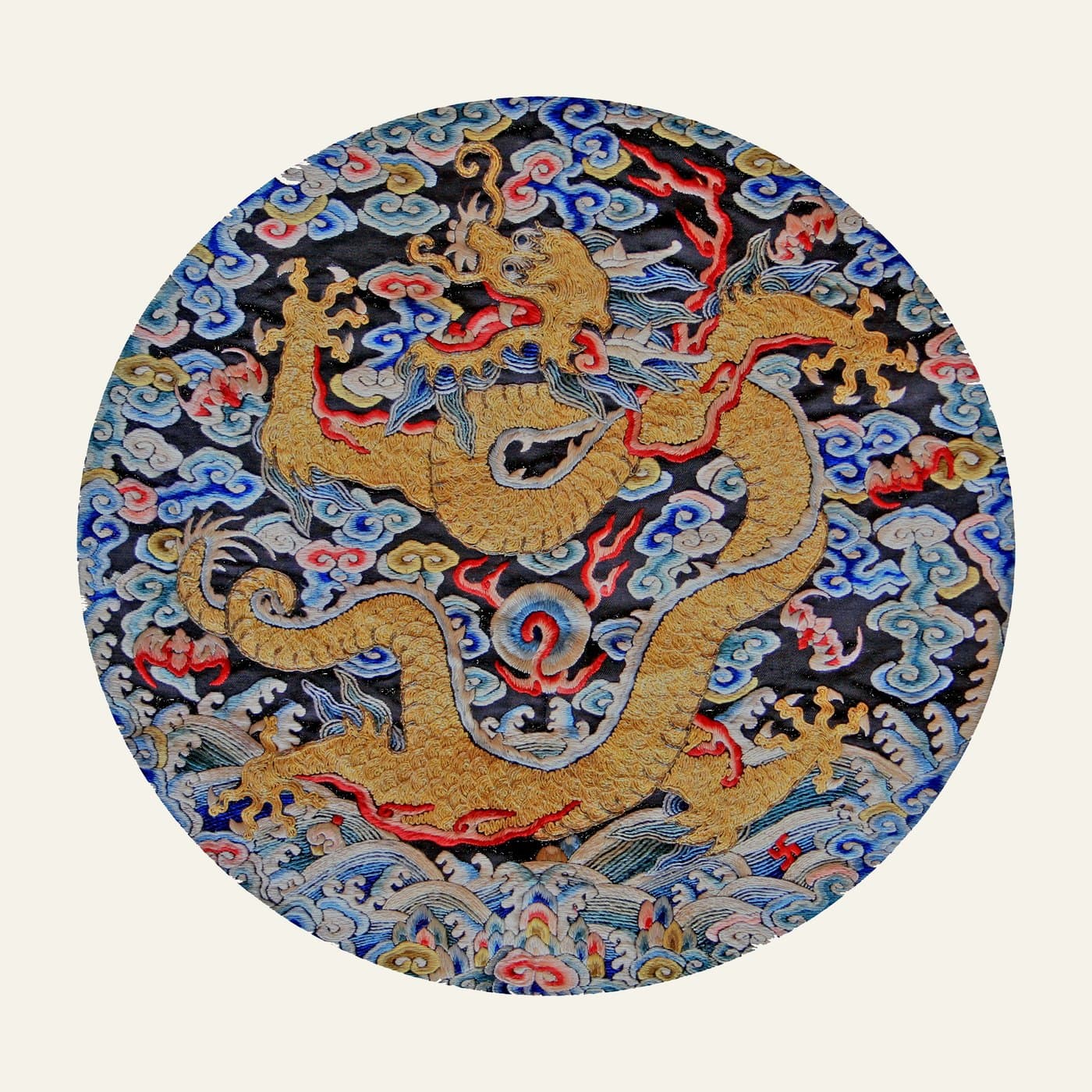
Dragon roundel (ii)
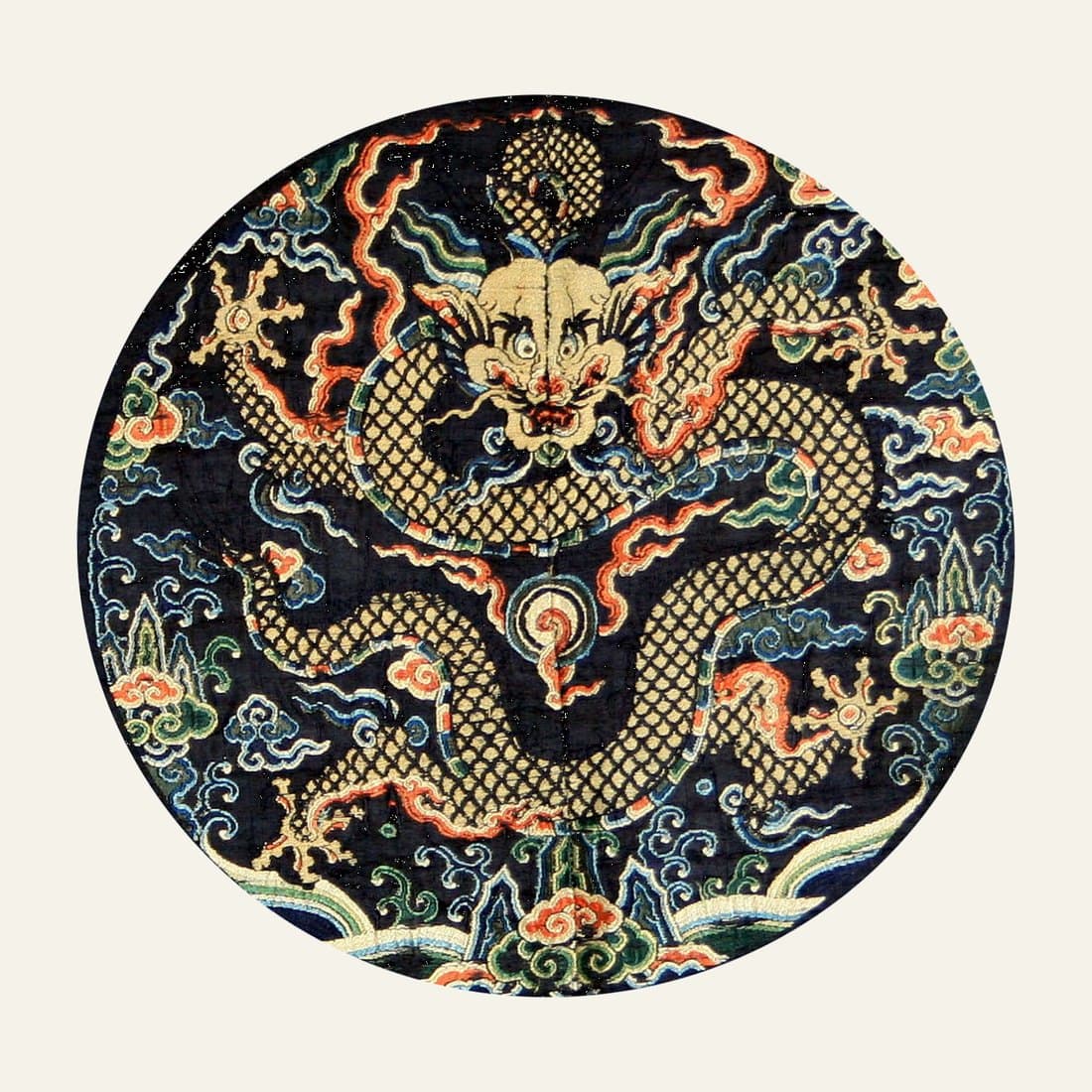
Dragon roundel (iii)
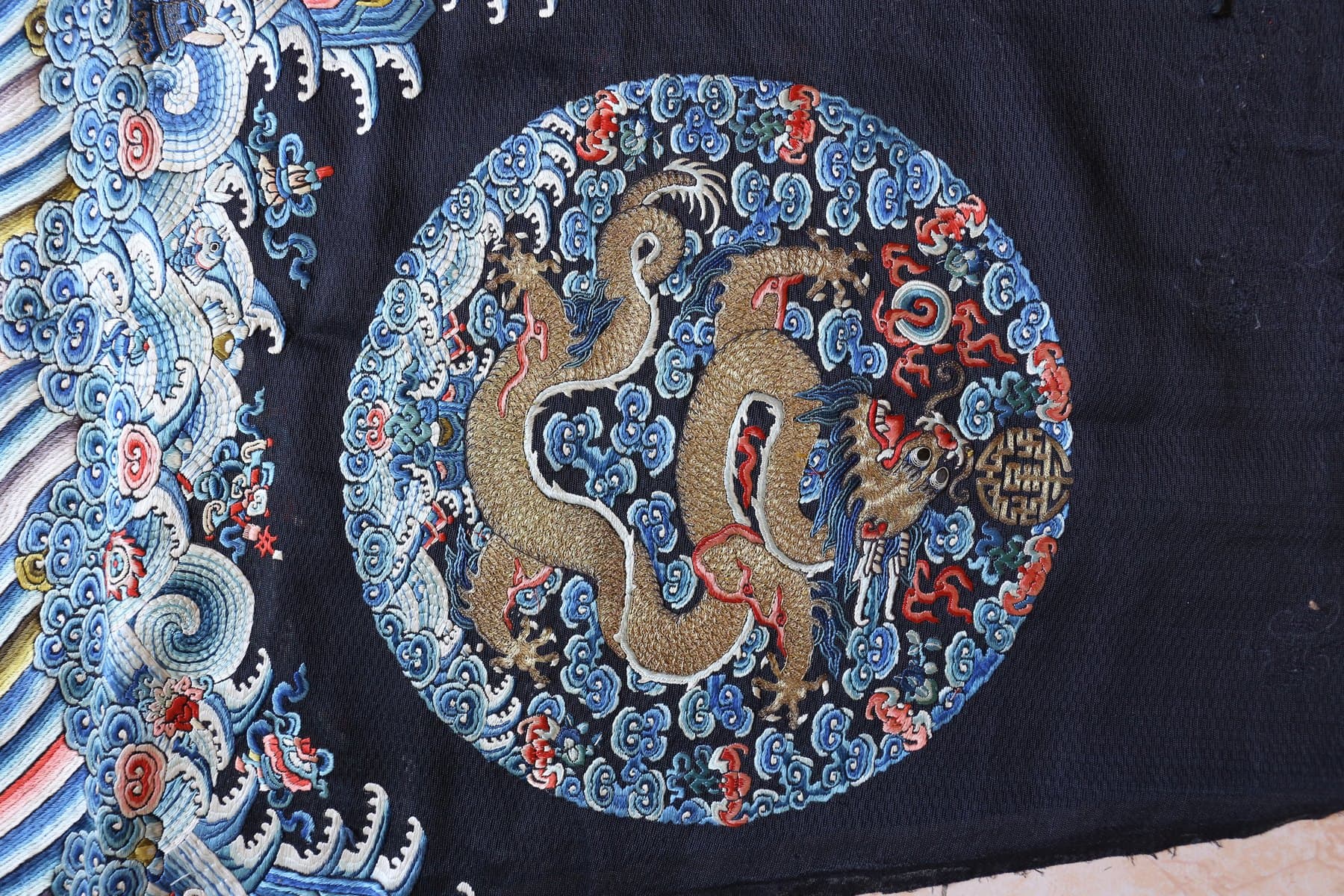
How the body coils and how densely the clouds fill: points of comparison
Change over time · Qing reigns compared
This section is built up reign by reign from actual objects. Plates and notes are left empty until specific examples can support them, rather than filled with speculation.
Reigns to be covered
- Kangxi1662–1722
- Yongzheng1723–1735
- Qianlong1736–1795
- Jiaqing1796–1820
- Daoguang1821–1850
- Xianfeng1851–1861
- Tongzhi1862–1874
- Guangxu1875–1908
Related Objects
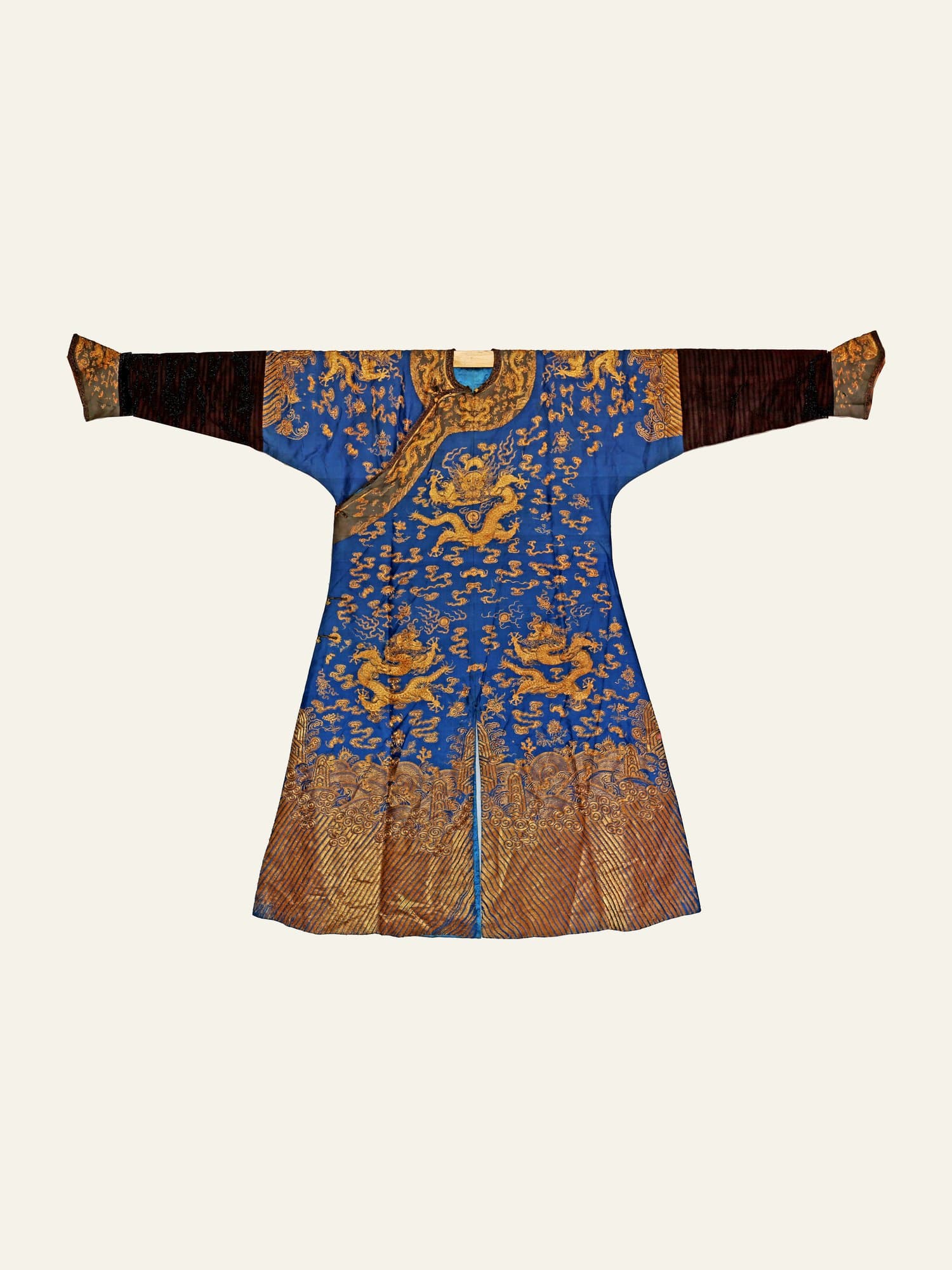
Jifu Robe with Dragons and Clouds on a Blue Ground
清代蓝地云龙纹吉服袍
Qing dynasty · Jifu robe (festive court dress)
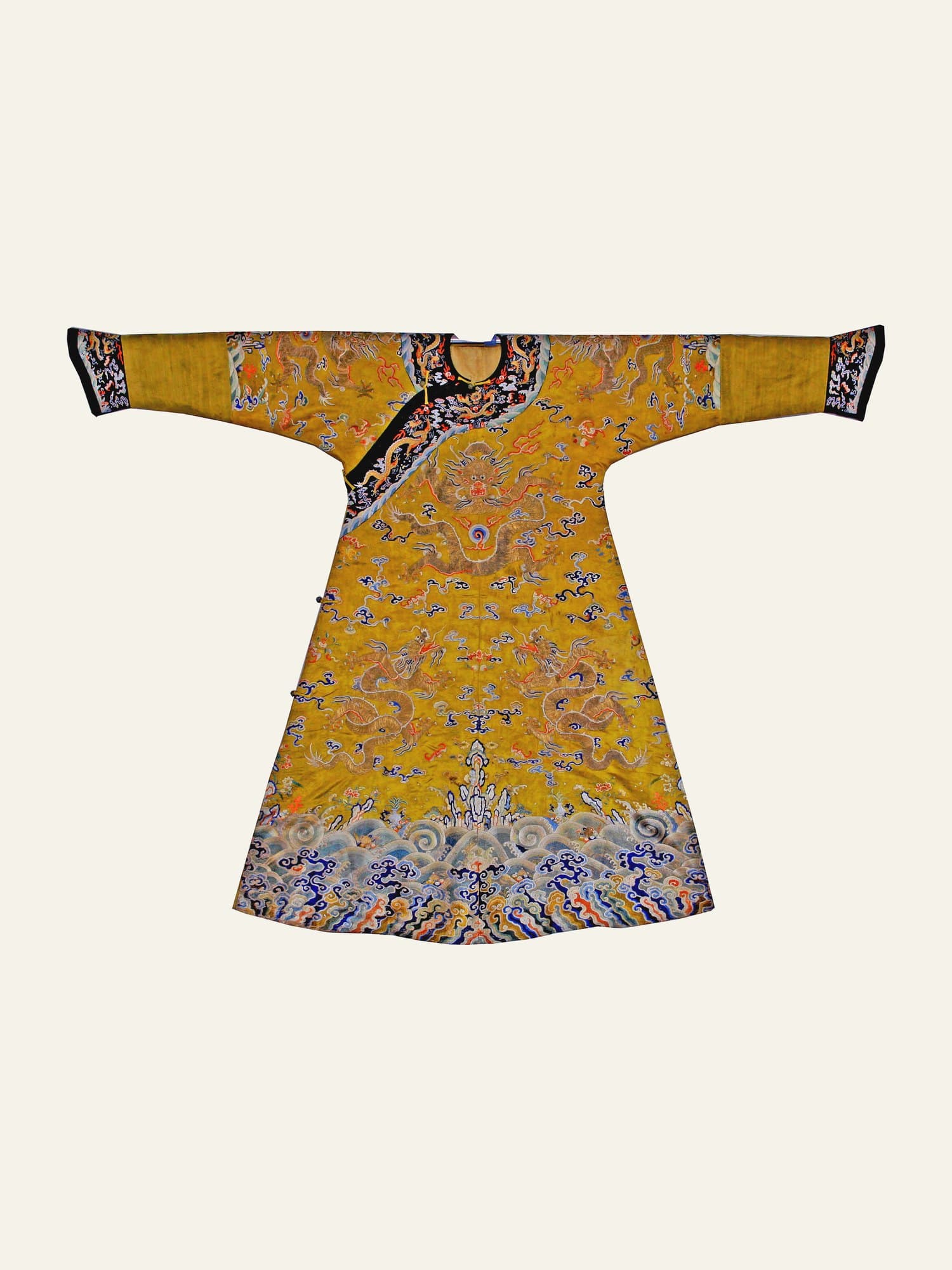
Jifu Robe with Dragons and Clouds on a Yellow Ground
清代黄地云龙纹吉服袍
Qing dynasty · Jifu robe (festive court dress)
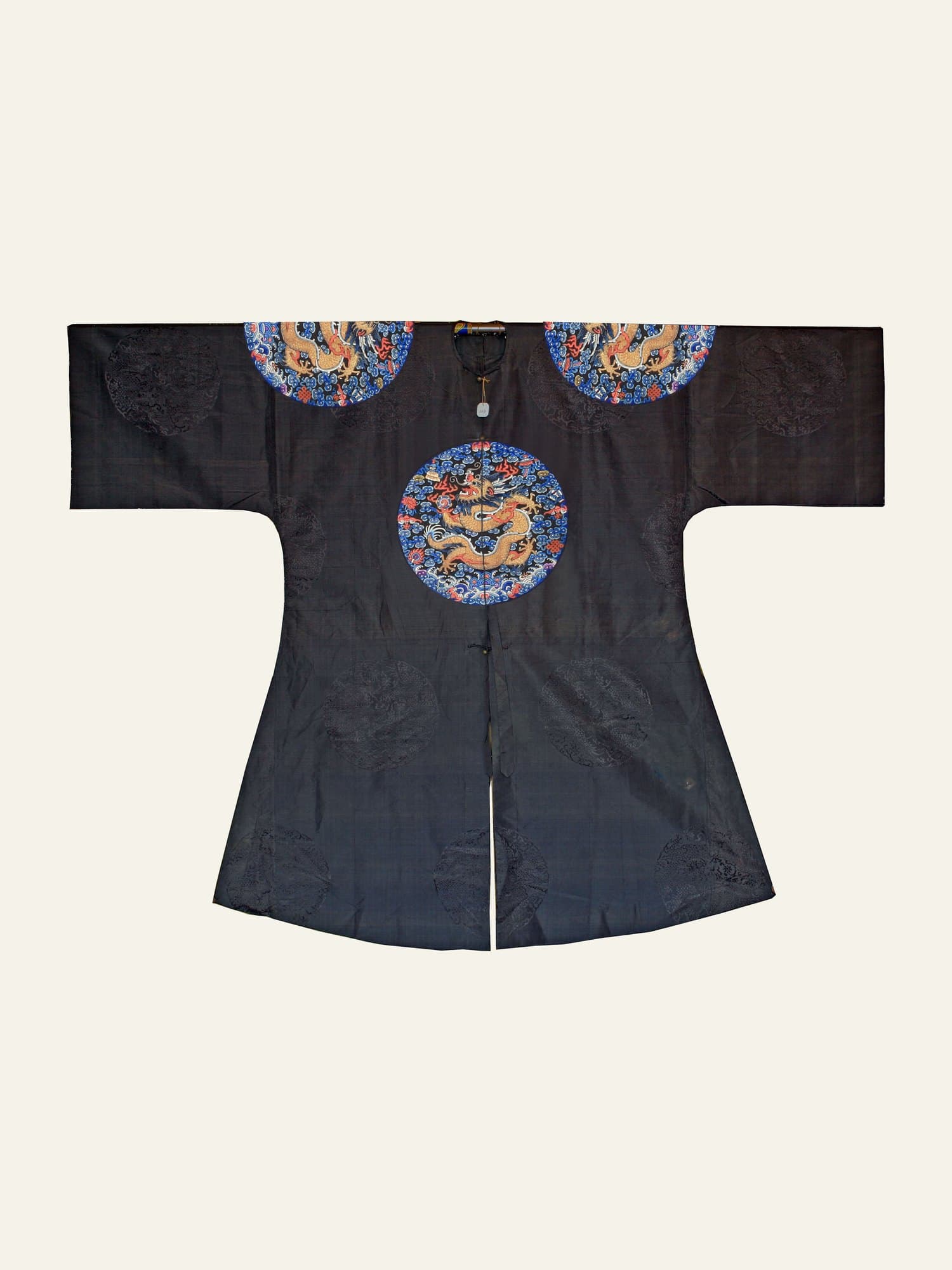
Longgua with Dragon Roundels on a Dark Blue Ground
清代石青地团龙纹龙褂
Qing dynasty · Longgua (dragon surcoat)
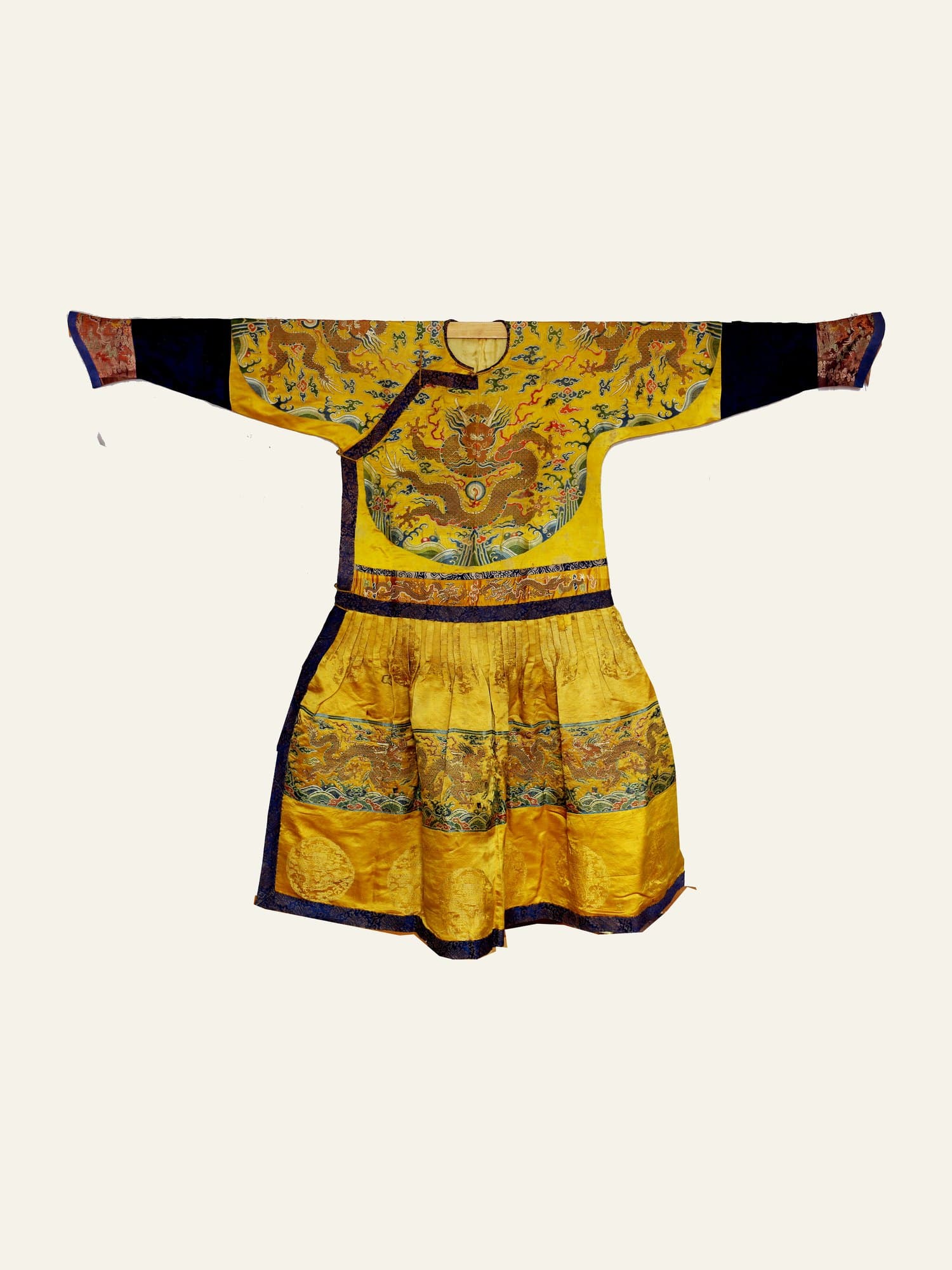
Chaofu Robe with Dragons and Clouds on a Yellow Ground
清代黄地云龙纹朝袍
Qing dynasty · Chaofu robe (formal court dress)