Motifs
Motifs
纹样
The motif database is organised one motif at a time, recording historical development, cultural meaning, change over time, and the related objects, essays and exhibitions. The dragon entry carries a reign-by-reign comparison intended to accumulate as a dating reference.
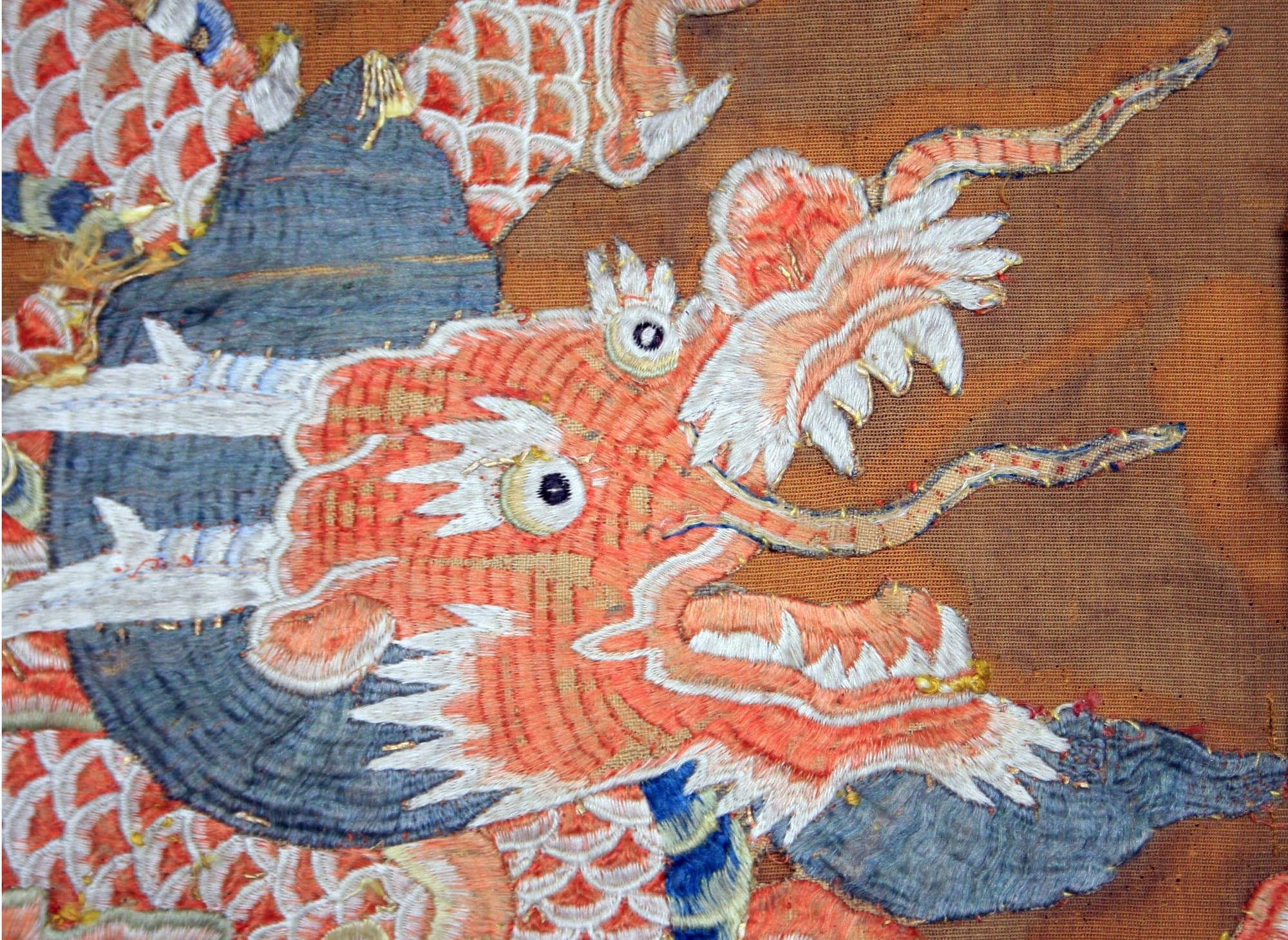
Dragon
龙纹
The dragon is the most heavily regulated motif in Chinese textile ornament. Across the reigns of the Qing dynasty its form shifts in ways that are consistent and legible enough to serve as a tool for dating.
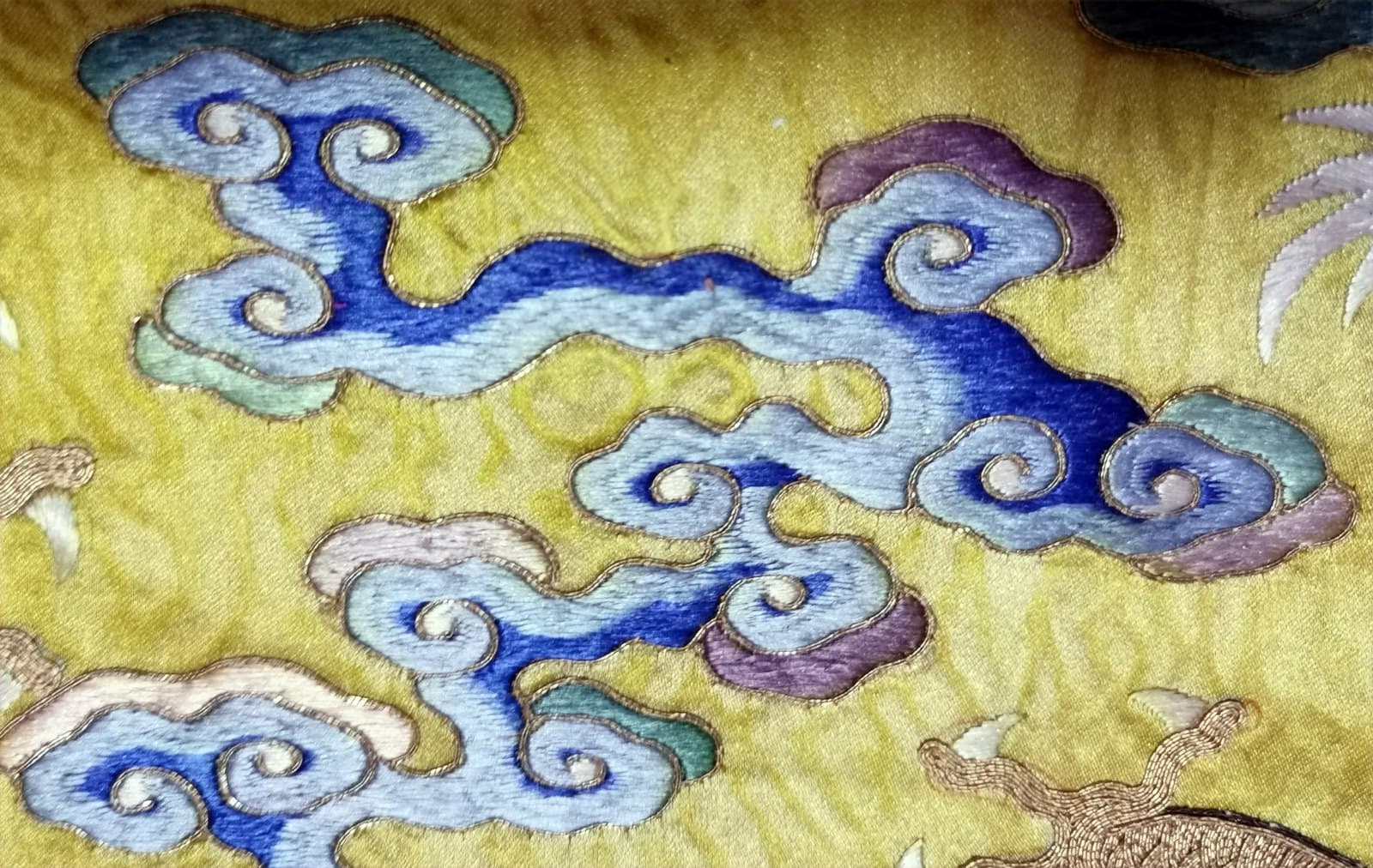
Cloud
云纹
Cloud motifs do structural work in Qing textiles — dividing, linking and filling — and their form moves from the lingzhi-headed cloud of earlier periods towards regularised ruyi clusters and long trailing bands.
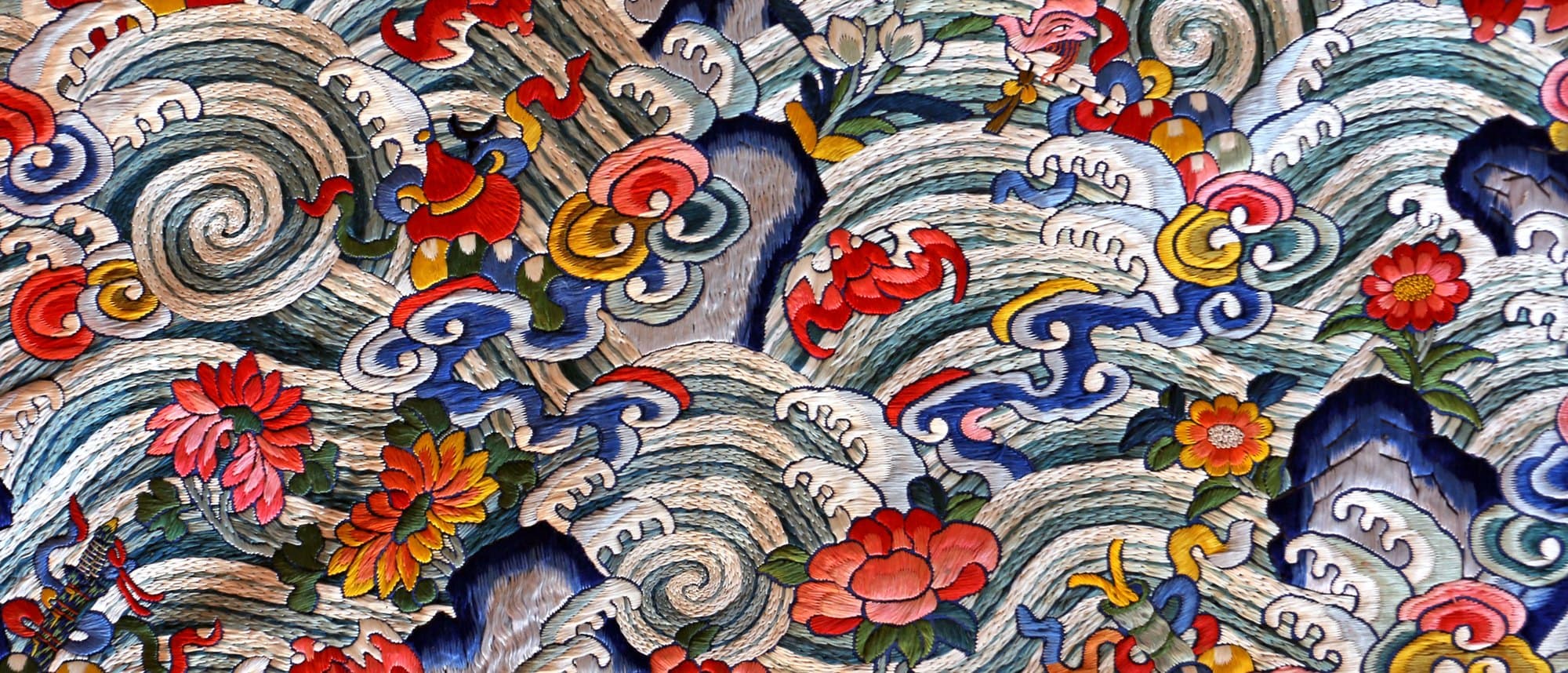
Wave and Mountain Motif
海水江崖
The wave-and-mountain border runs along the hem of a robe, built from vertical water, horizontal water and rock forms — among the most codified compositions in Qing dress.
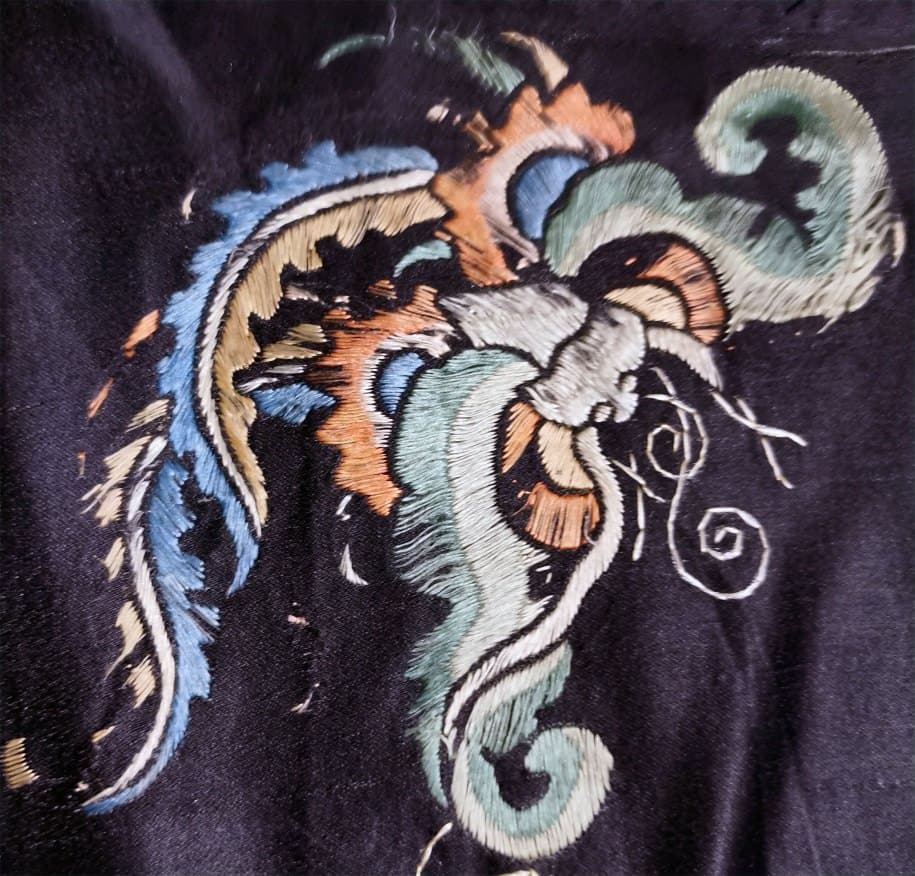
Butterfly
蝴蝶
The butterfly is among the most frequent subjects on Qing women’s dress. Two compositional types can be distinguished: one with long trailing tails and coiling wings, far from naturalistic, common in Suzhou and Sichuan work; and one drawn from observation, its wing edges secured with dense short couching, characteristic of the Beijing style.
Peony
牡丹
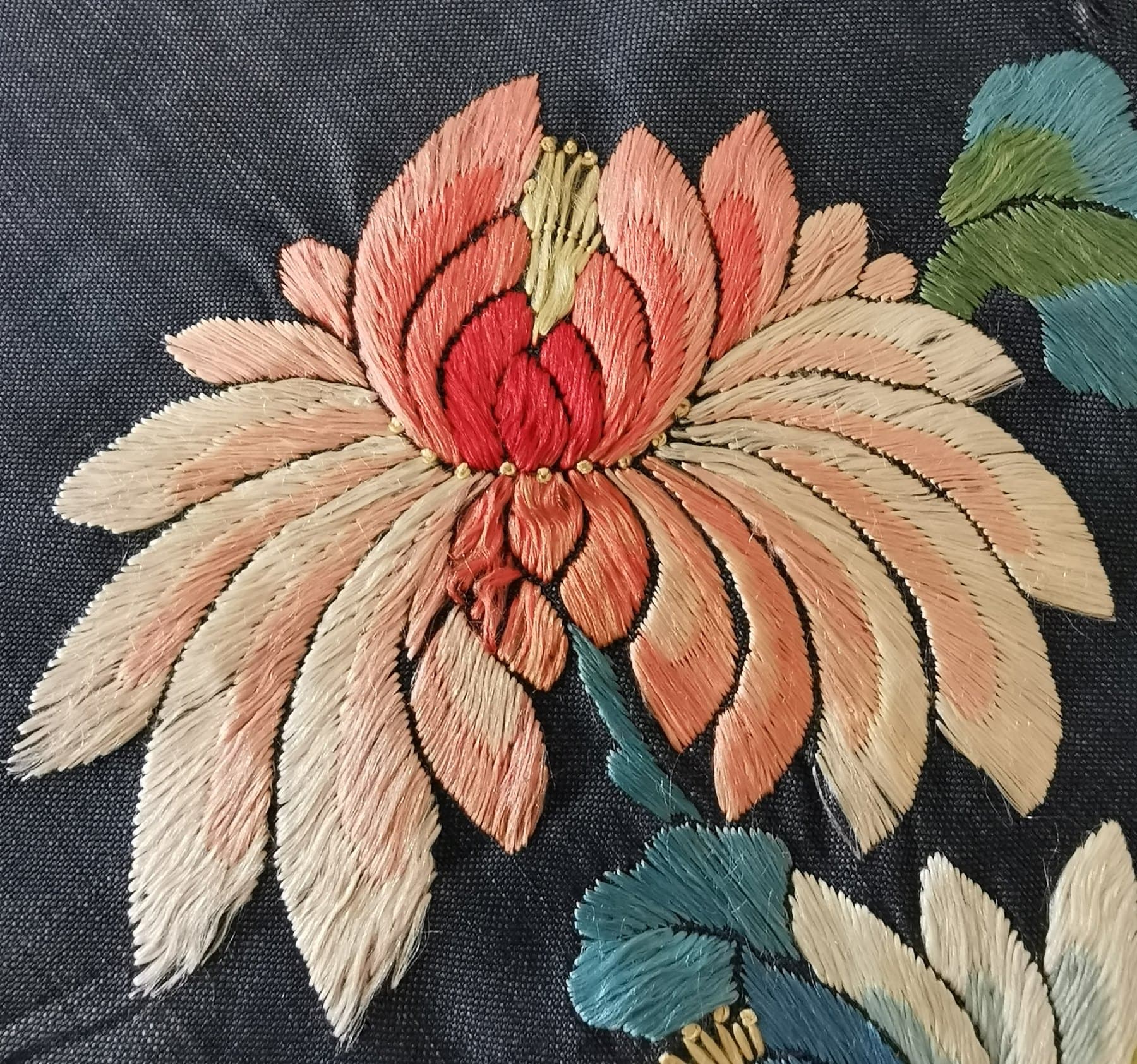
The peony signifies wealth and standing, serving both as a principal motif and as the flower head anchoring scrolling or broken-branch compositions. The regional schools treat it very differently, which makes it a useful specimen for telling them apart.
Scrolling Lotus
缠枝莲
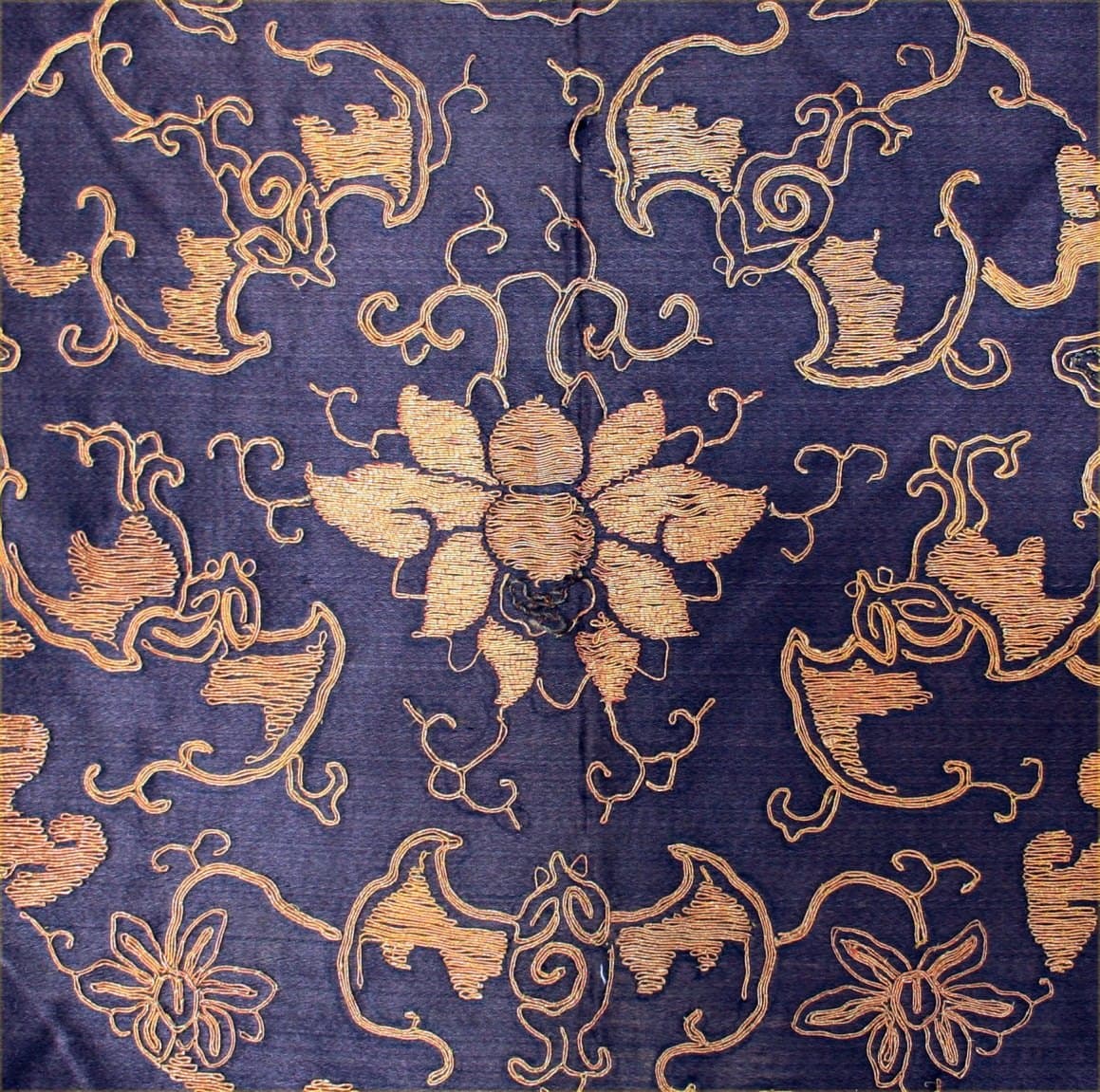
Scrolling lotus links flowers along a continuous stem in an endless repeat — one of the principal all-over patterns of Ming and Qing textiles.
Twelve Symbols
十二章纹
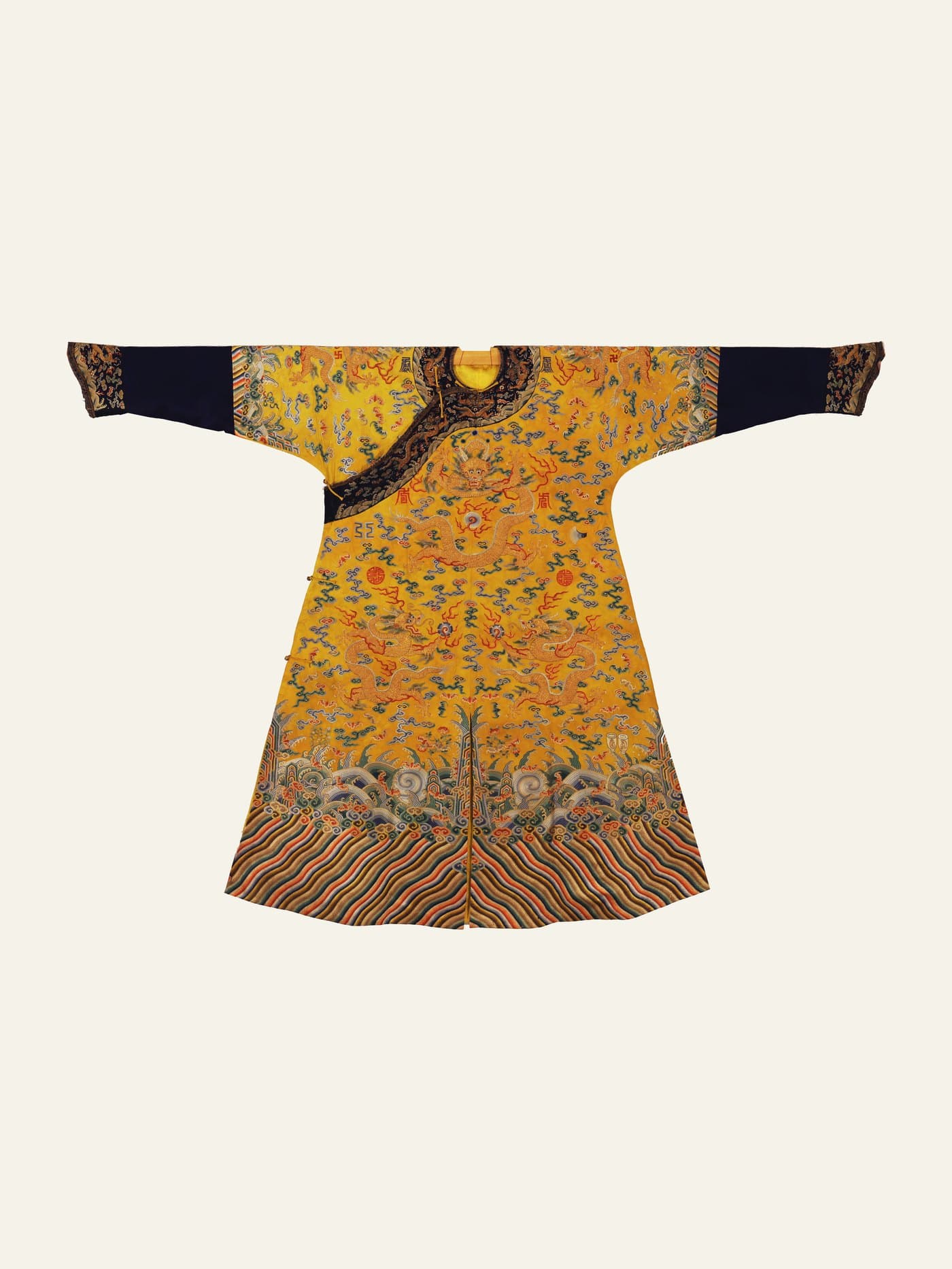
The Twelve Symbols form the ornament reserved for imperial ceremonial dress: sun, moon, constellation, mountain, dragon, pheasant, sacrificial vessels, water weed, fire, grain, axe and the fu symbol — each with a fixed position and meaning.
Eight Auspicious Symbols
八宝
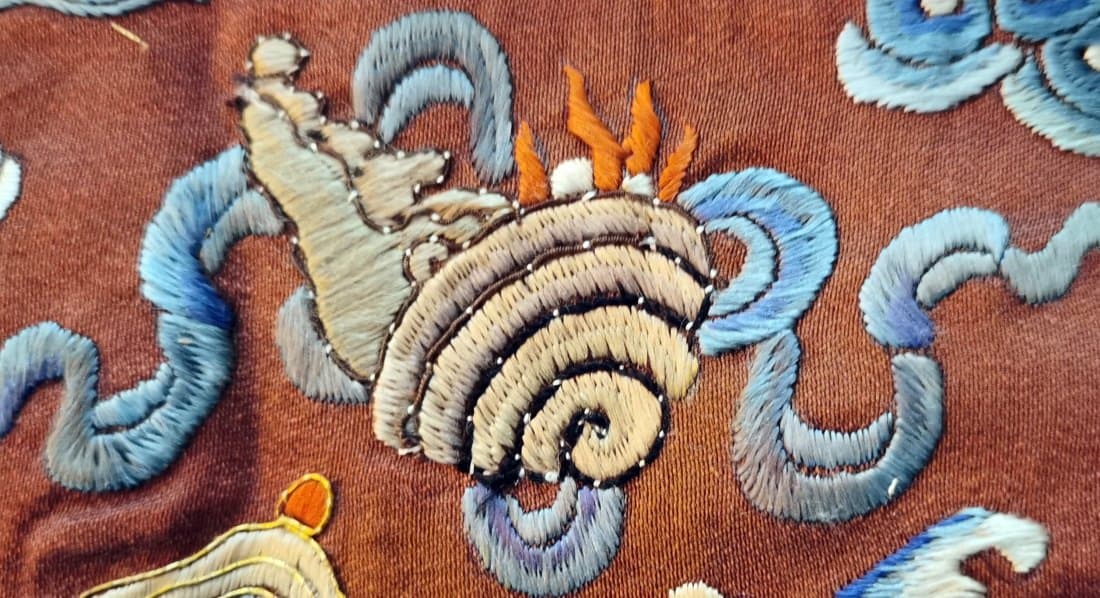
The Eight Auspicious Symbols — wheel, conch, parasol, victory banner, lotus, endless knot, fish and vase — are Buddhist emblems, in popular usage the “eight signs of good fortune”, usually shown with fluttering ribbons and clouds.
Hidden Eight Immortals
暗八仙
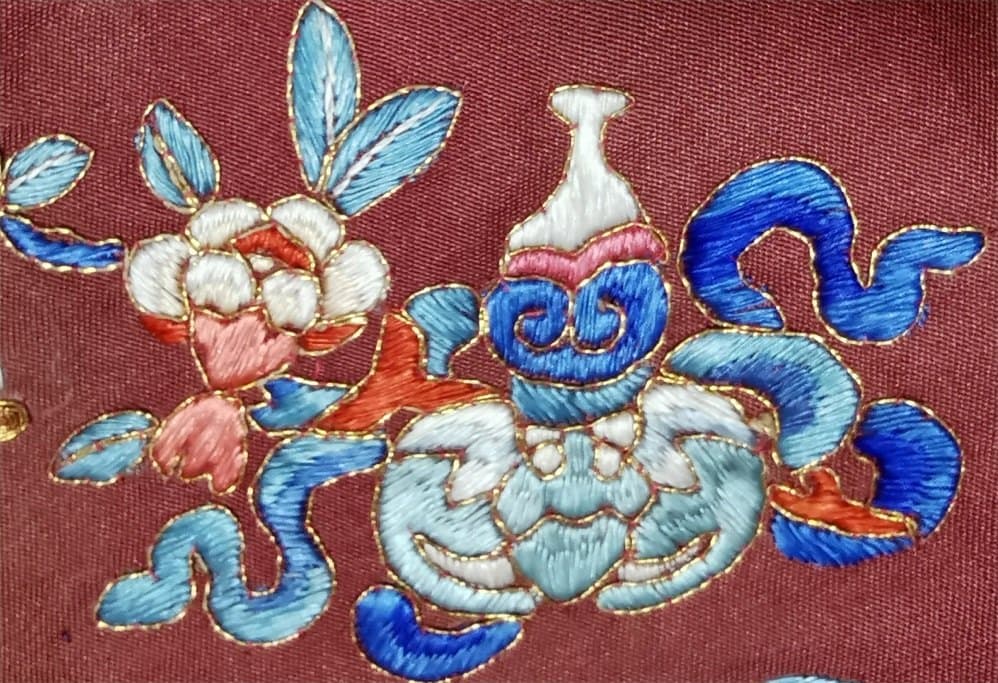
The Hidden Eight Immortals — the Daoist counterpart of the Buddhist set — are the attributes carried by the Eight Immortals: gourd, fan, drum, sword, lotus, flower basket, flute and clappers. The immortals are implied by their attributes alone, hence “hidden”.
Bat
蝙蝠
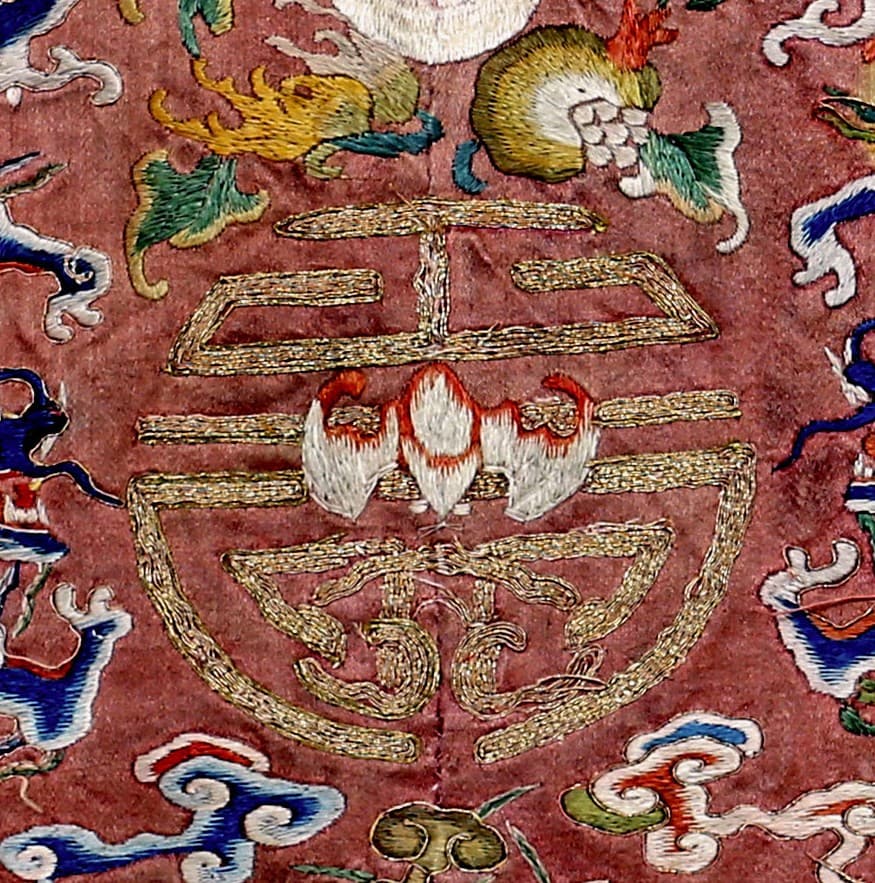
The bat is auspicious through a pun: fu, “bat”, is a homophone of fu, “blessing”. It is commonly combined with the shou longevity character, clouds and scrolling florals.