Peony
牡丹 · mudan
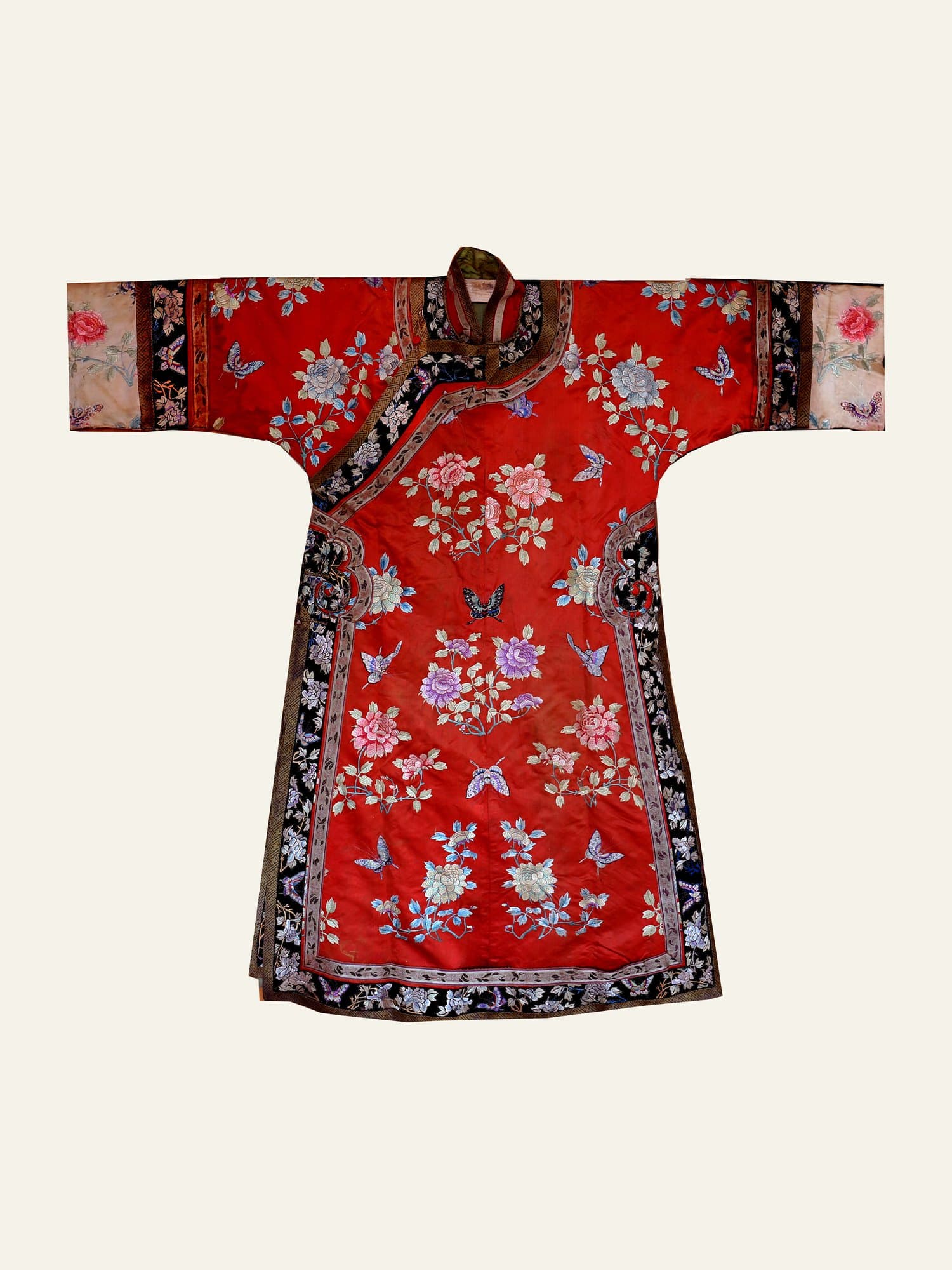
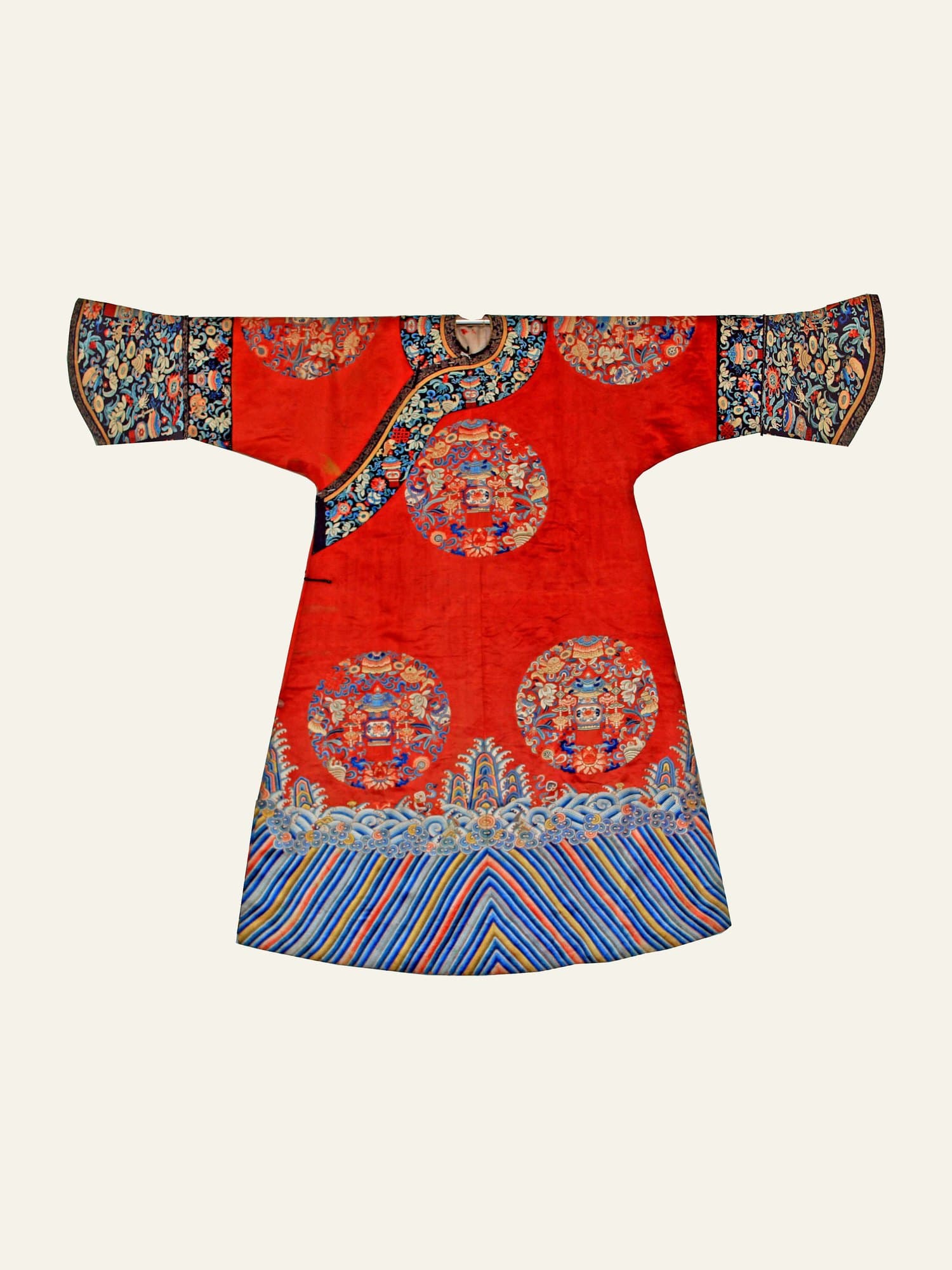
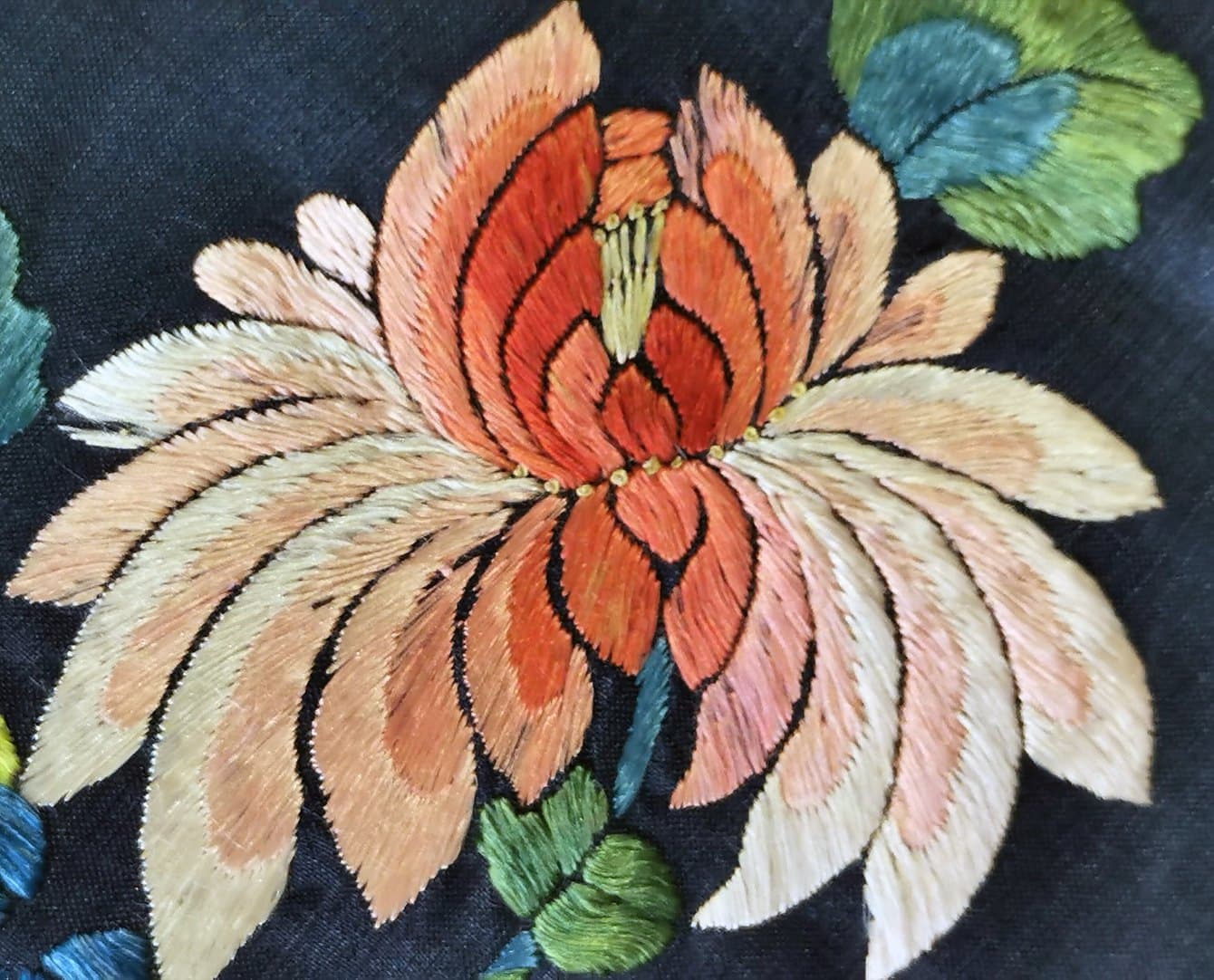
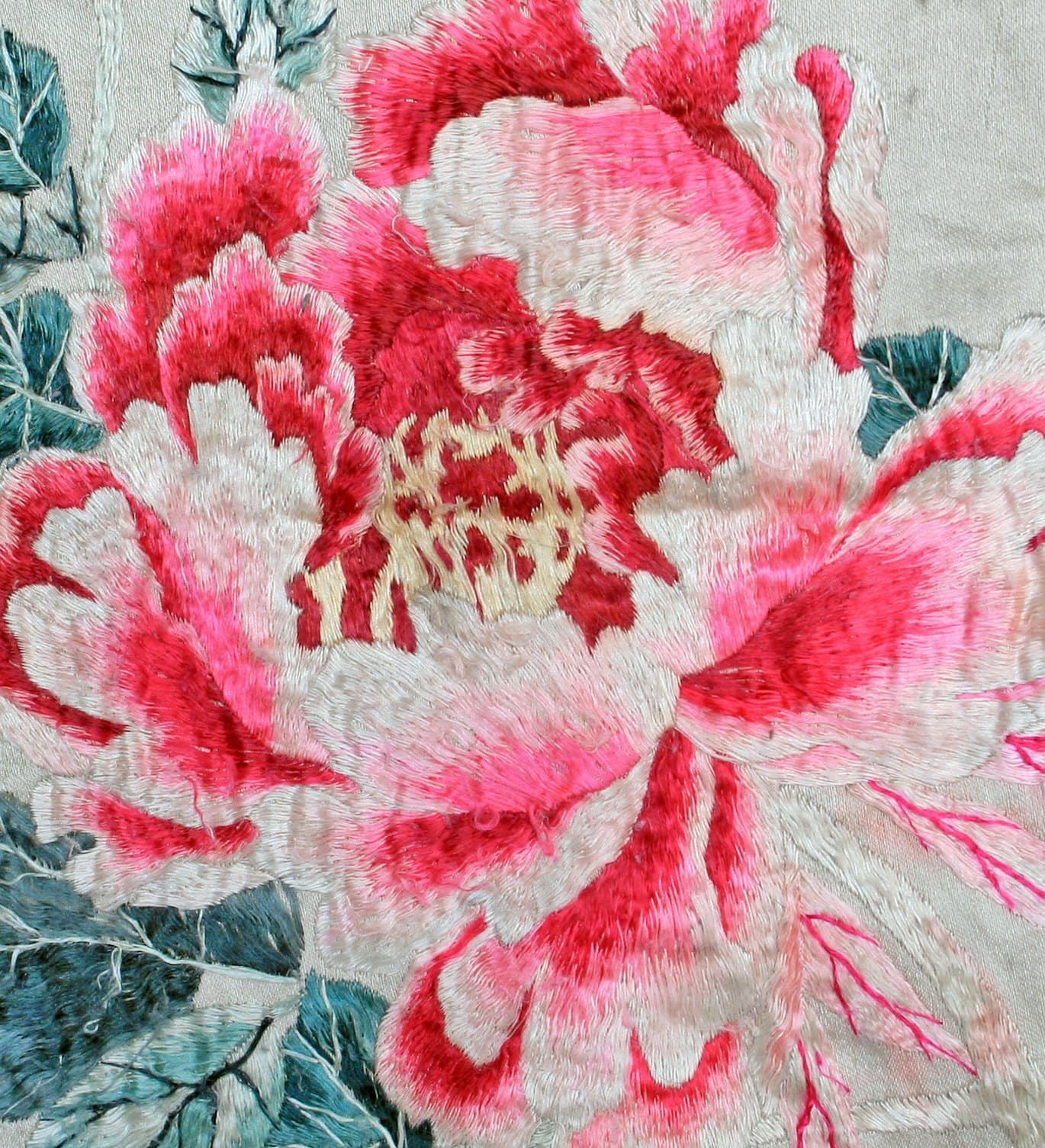
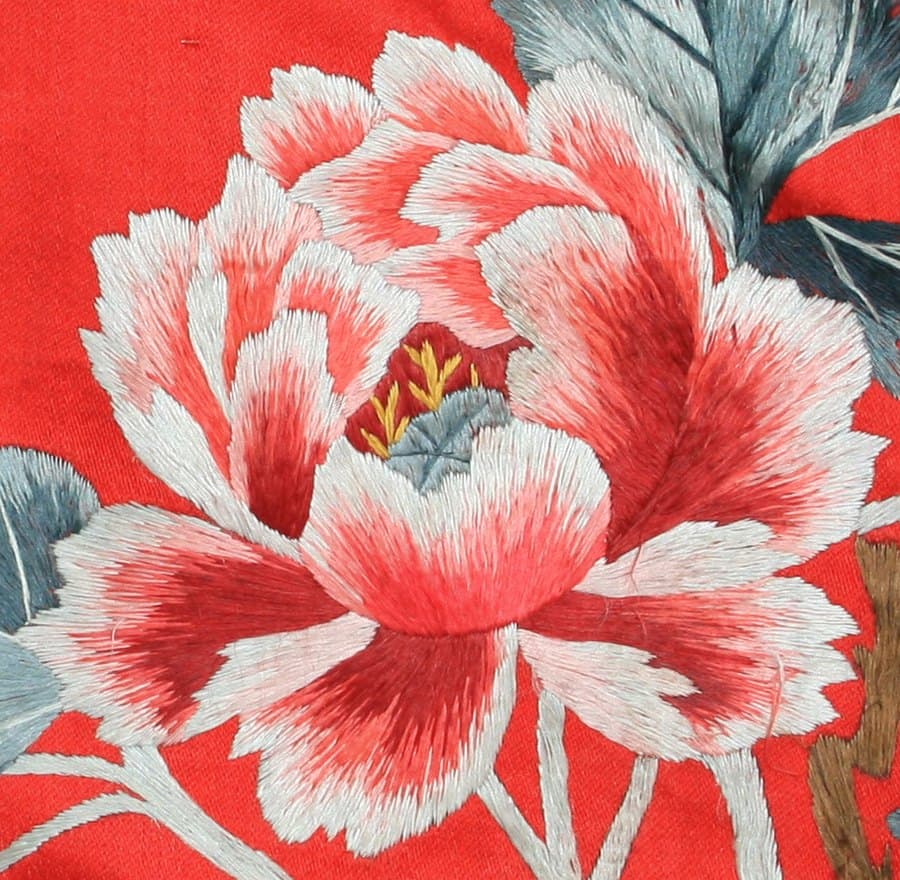
The peony signifies wealth and standing, serving both as a principal motif and as the flower head anchoring scrolling or broken-branch compositions. The regional schools treat it very differently, which makes it a useful specimen for telling them apart.
Historical development
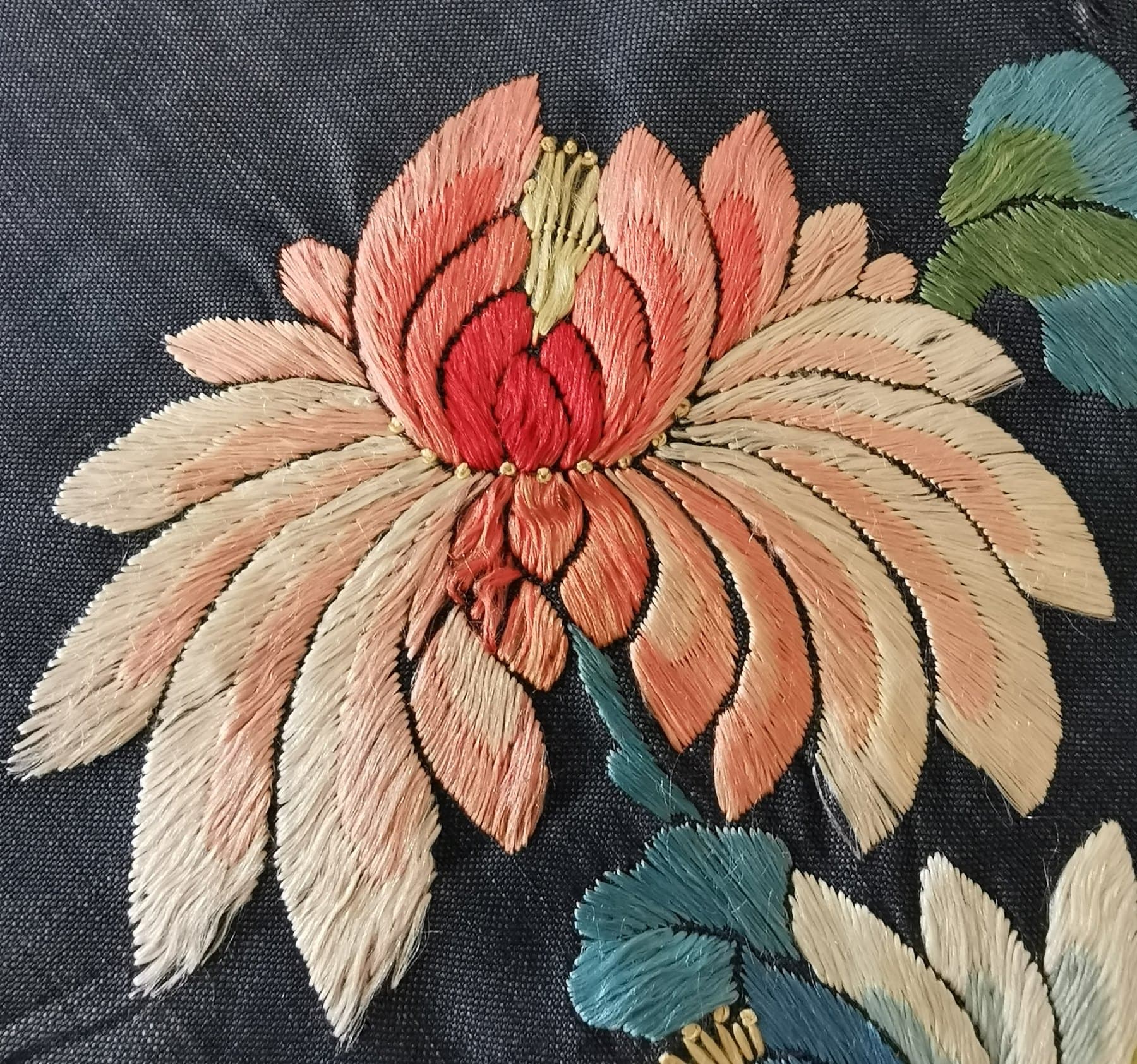
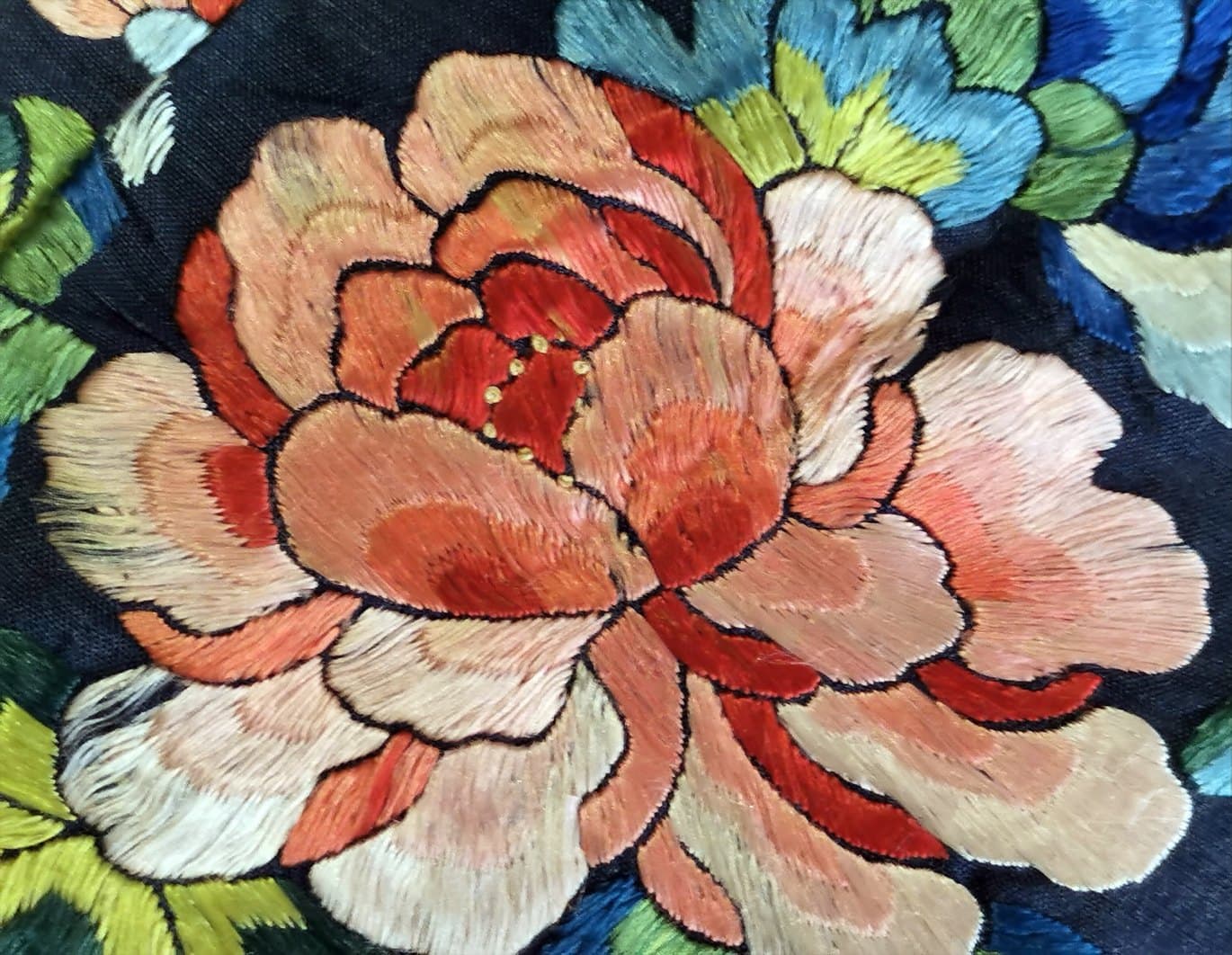
Suzhou peonies are richly coloured and finely graded from light to dark, the flower somewhat flattened and seen from directly in front. The work advances inward from the edge in short, closely ordered stitches.
Sichuan work raises the centre of the flower and views it from behind and to one side. The method of working inward is the same, but the colour ignores what the flower would actually be, taking red, yellow, blue or green as the composition requires.
Hunan work aims at description and stays close to the living plant. The stitches are long without appearing coarse: the edge of each petal is worked inward along its own grain, the second row extending unevenly into the first, the darkest tone laid last, so that the veining reads as both true and fine.
Everything depends on the direction of the needle. Peony, chrysanthemum or scattered small flower alike has a centre from which the design radiates; within each petal, the work retreats inward from the rim.
Cultural meaning
Paired with grapes, vases or rocks, the peony generates further readings such as “wealth and many sons” or “wealth and peace”.
Plates
The same motif as it appears on different objects, gathered for comparison. Dates and provenance for each example are to be established and added.
Peony (i)
Peony (ii)
Peony (iii)
Peony (iv)