Reference
Look Something Up
查阅
Six things to look something up in. The first two are catalogued here; the rest send you elsewhere — this archive holds twenty-seven objects, and of the hundreds of thousands of Chinese textiles that survive, nearly all are somewhere else.
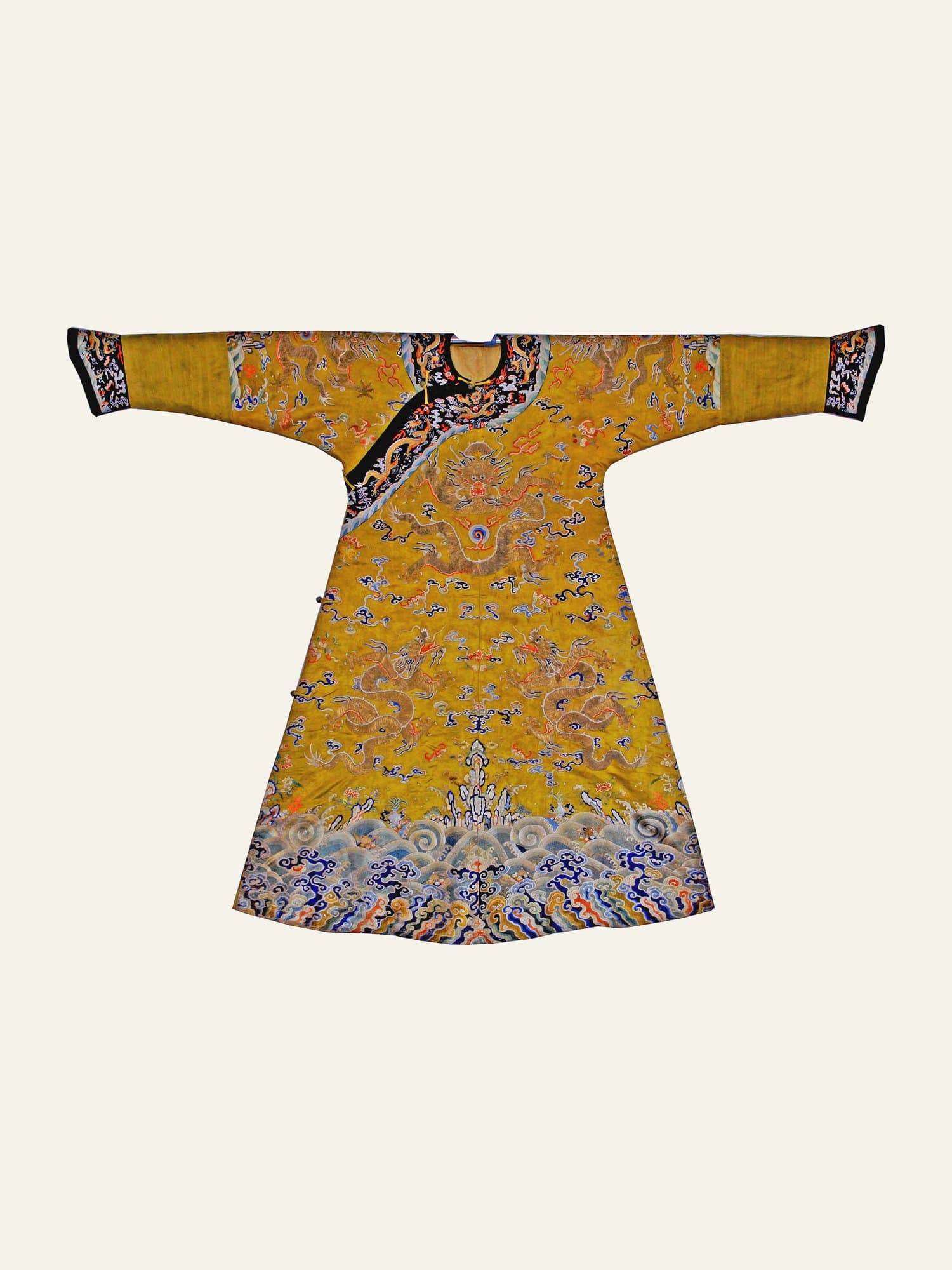 01
Object Records
One record per object: material, weave structure, technique, motif, form, dimensions, provenance. Anything not measured or established is marked as pending rather than filled in by guess.
27 records
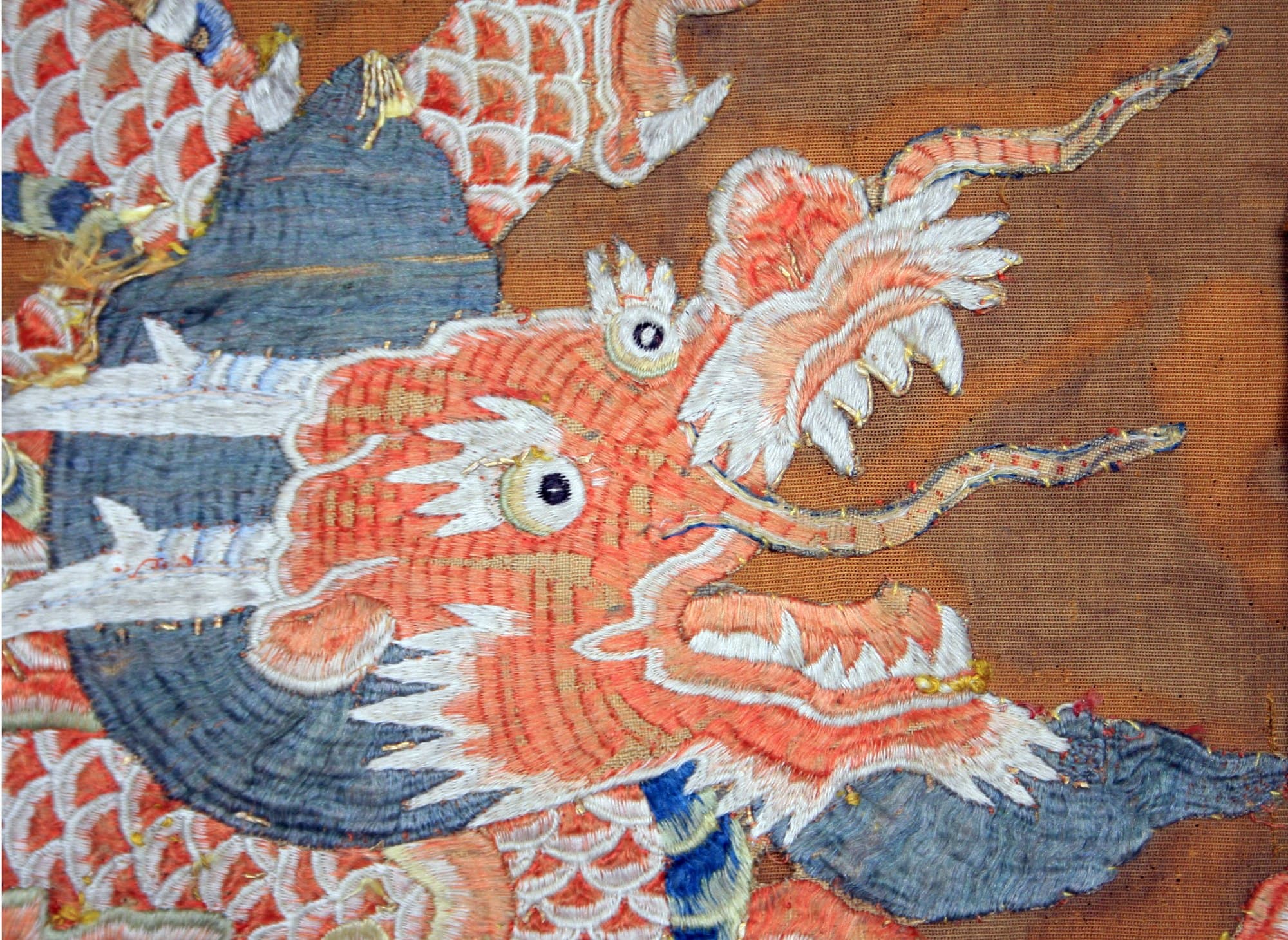 02
Motif Reference
Not a catalogue of patterns but a gathering of the same motif as it appears across different objects. The differences in how it is drawn are concrete evidence for dating, not decorative knowledge.
10 entries
 03
Bibliography
The reference works this archive relies on, each with a note on what it is useful for. Fields are checked against a publisher, museum or library record; what could not be confirmed is left blank, and doubts are stated on the entry.
14 titles
 04
Where to Look
Institutions whose Chinese textile holdings can be searched online, each checked by opening the search interface. Image terms are listed separately: finding an object is easy, knowing whether you may reproduce it is not.
14 institutions
 05
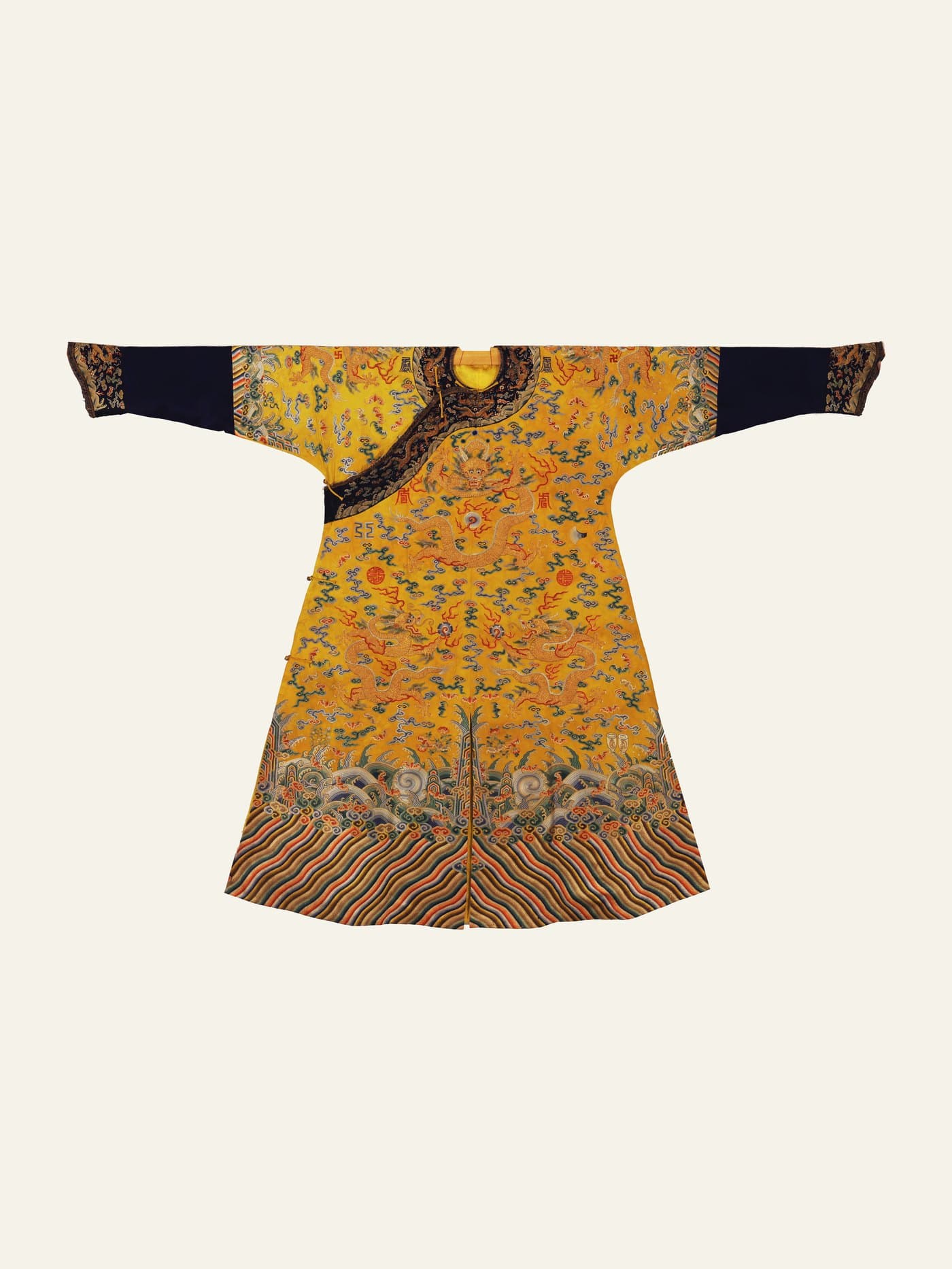
Comparable Pieces
Specific objects in public collections elsewhere, grouped by type, to set against the pieces catalogued here. Each carries its accession number — the one thing that makes a citation checkable. Image terms are verified object by object, not assumed from the institution.
25 objects
 06
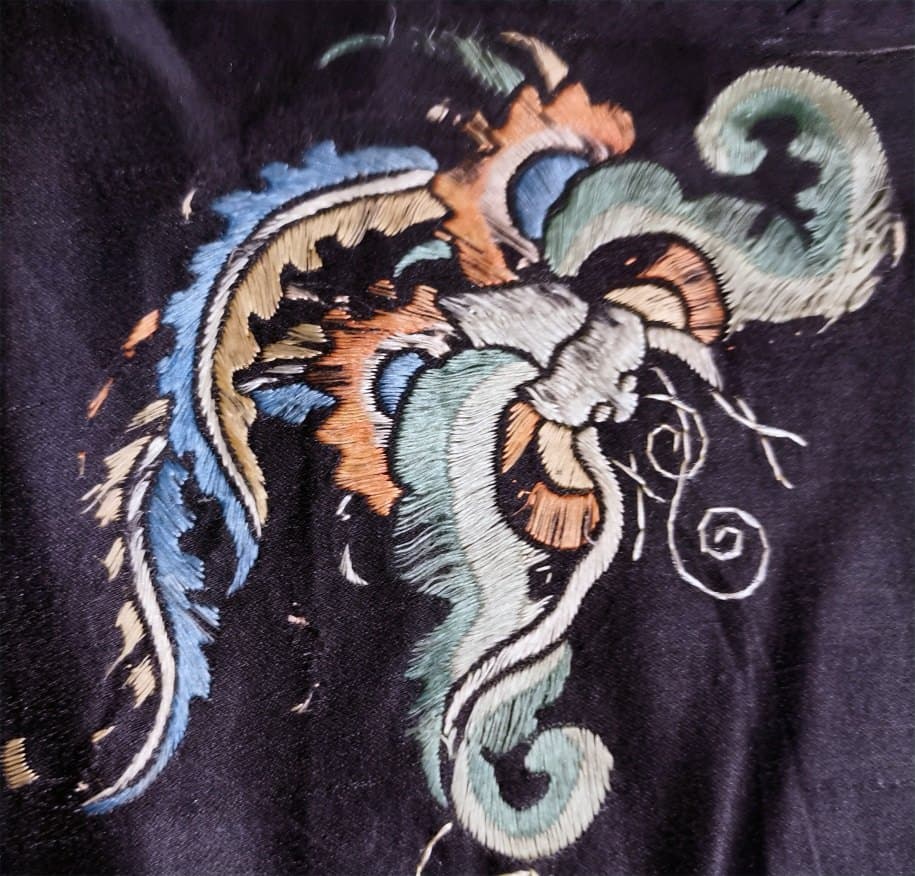
The National Register
The embroidery portion of China’s national register of intangible cultural heritage: item numbers, rounds, submitting localities and protecting bodies, transcribed entry by entry with a link back to each register page. The register itself exists in Chinese only.
27 entries
On View Elsewhere
2026-07-06 – 2026-10-07
Qing Imperial Dress from the Palace MuseumWorld Expo Museum · Shanghai
101 Qing garments and dress accessories lent by the Palace Museum, worn by emperors from the Kangxi to the Tongzhi reigns and by six empresses and consorts. The museum states that nearly nine tenths of the loan has not previously left Beijing.
2026-06-14 – 2026-10-12
Fashioning Chinese Women: Empire to ModernityLos Angeles County Museum of Art · Los Angeles
More than seventy women’s ensembles from Shanghai, Hong Kong and the United States, running from late-Qing embroidered robes through the qipao of the 1930s to the cheongsam of the 1960s.
2016-09-05 – 2028-03-01
Chinese Silk and the Silk RoadChina National Silk Museum · Hangzhou
The museum’s main silk gallery: eight thematic units over two floors, from Neolithic evidence to the present, including Han brocade fragments, Tang patterned silks, Song garments, Ming embroidery and Qing dragon robes.
2024-07-31 – 2028-03-01
Sericulture and Silk Craftsmanship in ChinaChina National Silk Museum · Hangzhou
Four sections on sericulture and silk weaving as intangible heritage, covering reeling and dyeing, Shu and Yun brocade and the named embroidery traditions, with some twenty traditional looms of different periods shown alongside their products.
2011-11-25 – 2028-03-01
Textile Conservation GalleryChina National Silk Museum · Hangzhou
A working conservation laboratory open to visitors over two floors: analysis and treatment of excavated textiles in progress downstairs, finished conserved pieces upstairs. Worth a detour for anyone who wants to see what condition excavated silk actually arrives in.
2011-11-25 – 2028-03-01
Xinyou Archive CentreChina National Silk Museum · Hangzhou
A standing reference display rather than an exhibition: modern textile swatch books, personal archives of figures in the textile trade, and Chinese and foreign publications on sericulture, dyeing, weaving history, textile archaeology and the Silk Road.
2021-02-06 – ongoing
Ancient Chinese Culture: Costume and AdornmentNational Museum of China · Beijing
About 130 principal objects — jade and bone implements, ceramics, garments, gold and silver ornaments and pictorial sources — in six chronological sections, with fifteen life-size reconstructed figures showing dress from prehistory to the Qing. No closing date has been announced.
Permanent display
The Han Tombs at Mawangdui, ChangshaHunan Museum · Changsha
The standing display of the Western Han tombs at Mawangdui, about a thousand objects over three floors, of which more than five hundred are silk garments and textiles. The single most important group of early Chinese silk on permanent view anywhere.
Permanent display
Wedding Attire: Three Cultures, One CelebrationThe Metropolitan Museum of Art · New York
Wedding ensembles and accessories of the eighteenth to early twentieth century from China, Japan, and Ottoman Turkey and the Balkans, in Gallery 599. The Met gives no dates; check before travelling.
2026-07-25 – ongoing
Decorative Arts in China, 1000 to the PresentThe Metropolitan Museum of Art · New York
Over a hundred objects in Galleries 220–221 spanning a millennium — porcelain, metalwork, lacquer, jade, bamboo and silk, from imperial commissions to export wares. Silk is one medium among several here, not the subject.
Dates are as published at the time of checking; confirm with the institution before travelling.
Not sure where to begin? Read the four parts of the learning line first; the objects give up much more once you have.