History
A History of Chinese Embroidery
中国刺绣的历史
The history of Chinese embroidery is the history of silk thread being reinvented, over and over, on cloth. What follows is arranged by period — but what it records is not a succession of dynasties so much as changes in stitch, material and purpose.
01
Origins
Neolithic to the Zhou
China is where the silkworm was first domesticated and silk first reeled and woven. Silk is the precondition: only once there was silk was there anything worth putting a needle into. Embroidery began, and remained, the last stage of a single technical system that starts with the worm.
Almost nothing survives from the earliest phases. What can be said is that decorative stitching existed before any systematic vocabulary of stitches did; embroidery proper had to wait until silk thread was strong and even enough to be pierced through repeatedly.
02
A System Emerges
Warring States to the Han
Chain stitch became the dominant technique. Its interlocking loops give a line that is both crisp and elastic — well suited to the flowing cloud-scrolls and composite beasts of the period, whose designs tend to run on without clear boundaries.
By this time embroidery was not merely ornament. It appears on garments and covers placed in tombs, taking part in the language of burial and belief; what a motif meant mattered more than how finely it was worked.
03
Exchange
The Tang
With the overland routes open, textile compositions from Central and West Asia entered China. The pearl roundel — a ring of small dots enclosing paired animals or birds — is the plainest evidence: the framework is not native, yet it was taken up widely and reworked.
In technique, satin stitch gradually displaced chain stitch. Laid side by side, the floss returns an unbroken sheen across a whole area, which suits volume and graded colour in a way that looped stitches do not.
04
Embroidery and Painting
The Song
Embroidery began to take painting as its model, chasing the gradations and washes of brush and ink. Embroiderers split the floss extremely fine — a single filament divided many times over — in order to make transitions between colours that the eye cannot locate.
The consequence of that turn was that embroidery entered the category of the work of art, and the individual hand began to be judged on its own. Kesi tapestry matured in the same period: woven rather than stitched, taking a different road towards the same destination.
05
Regional Schools and Regulation
The Ming and Qing
Regions developed their own systems of stitching and their own preferences, later summarised as the four great traditions of Suzhou, Hunan, Guangdong and Sichuan. What separates them is not only style but the structure of the stitching itself: blended, crossed and couched work are each used differently.
At the same time, embroidery for the court was brought under regulation. Three imperial silk manufactories — at Jiangning, Suzhou and Hangzhou — supplied the palace, and illustrated statutes laid down who wore which colour, which motifs, how many dragons. Embroidery became a legible mark of rank.
Most of the objects in this archive belong to this period. The rules were written on paper; carried out in silk they never quite match — and it is in that gap that the research begins.
From the Account to the Objects
The above is a summary. Dating and attribution have to be settled on the objects themselves: it is the difference in how a single motif is drawn from one period to the next that gives something to compare.
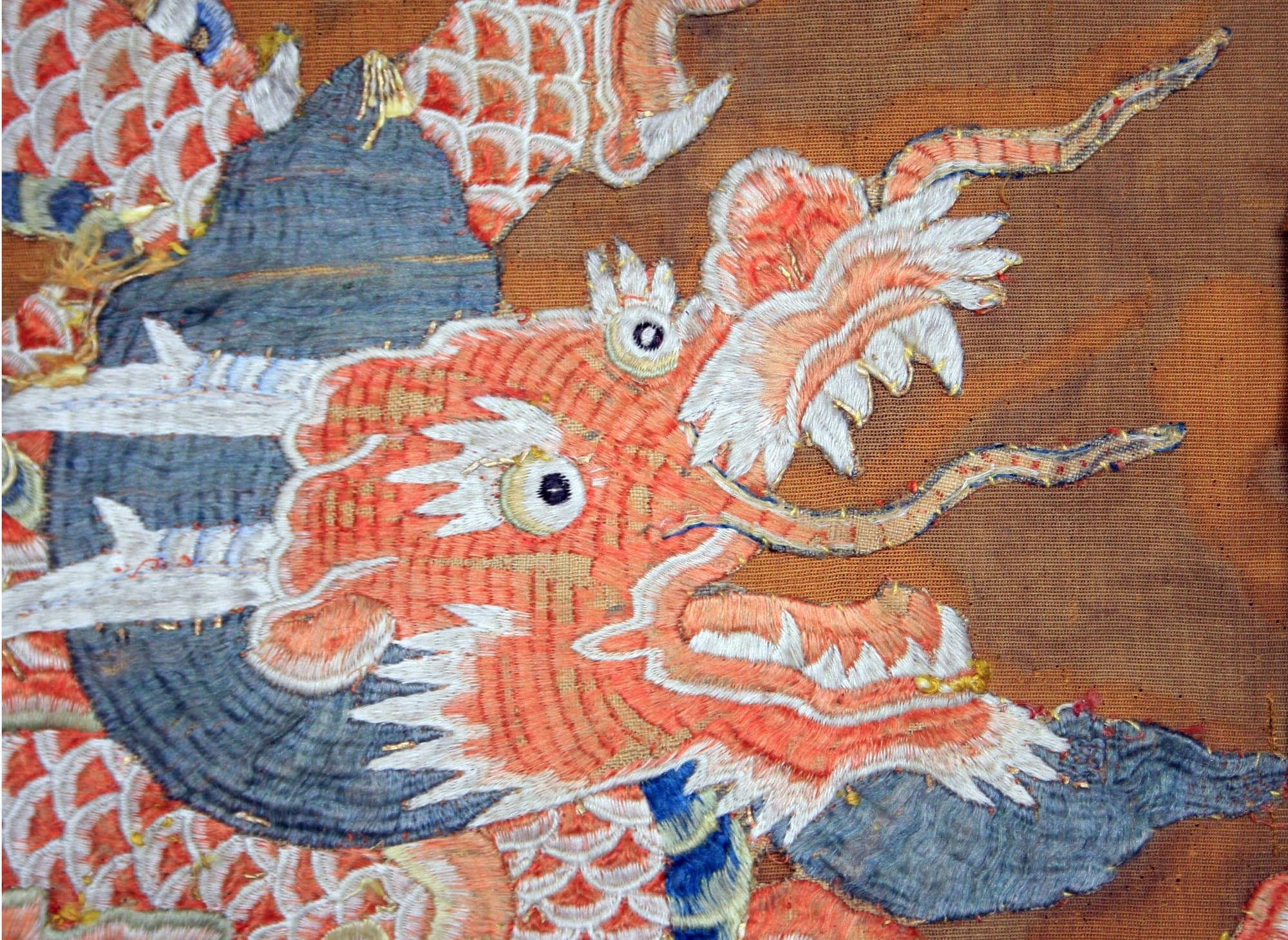
Dragon
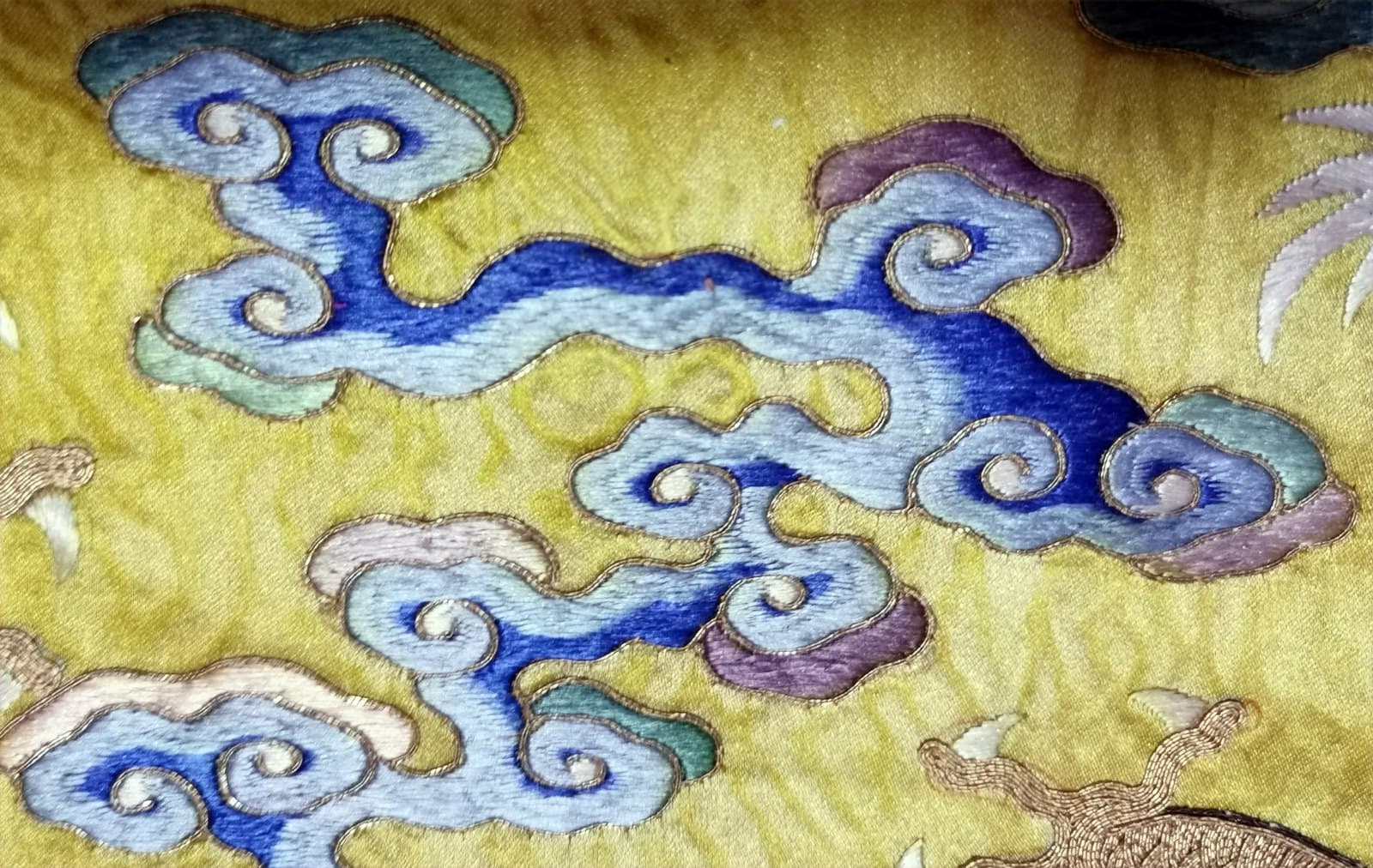
Cloud
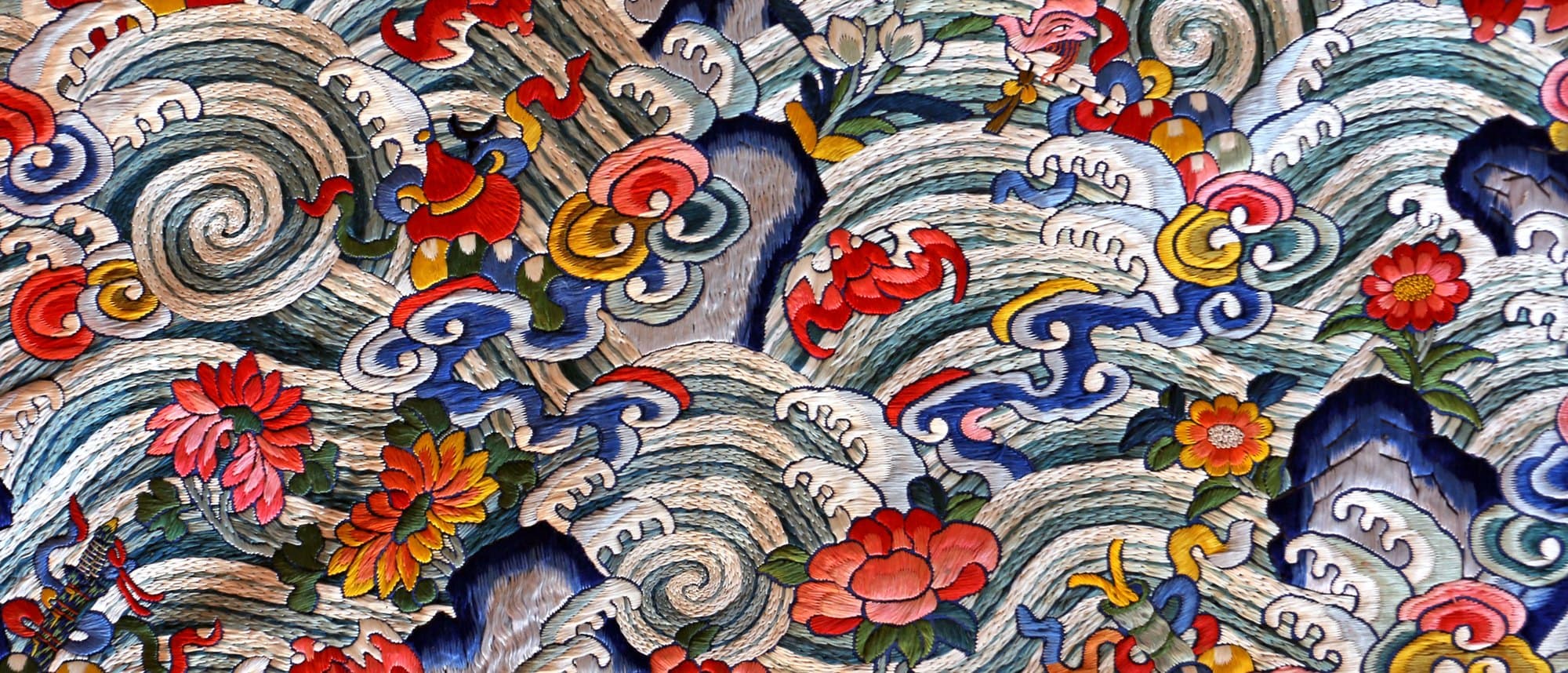
Wave and Mountain Motif
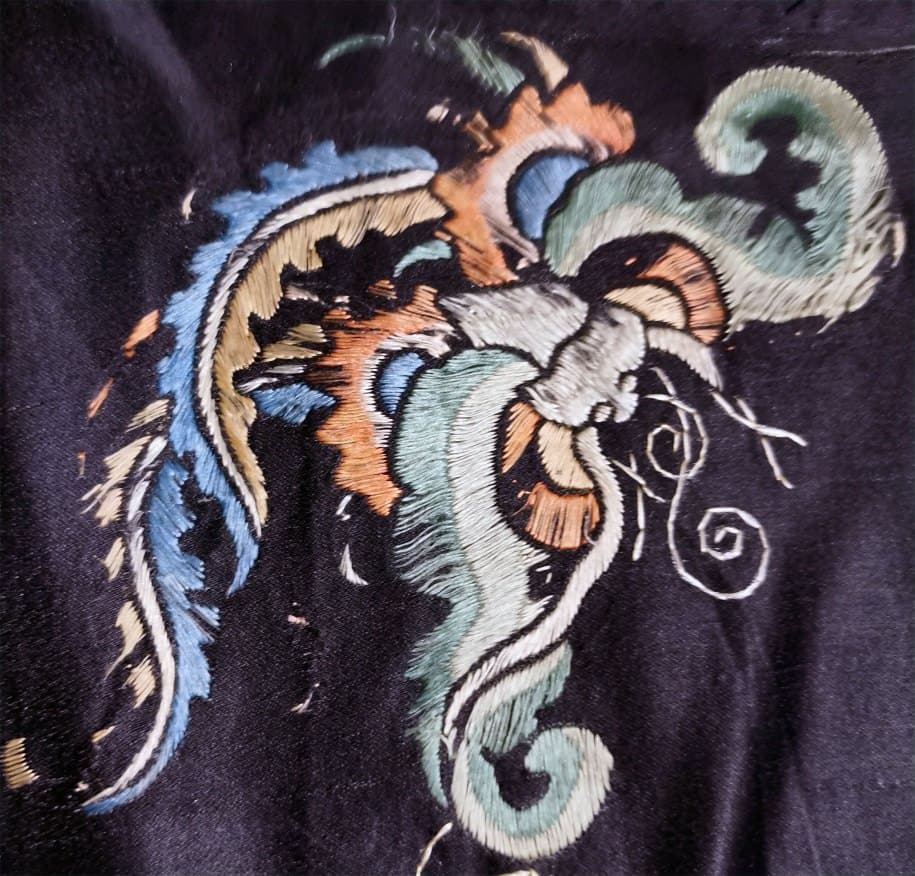
Butterfly