Imperial Embroidery
Imperial Embroidery
宫廷织绣
Qing court dress was a visual system fixed by regulation: who could wear which colour, which motifs, how many dragons — all of it set down in the illustrated statutes. This section works from surviving garments and textiles, to see how those rules were carried out in silk, and where they were not.
- Object records
- 27
- Photographed
- 21
- Motif entries
- 10
- In public collections
- 97
The Objects
Court robes, festive robes, informal dress, rank badges, hats and accessories. Each is recorded by material, weave structure, technique and motif; anything not measured or established is marked “to be added” rather than filled in by inference.
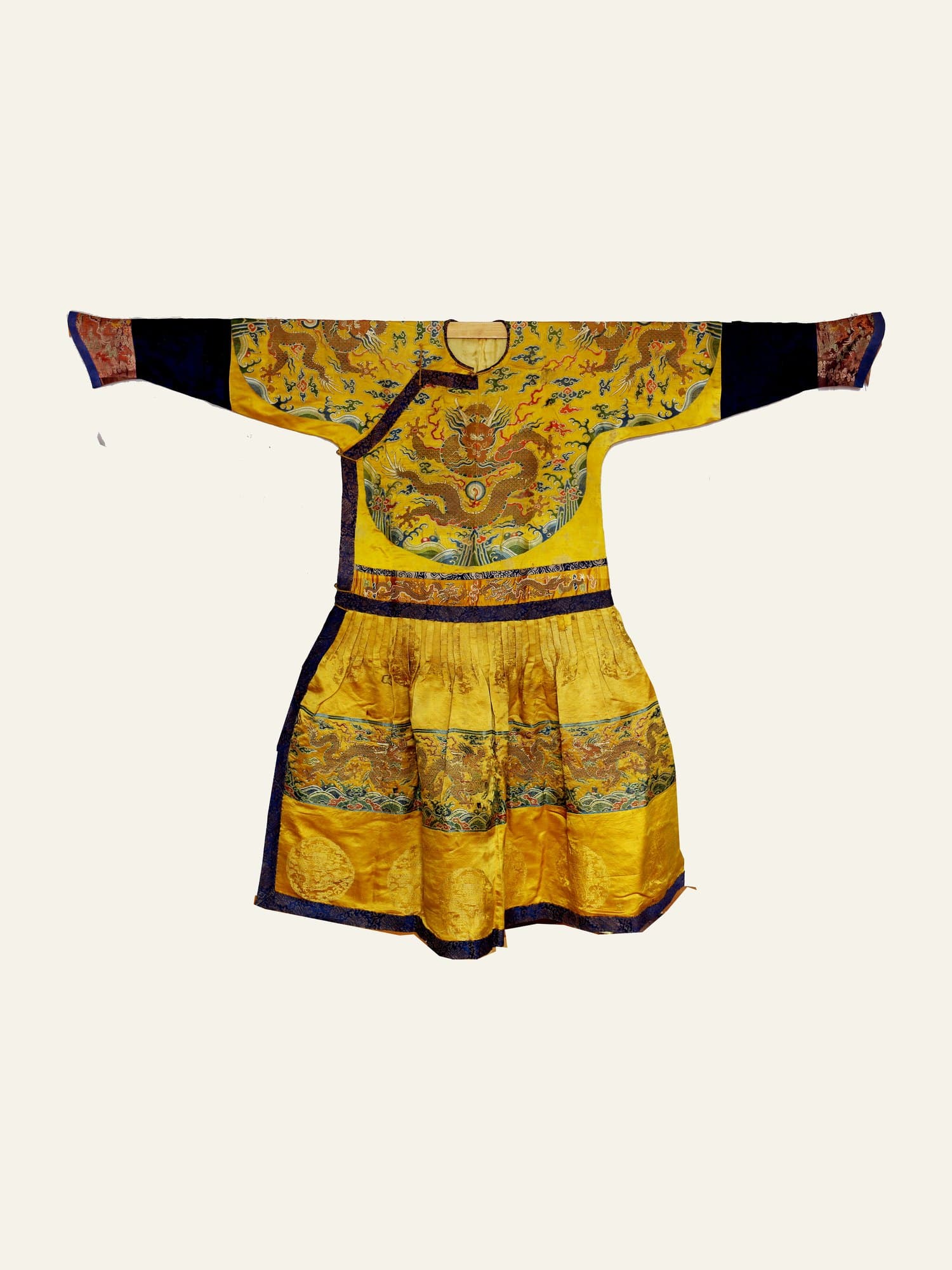
Chaofu Robe with Dragons and Clouds on a Yellow Ground
清代黄地云龙纹朝袍
Qing dynasty · Chaofu robe (formal court dress)
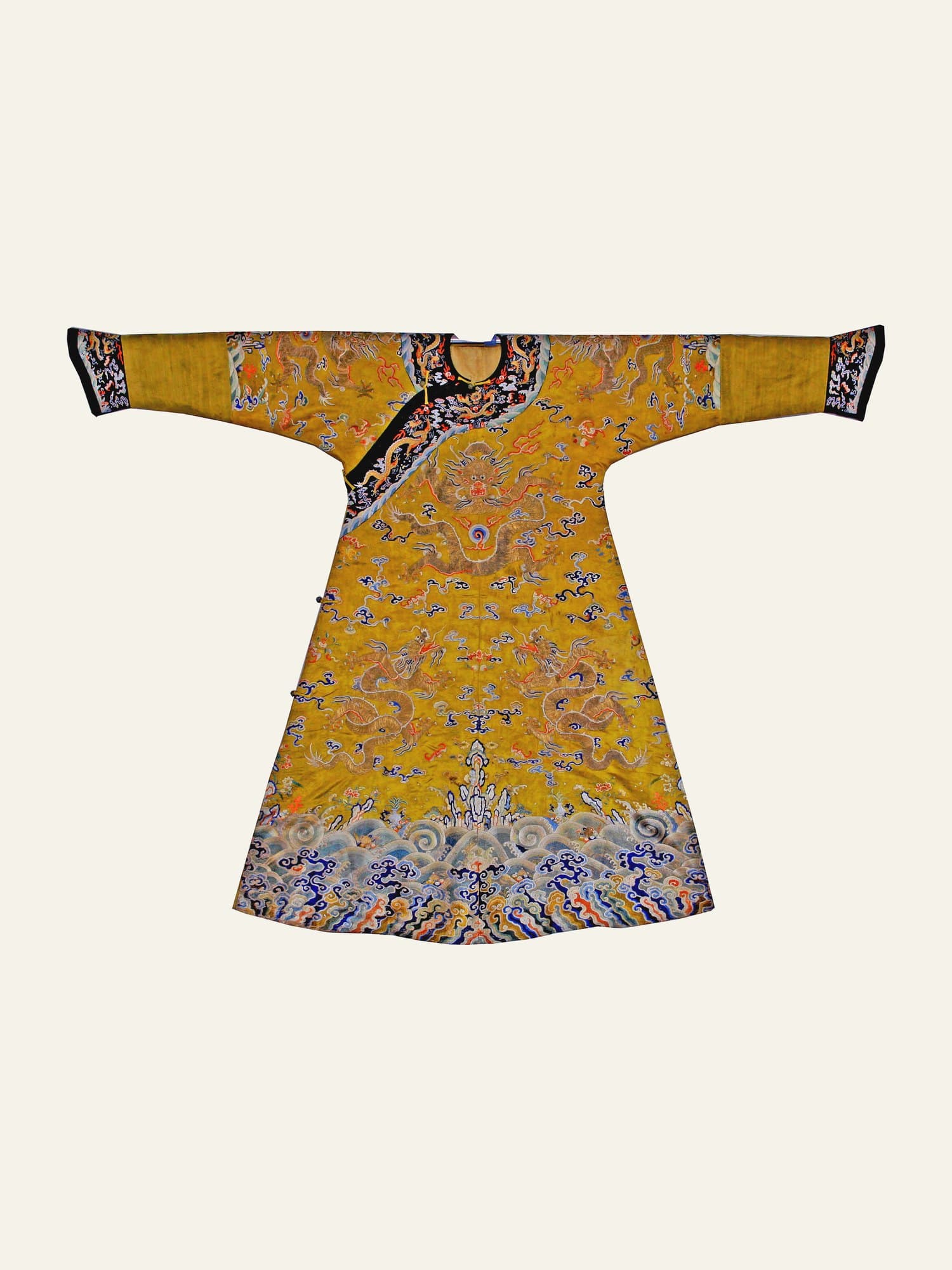
Jifu Robe with Dragons and Clouds on a Yellow Ground
清代黄地云龙纹吉服袍
Qing dynasty · Jifu robe (festive court dress) · Embroidery
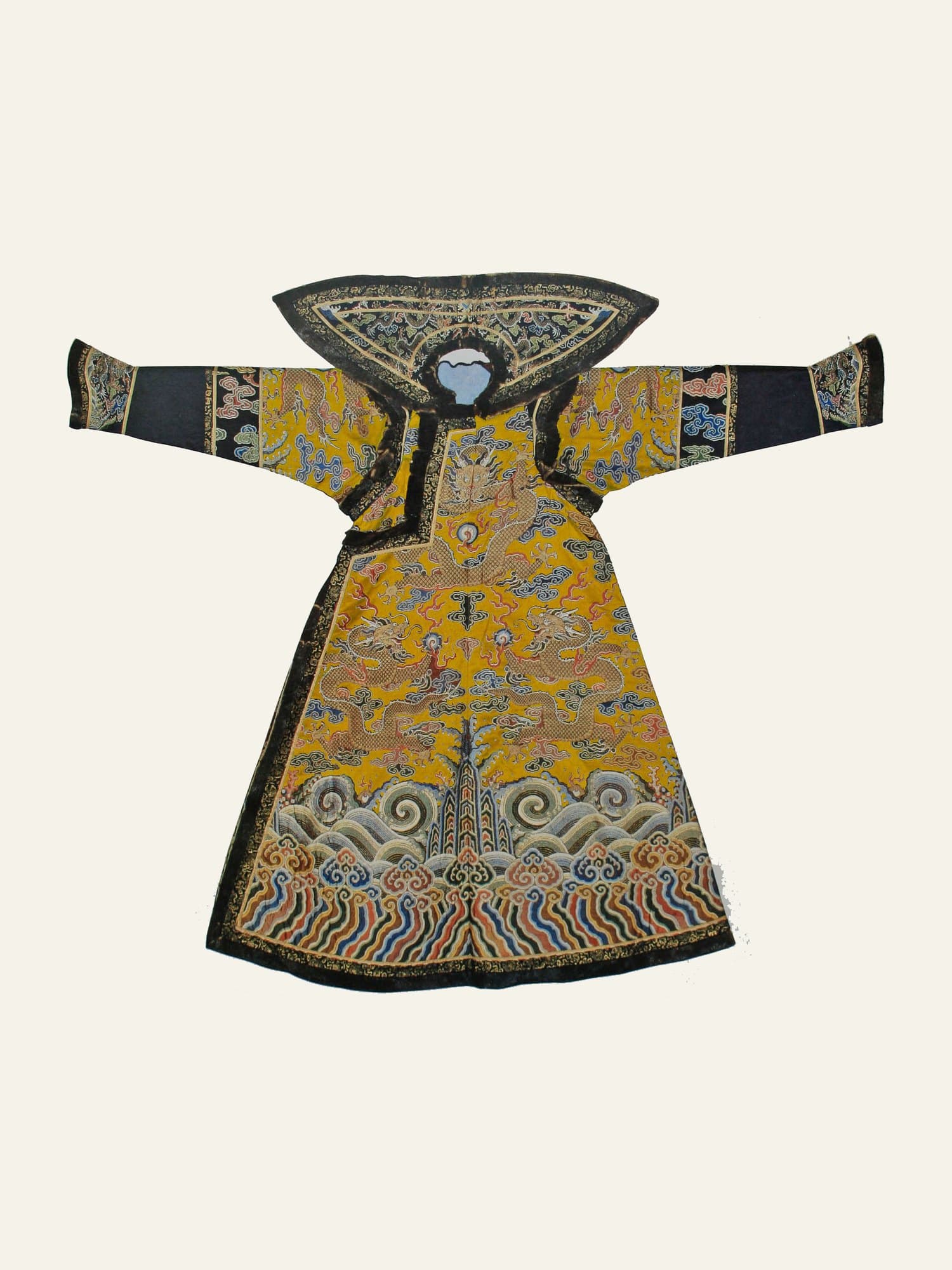
Woman’s Chaofu Robe
清代女朝袍
Qing dynasty · Chaofu robe (formal court dress)
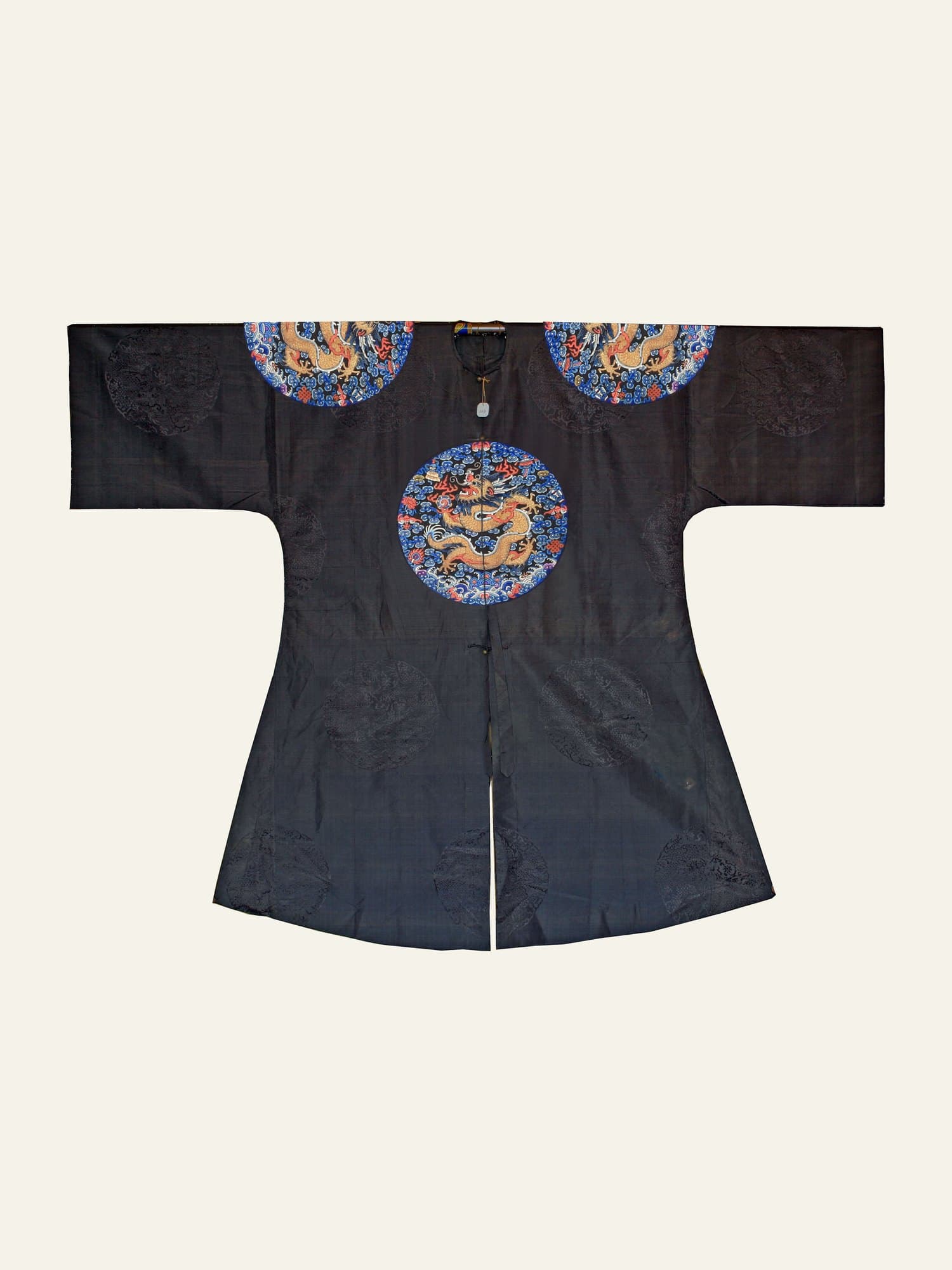
Longgua with Dragon Roundels on a Dark Blue Ground
清代石青地团龙纹龙褂
Qing dynasty · Longgua (dragon surcoat)
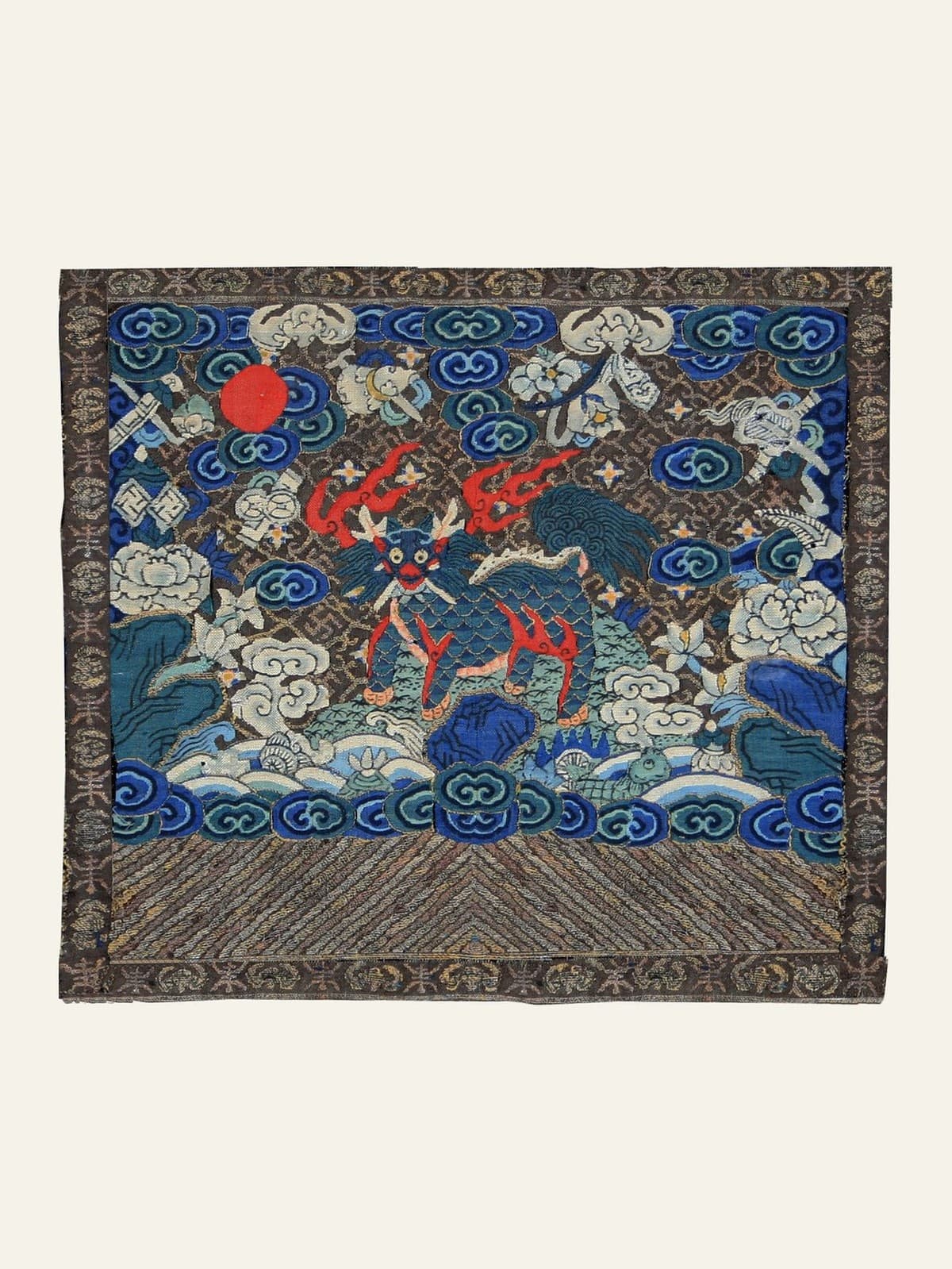
Civil Rank Badge (Buzi)
清代文官补子
Qing dynasty · Rank badge (buzi) · Embroidery
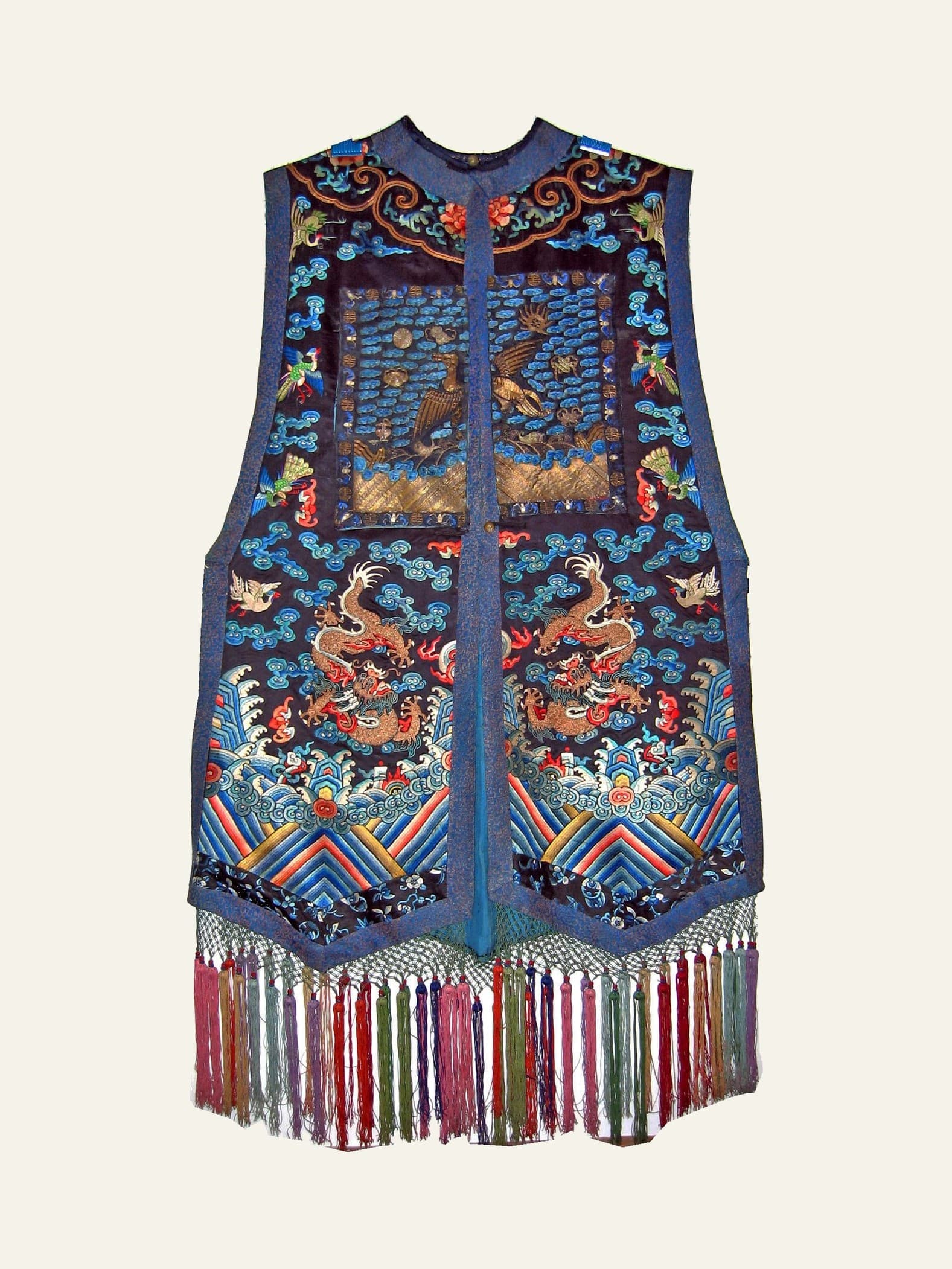
Xiapei with Cloud-Collar Construction
清代云肩式霞帔
Qing dynasty · Xiapei (ceremonial stole) · Embroidery
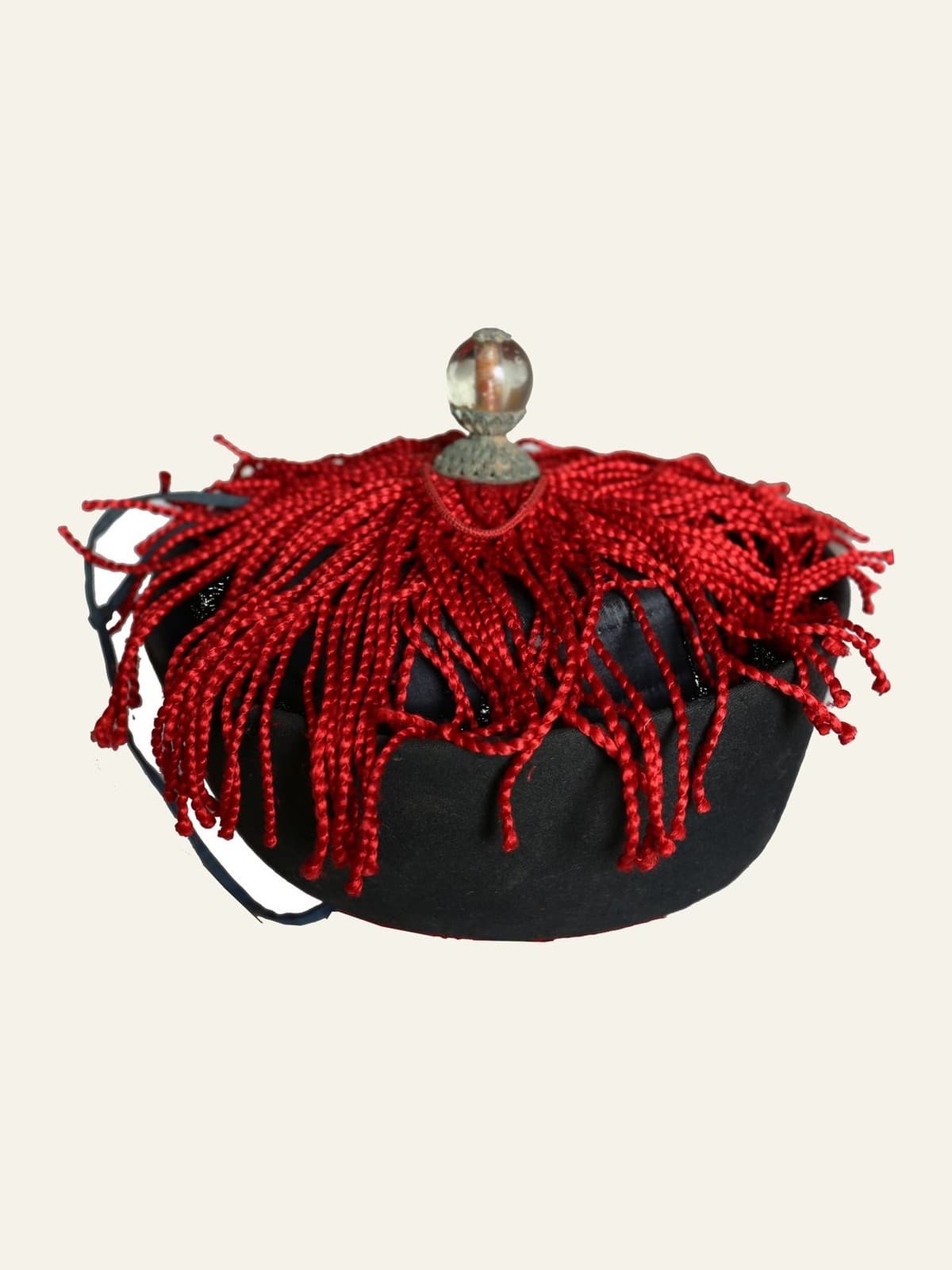
Chaoguan (Court Hat)
清代朝冠
Qing dynasty · Court hat
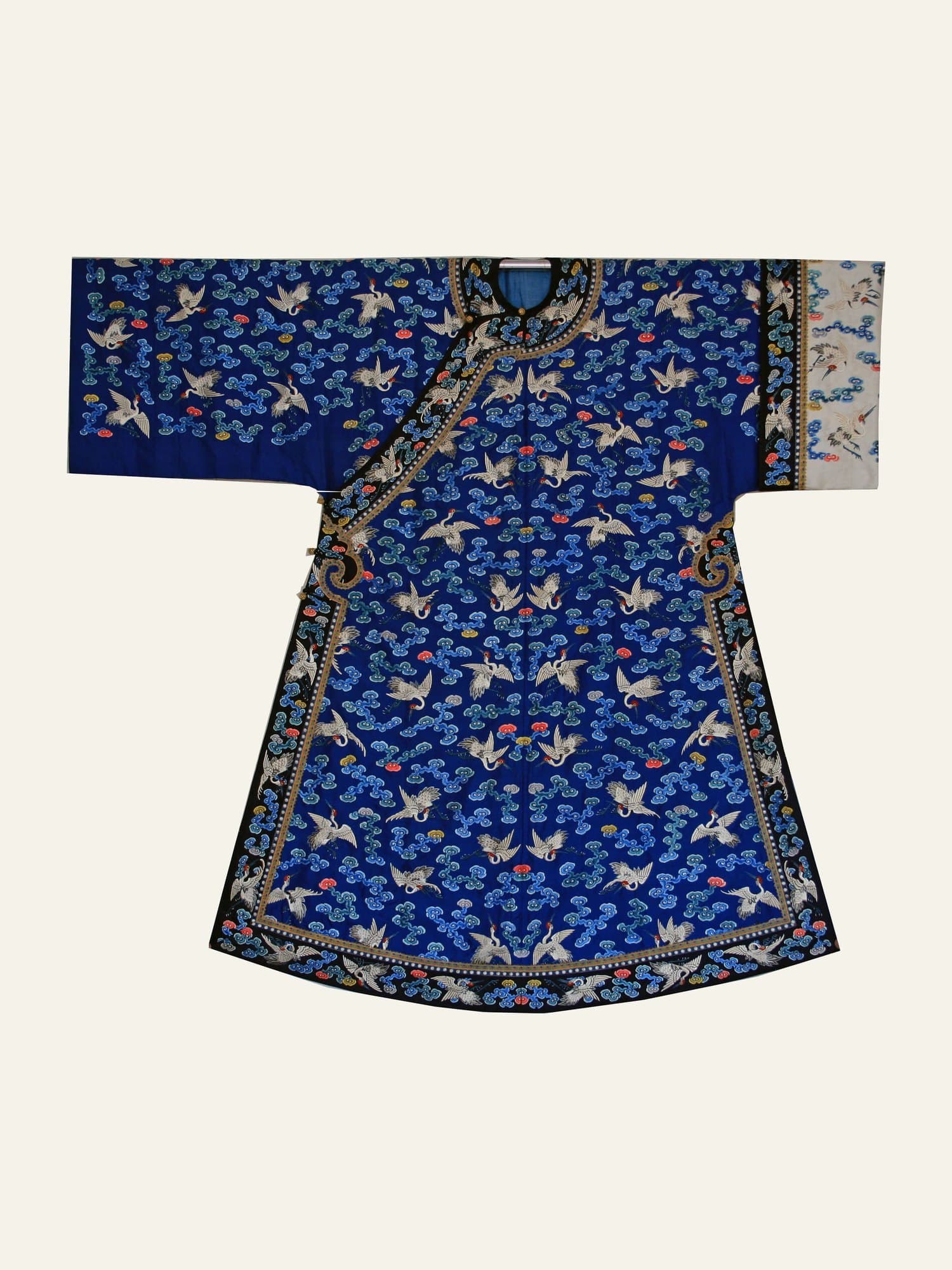
Changyi with Butterflies on a Blue Ground
清代蓝地蝶纹氅衣
Qing dynasty · Changyi (informal woman’s robe) · Embroidery
The Motifs
Motifs are not catalogued as patterns. The same motif is gathered as it appears across different objects, because the differences — the spacing of a dragon’s mane, the proportion of a cloud’s head to its tail, the number of registers in a wave border — are concrete evidence for dating and attribution, not decorative knowledge.
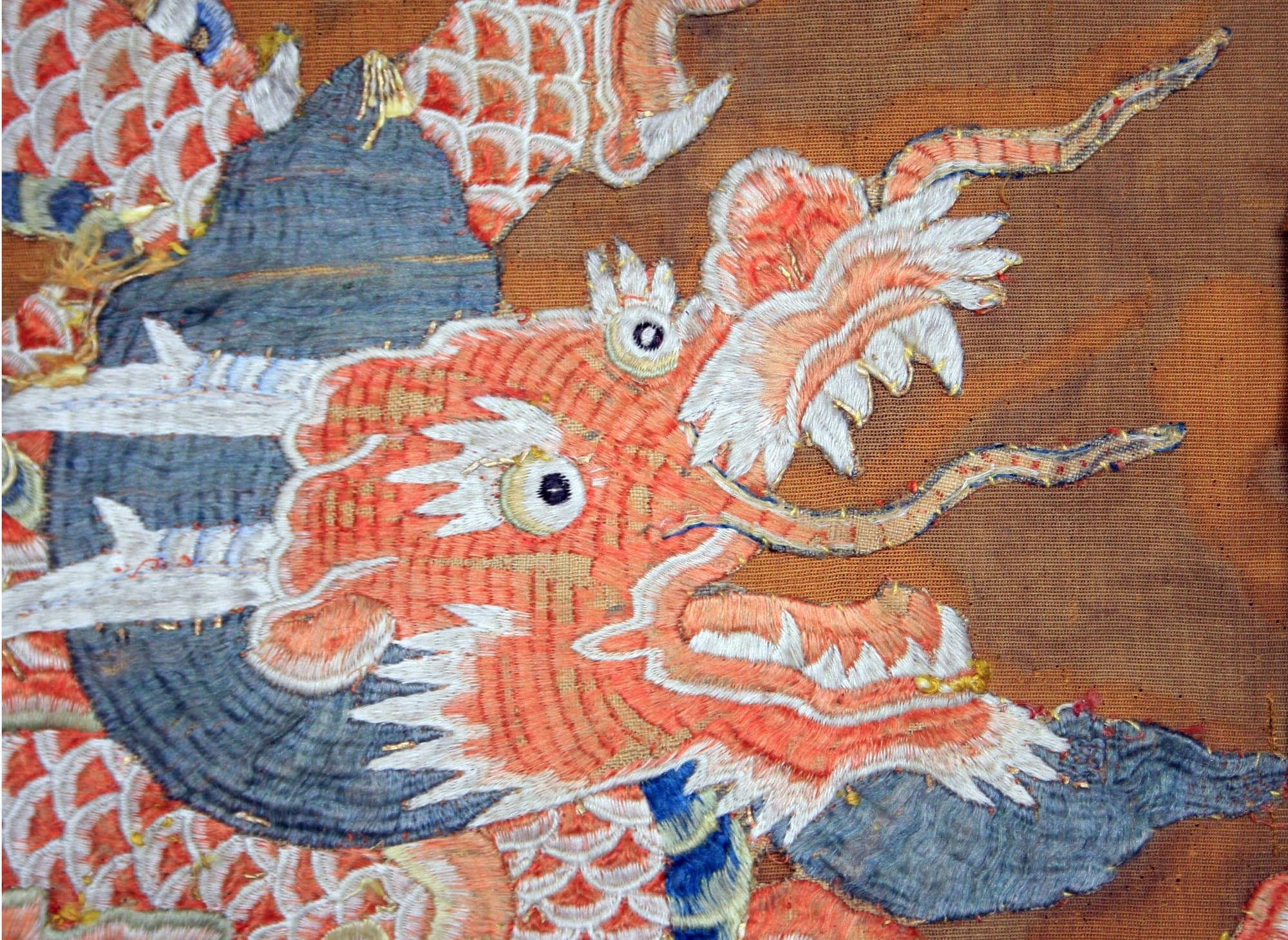
Dragon
longwen
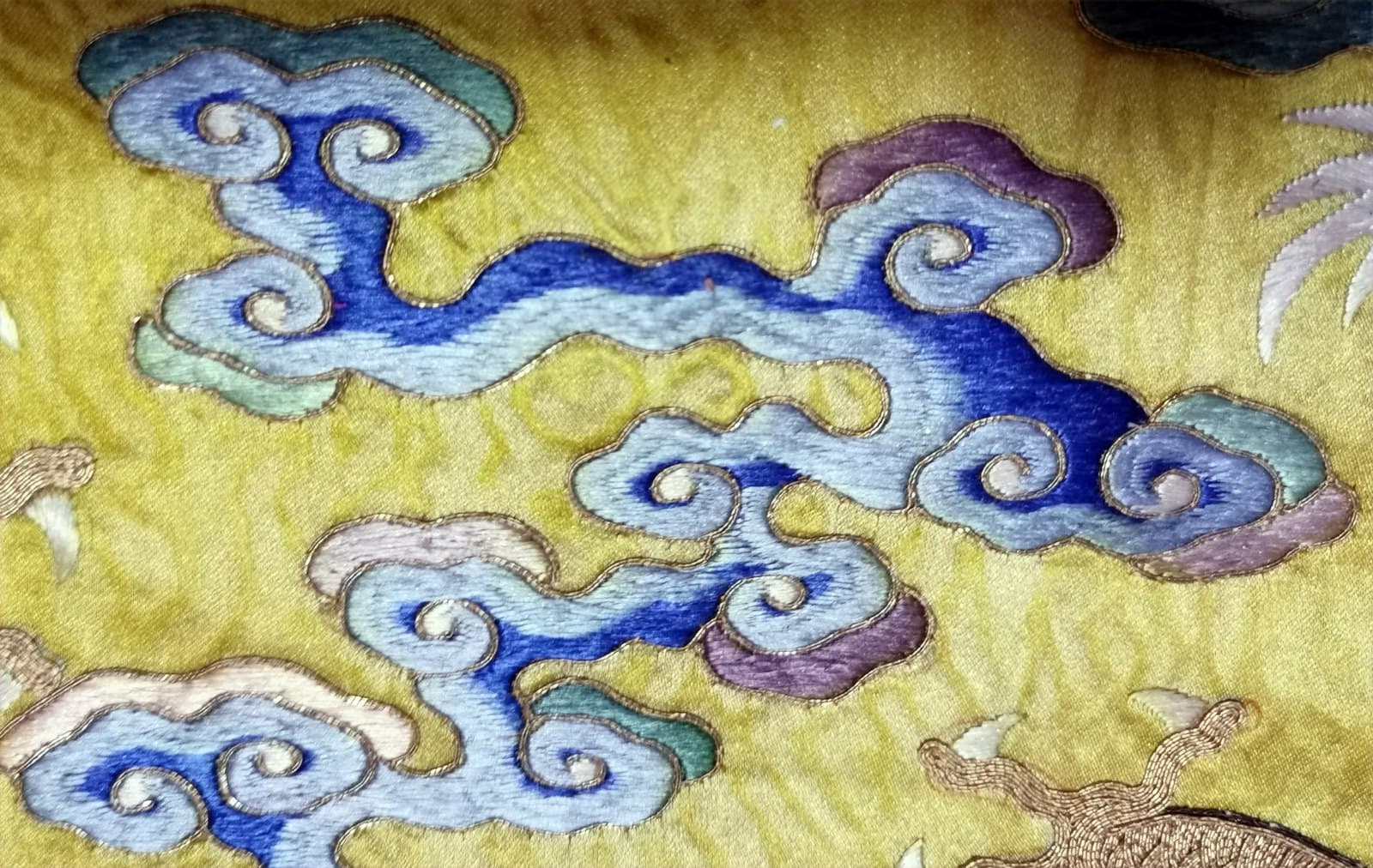
Cloud
yunwen
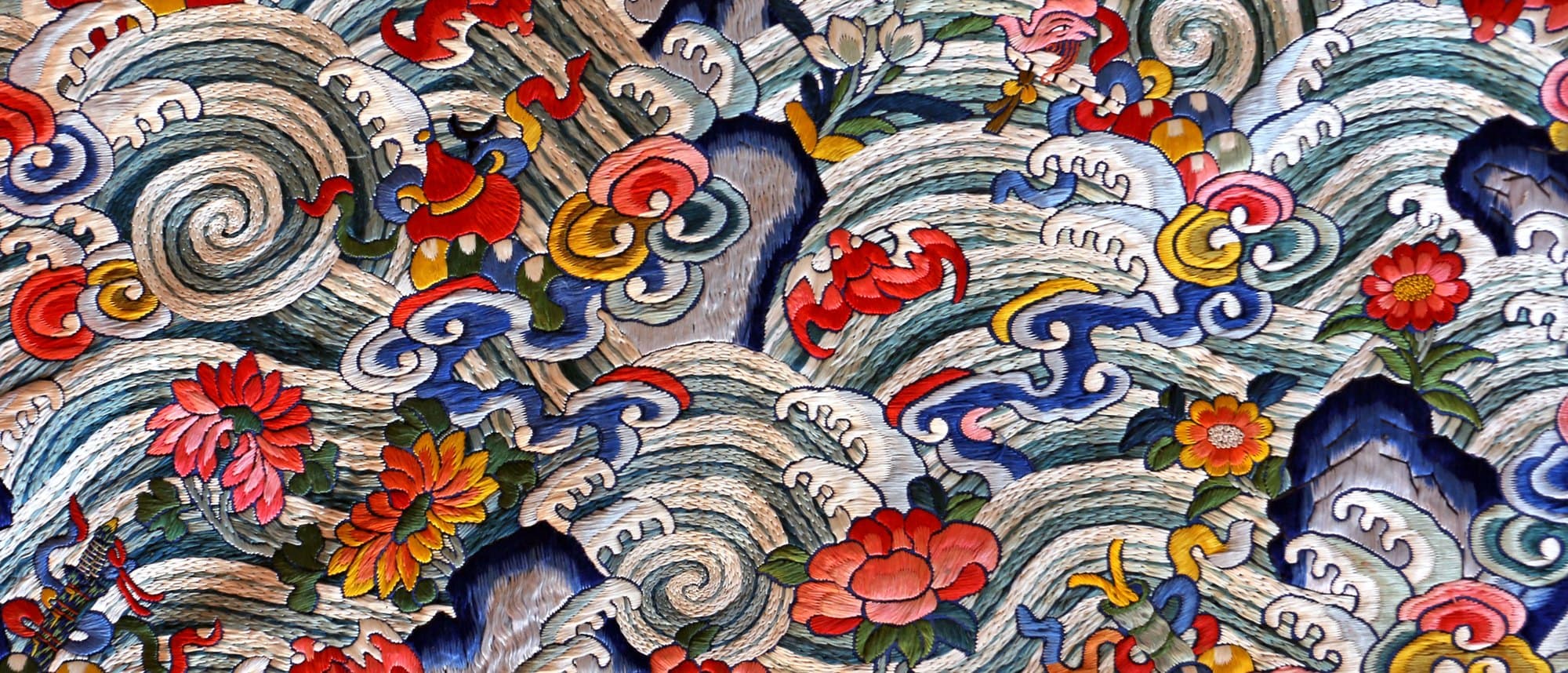
Wave and Mountain Motif
haishui jiangya
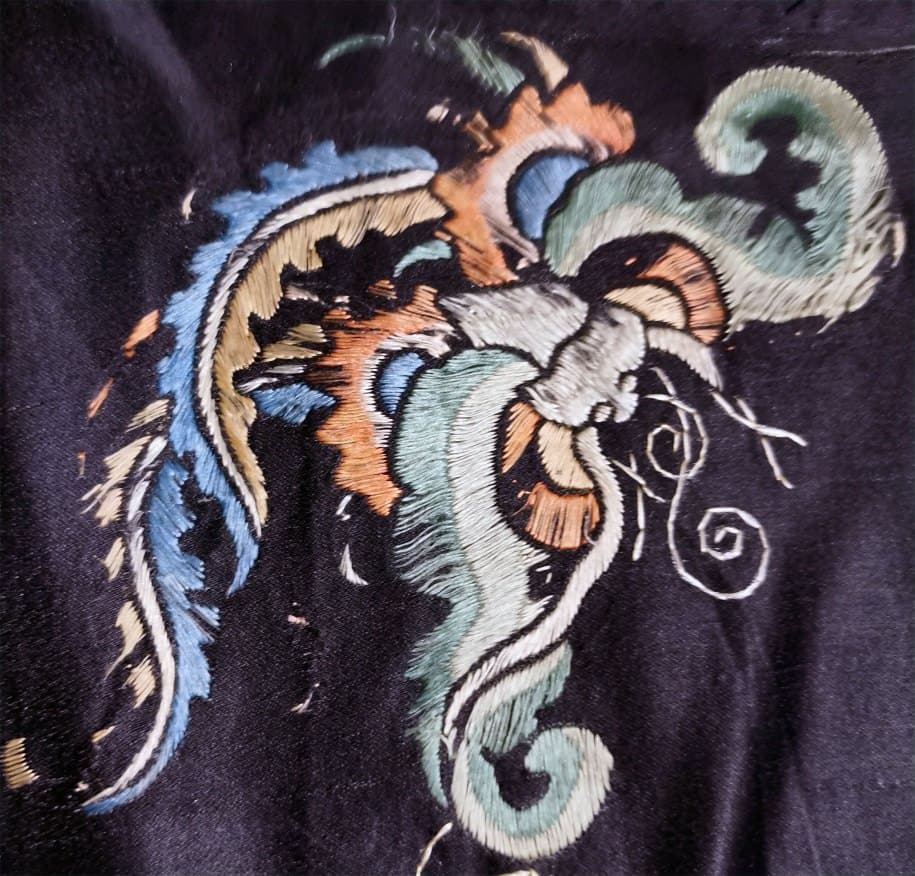
Butterfly
hudie
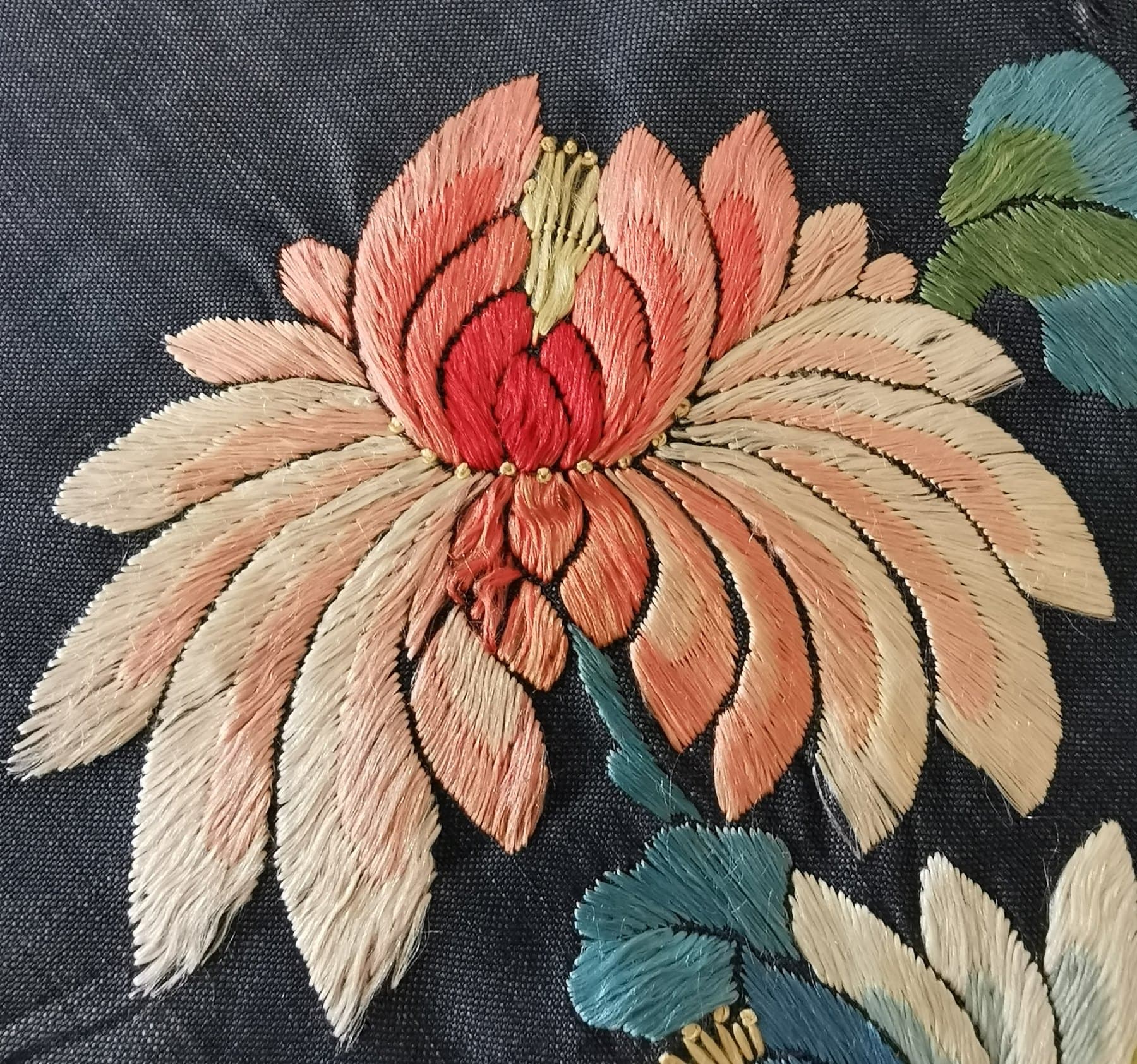
Peony
mudan
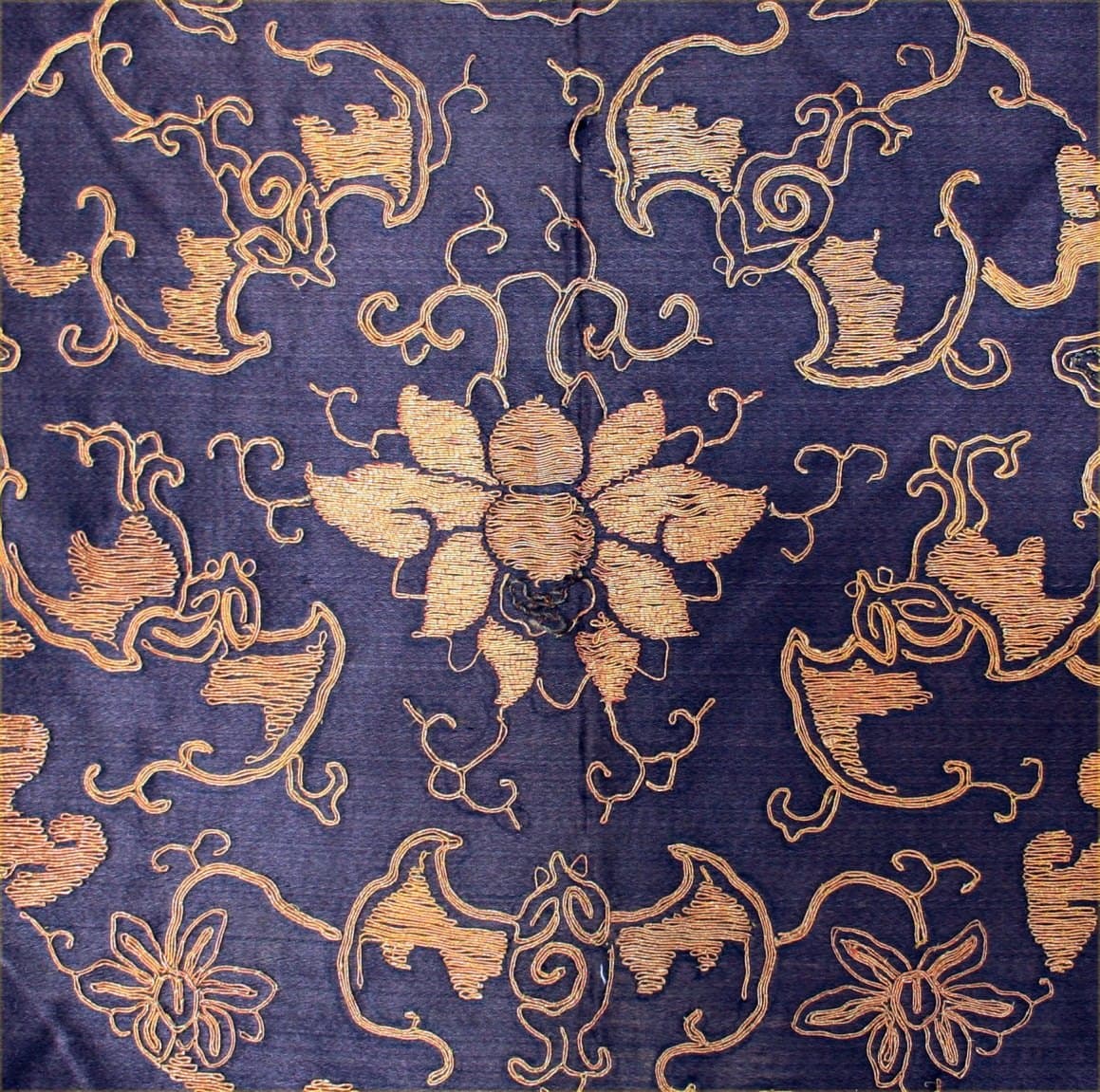
Scrolling Lotus
chanzhilian
Into public collections
97 objects given to the Tsinghua University Art Museum
In August 2022 Xiaojian Li donated ninety-seven objects from his collection of Chinese textiles, embroidery and dress to the Tsinghua University Art Museum: twelve garments and eighty-five textiles and embroideries.
A textile in private hands and the same textile in a public collection do not carry the same scholarly value. Once accessioned it has a number and a catalogue record, researchers can consult it through the museum’s own procedure, and work on it can accumulate.
Donation record and certificates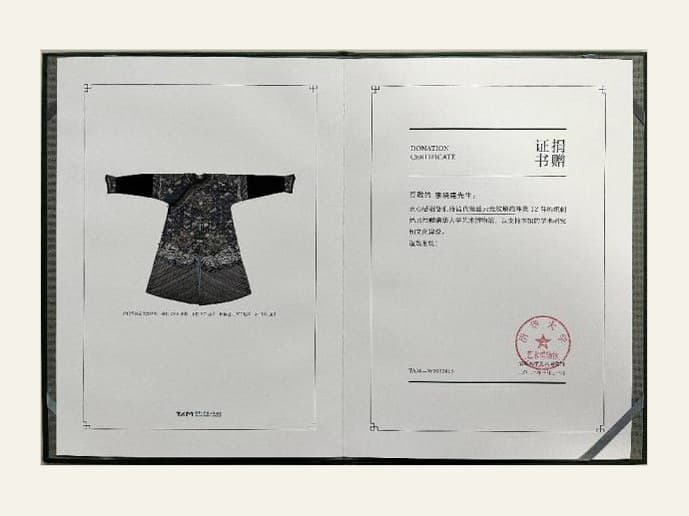
Donation certificate · twelve garments