Cloud
云纹 · yunwen
Cloud motifs do structural work in Qing textiles — dividing, linking and filling — and their form moves from the lingzhi-headed cloud of earlier periods towards regularised ruyi clusters and long trailing bands.
Historical development
The cloud has no fixed shape. Unlike the dragon it is not assigned a set form or position, and is generally used to fill what other motifs leave empty — which makes it the most sensitive register of a period’s compositional habits.
Early clouds are simple: an arc and a hook. By the Ming the motif has acquired a spiralling head, a pointed tail and a body joining the two. On Ming robes the stitches are short and dense, and the needle follows the turns of the design.
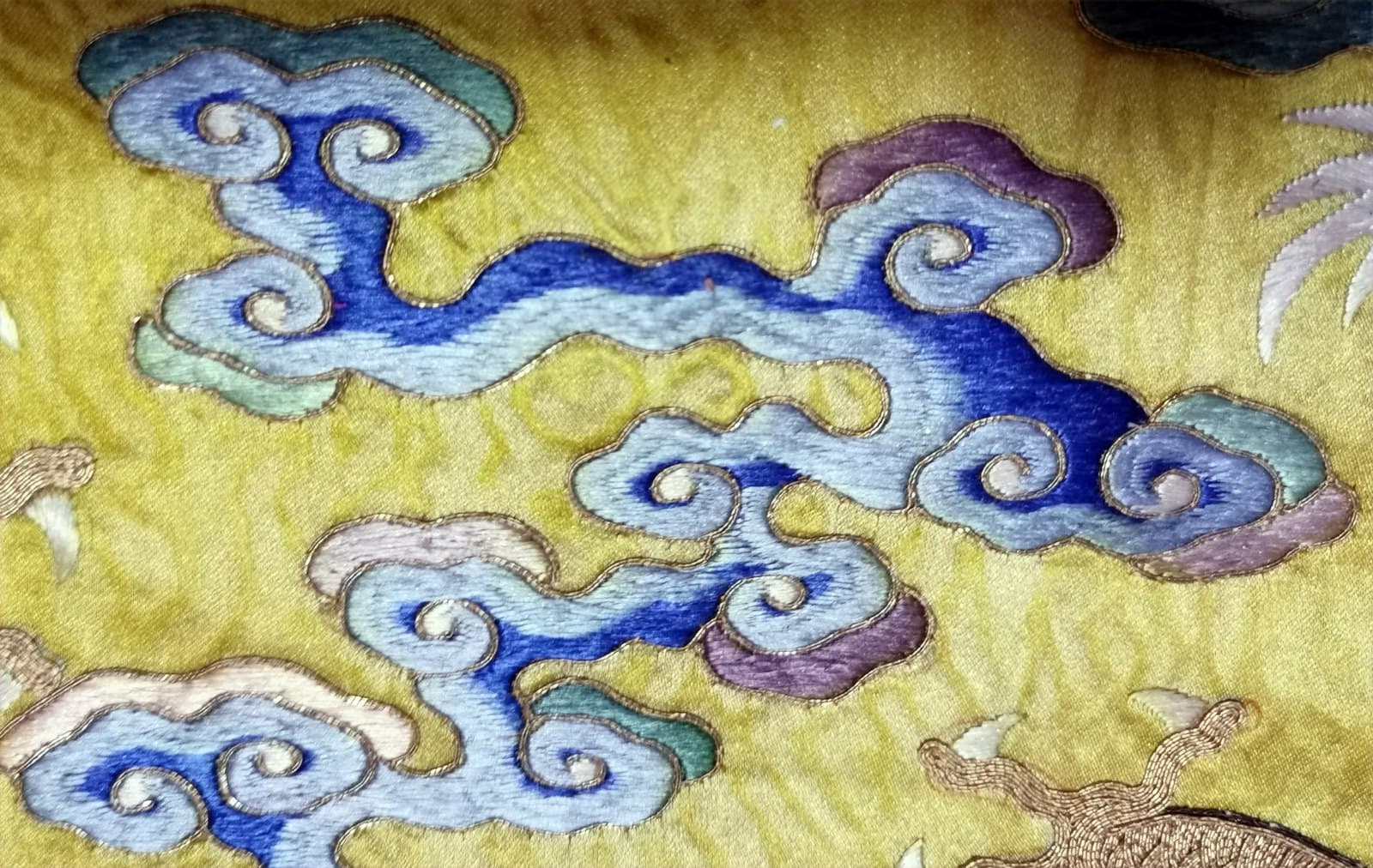
Early Qing clouds have somewhat larger heads, long slender bodies and a wide span. They are worked in long parallel horizontal stitches, with colour changes made through uneven staggered stitching — the two extremes of tone laid first, the transition filled afterwards.
One mid-Qianlong type has a long slender body with no tail and a head worked in several colours. The composition is fluent, the ground evenly reserved; in colour and execution it is the finest moment of the tradition.
Late Qing clouds are dense and formulaic, with many heads and short bodies, the palette narrowed largely to blue and green, and the earlier fluency lost. A further late type dispenses with body and tail altogether, pairing two semicircular heads; it appears from the Jiaqing reign but is not common.
As to stitch: clouds are almost always worked in parallel horizontal rows, the stitches becoming shorter and denser the later the date. The lighter outer colour is laid first and the darker inner colour worked into it with considerable overlap.
Cultural meaning
Clouds signify auspicious omen and the celestial realm, while compositionally serving to support and frame the principal motif.
The density and arrangement of clouds is often a better period indicator than the shape of any single unit. Read apart from the combinations in which they appear, cloud symbolism easily becomes speculation.
Plates
The same motif as it appears on different objects, gathered for comparison. Dates and provenance for each example are to be established and added.
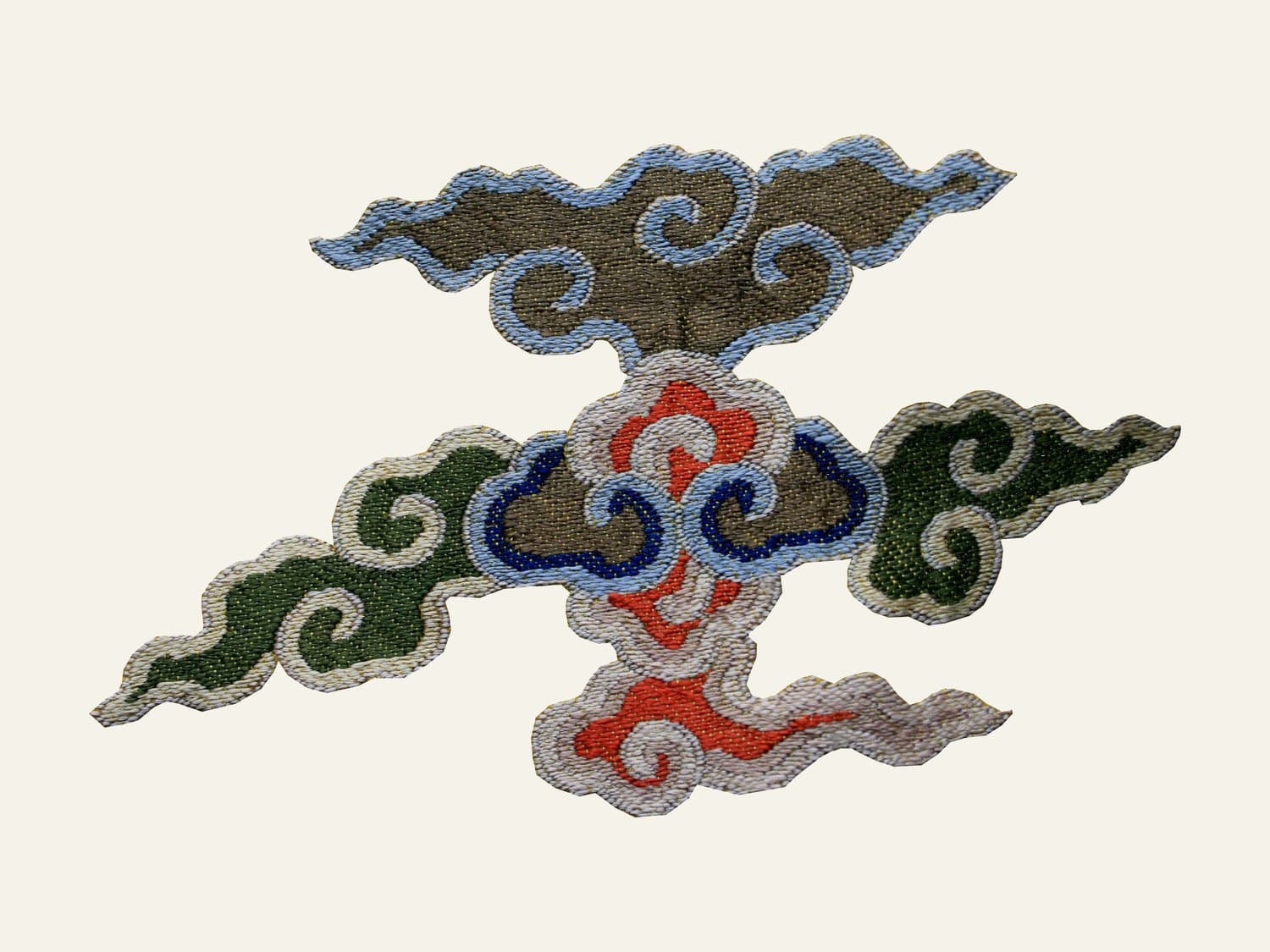
Head, body and tail all present
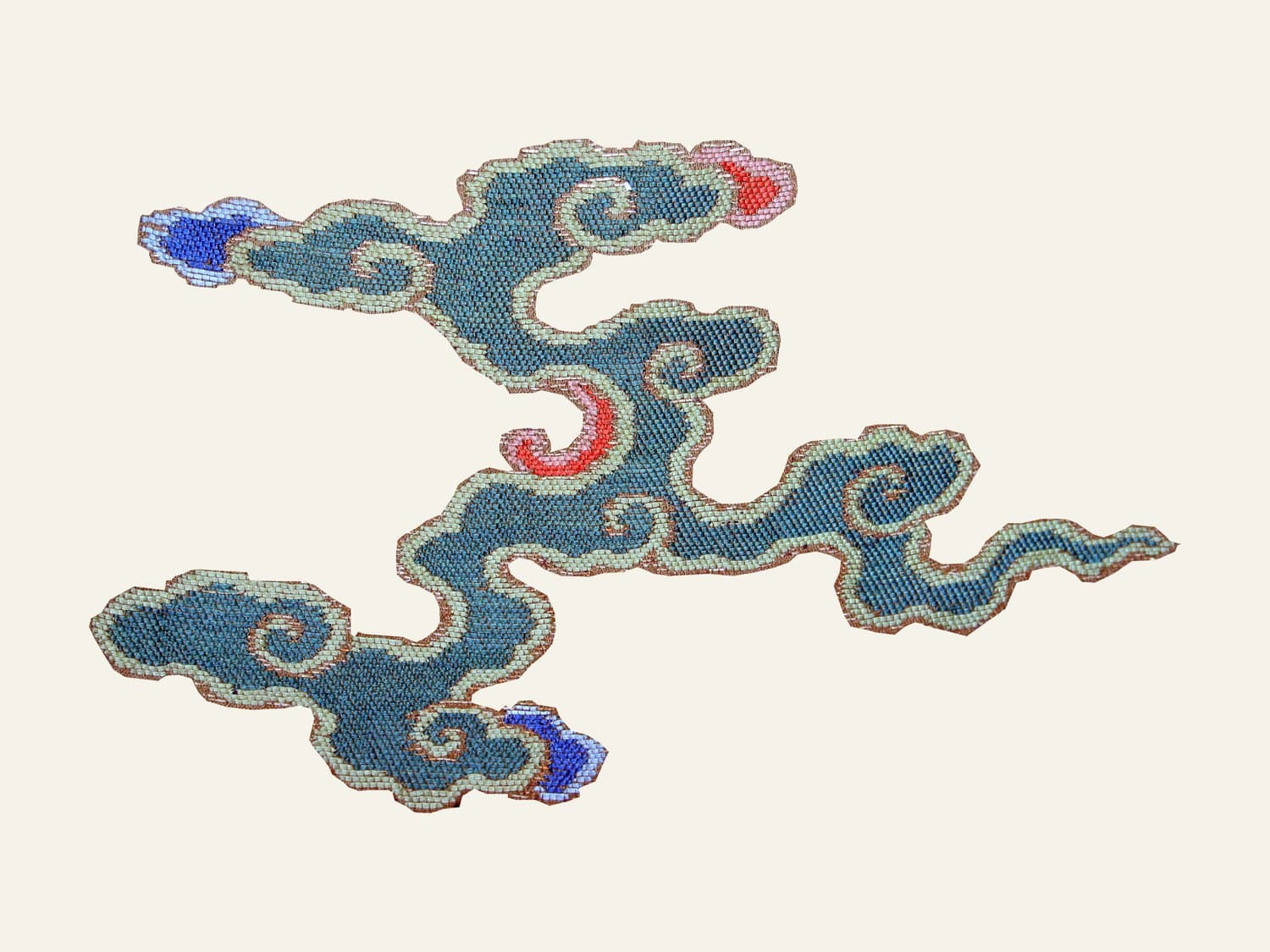
Cloud unit (ii)
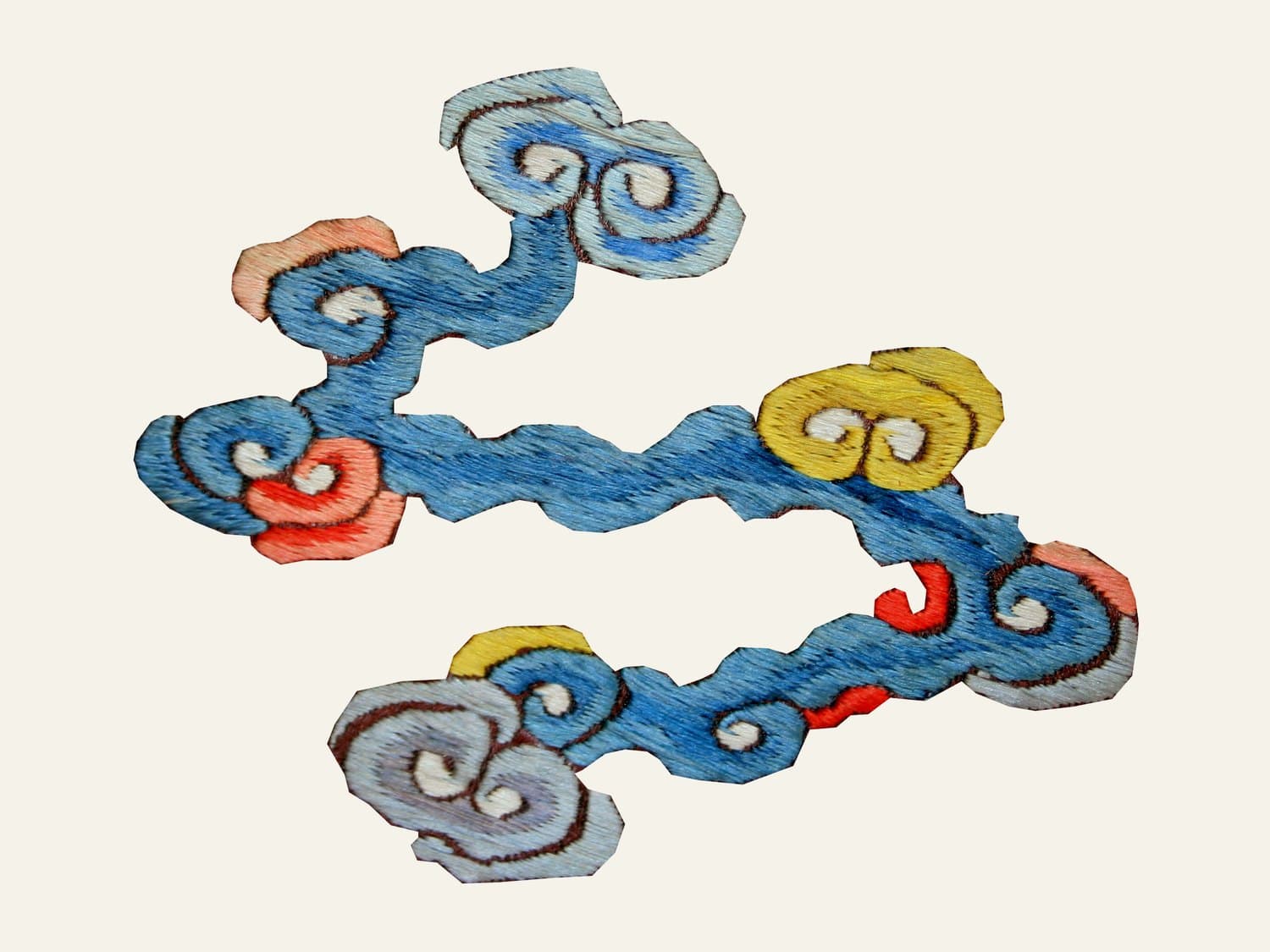
Cloud unit (iii)
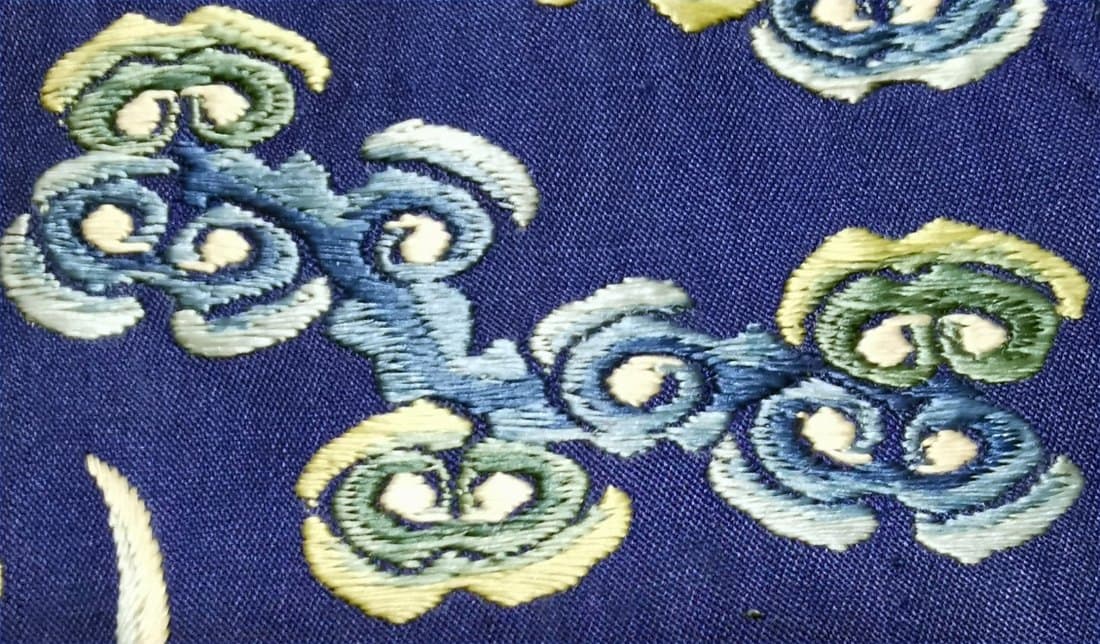
Cloud motif (i)
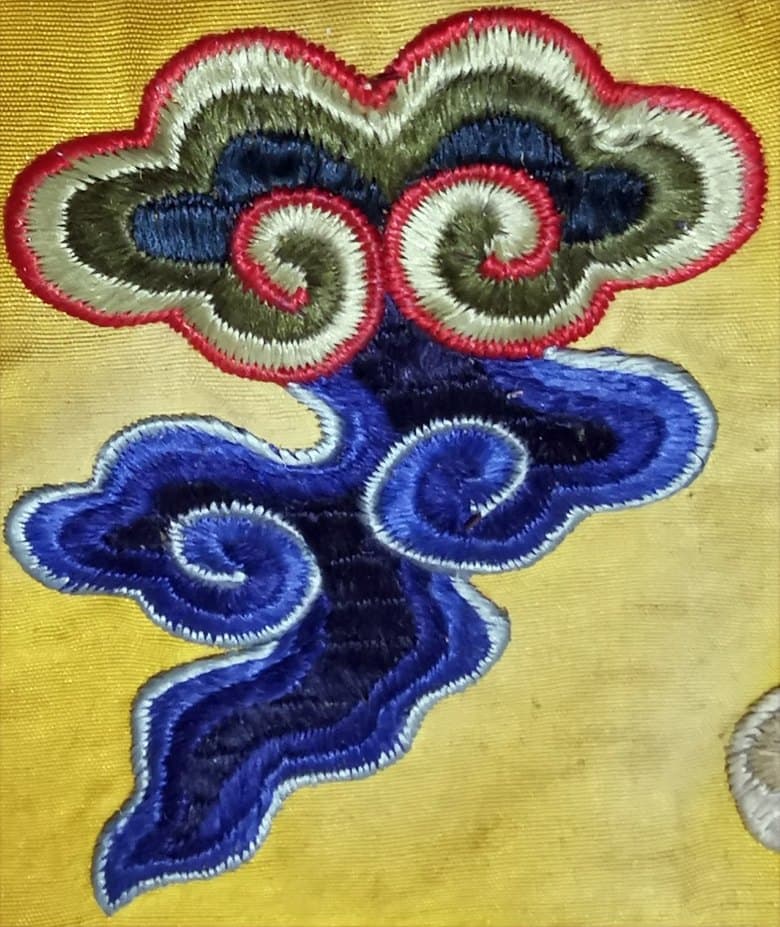
Cloud motif (ii)
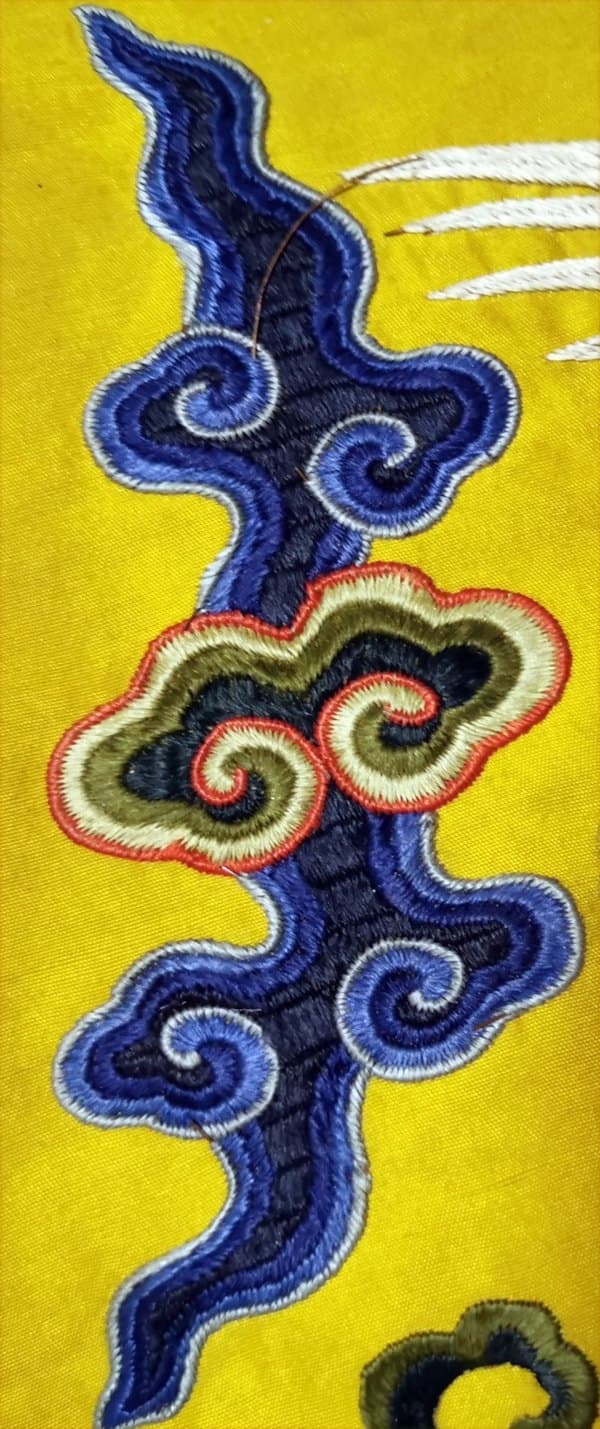
Long slender body, no tail
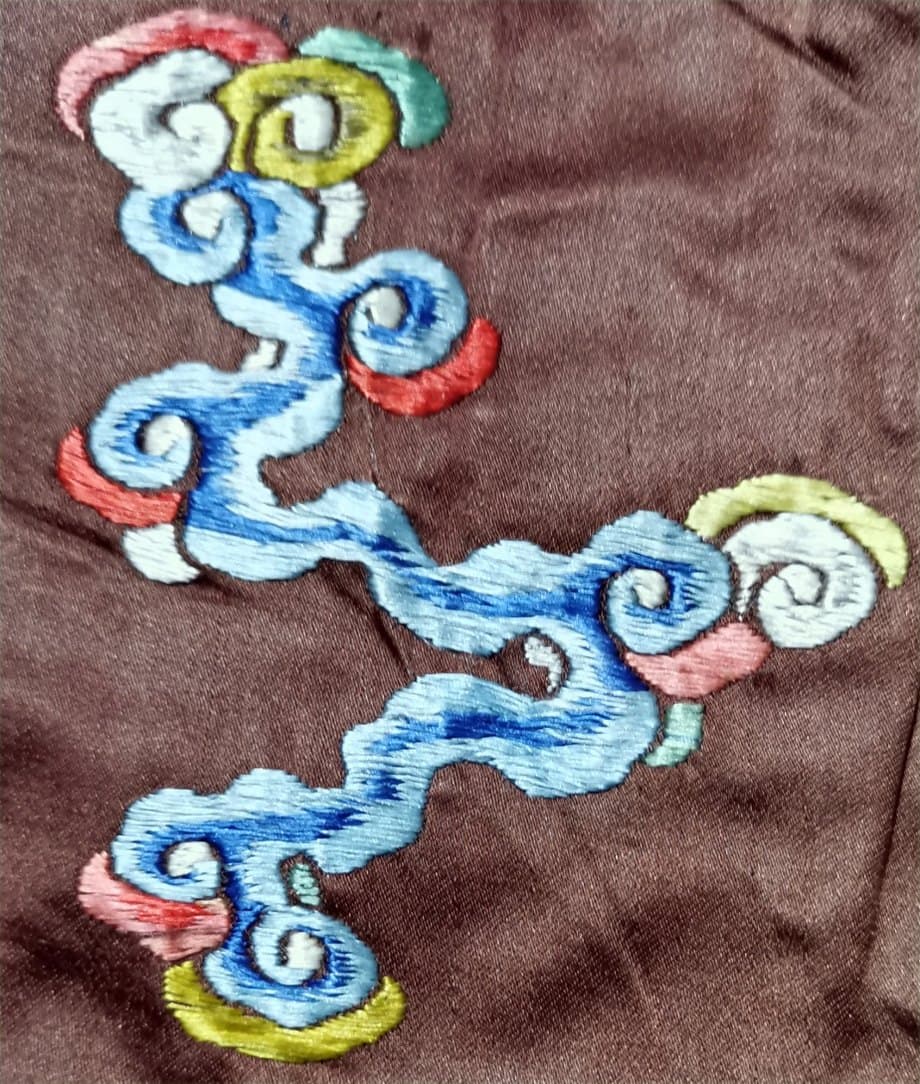
Cloud motif (iv)
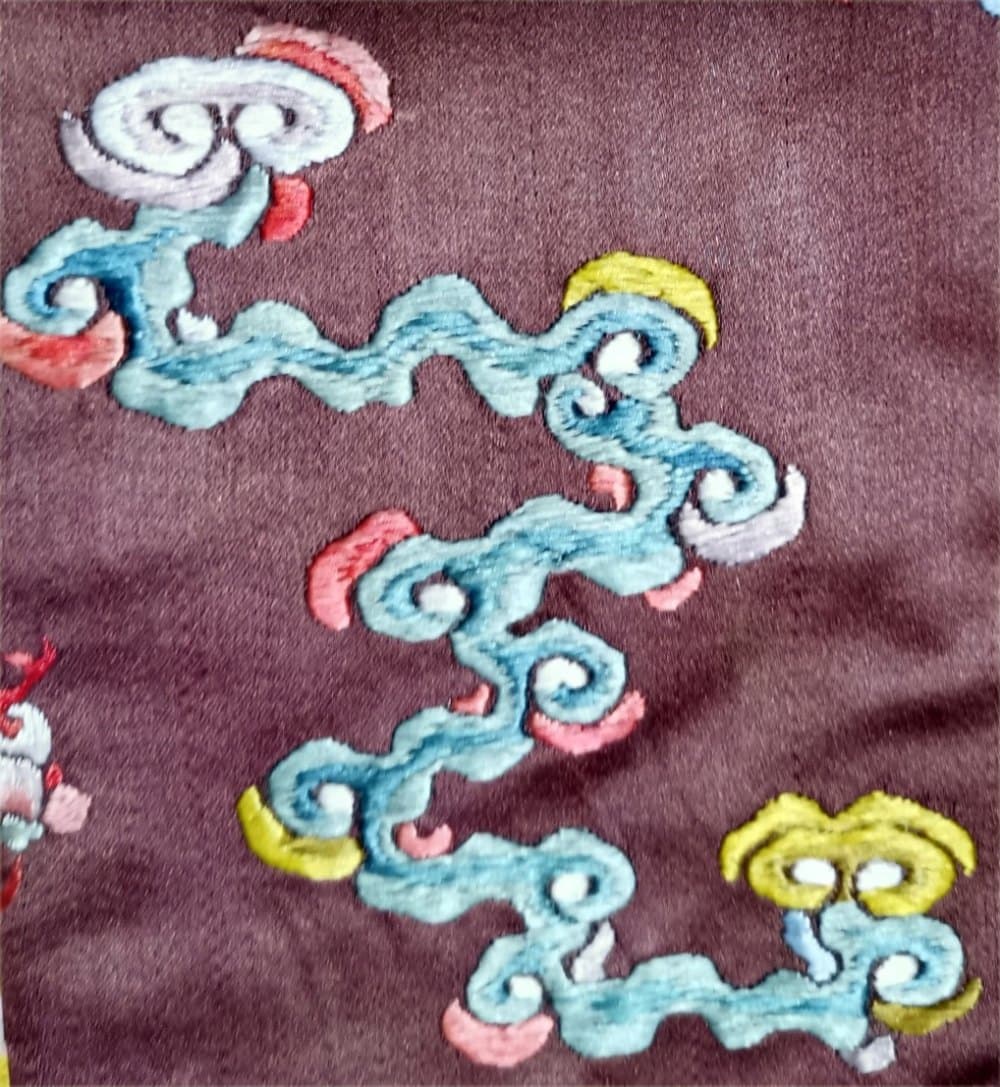
Cloud motif (v)
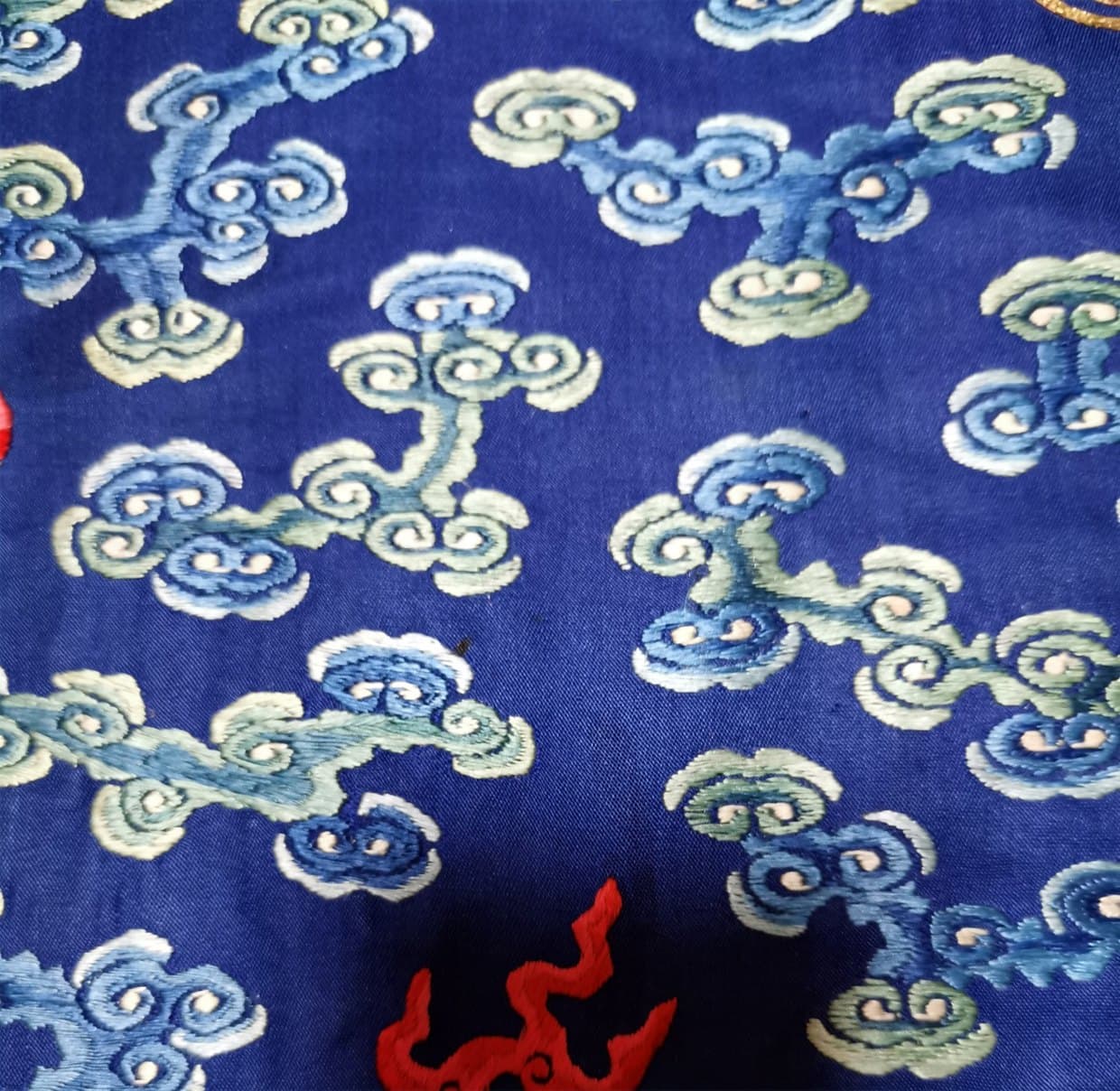
Tails lengthened and hooked into one another
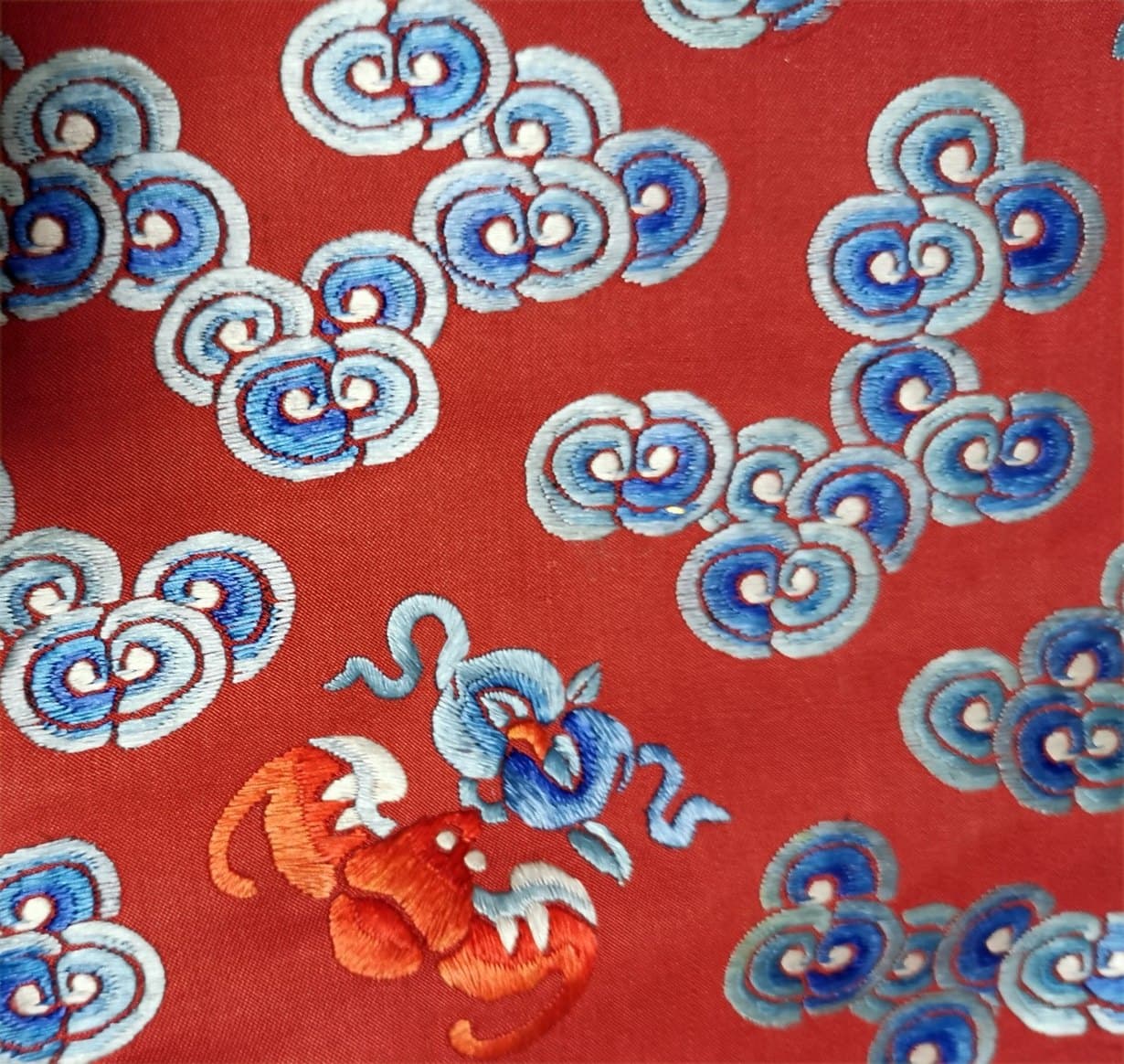
Cloud motif (vii)
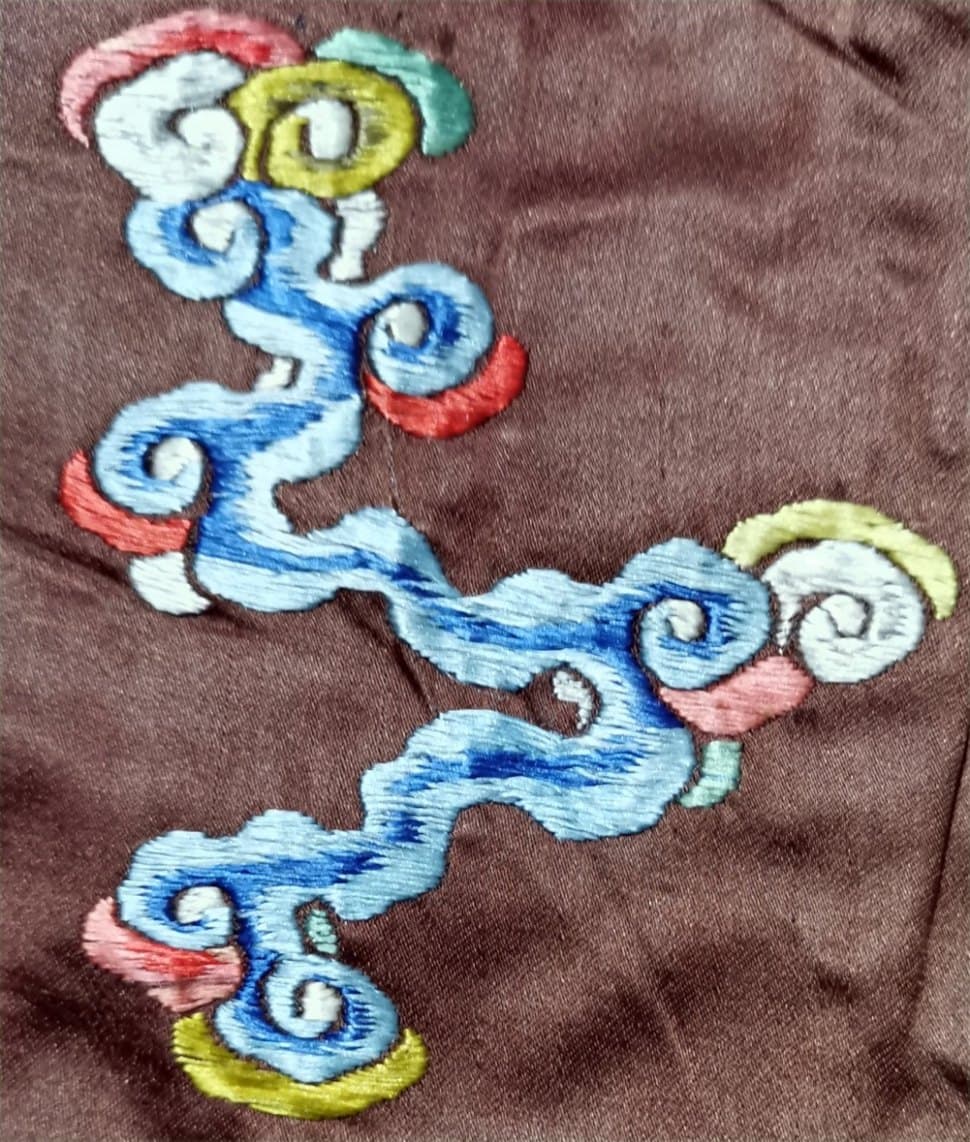
Cloud motif (viii)
Related Objects
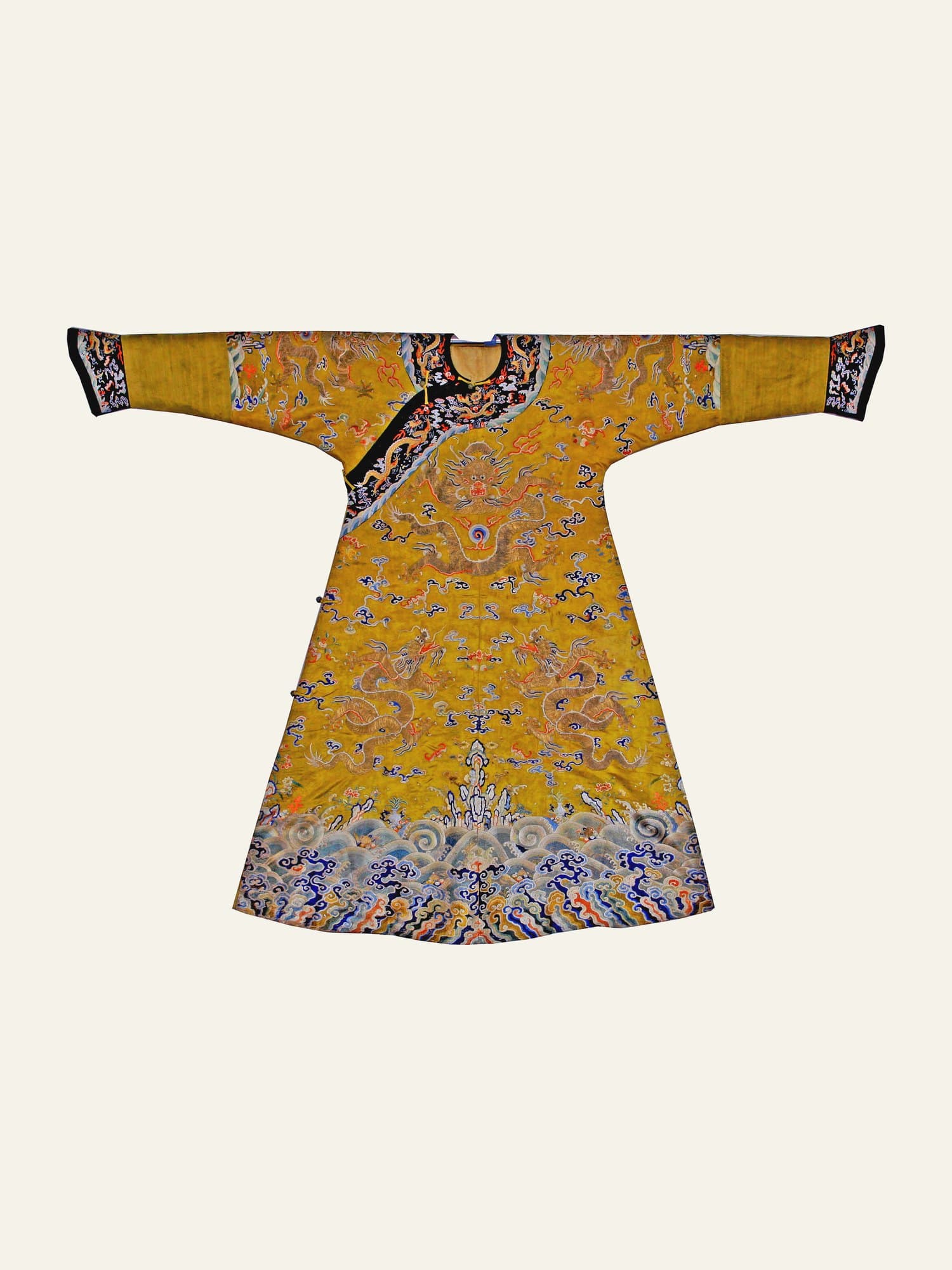
Jifu Robe with Dragons and Clouds on a Yellow Ground
清代黄地云龙纹吉服袍
Qing dynasty · Jifu robe (festive court dress)
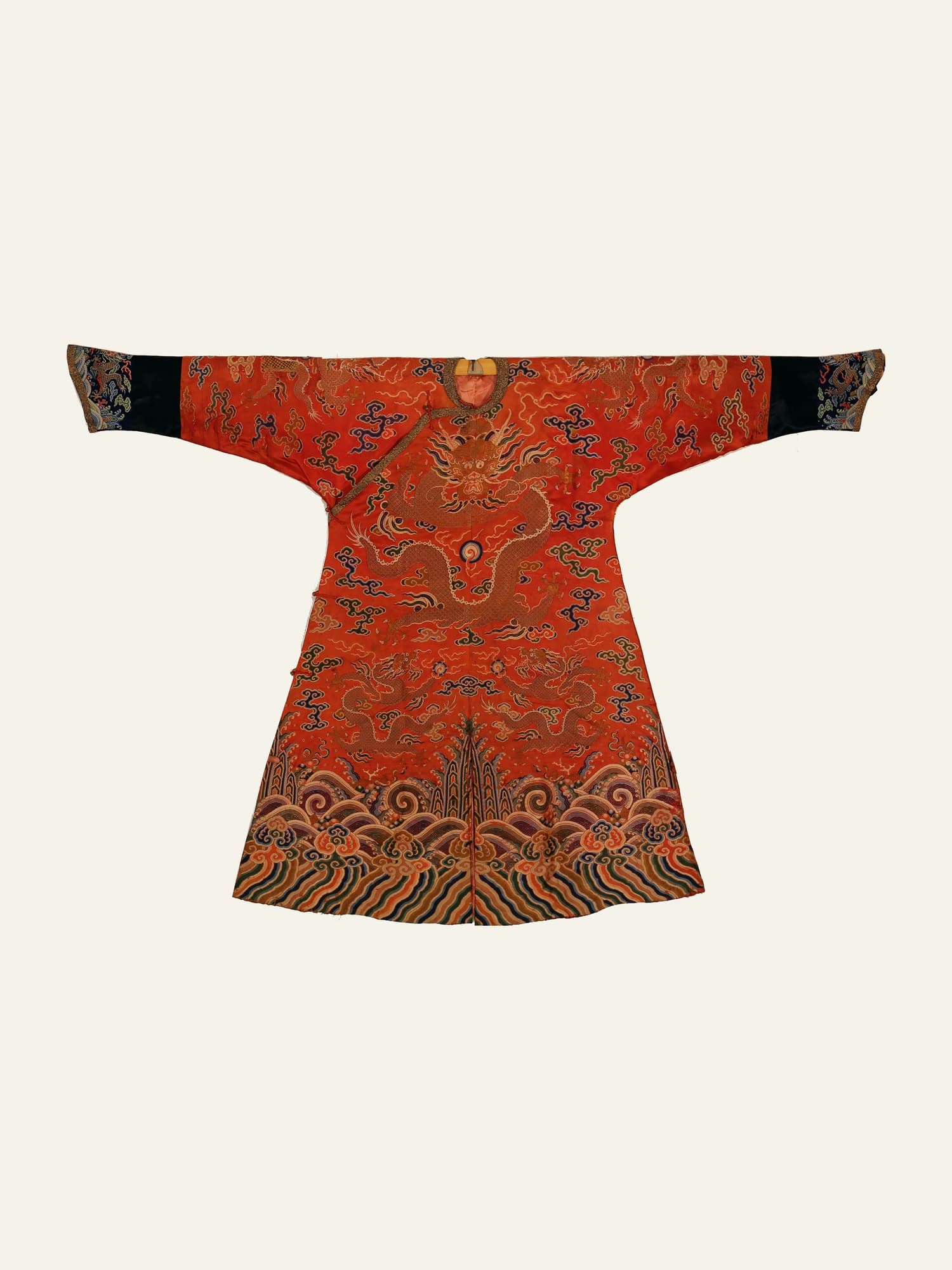
Jifu Robe with Dragons and Clouds on a Red Ground
清代红地云龙纹吉服袍
Qing dynasty · Jifu robe (festive court dress)
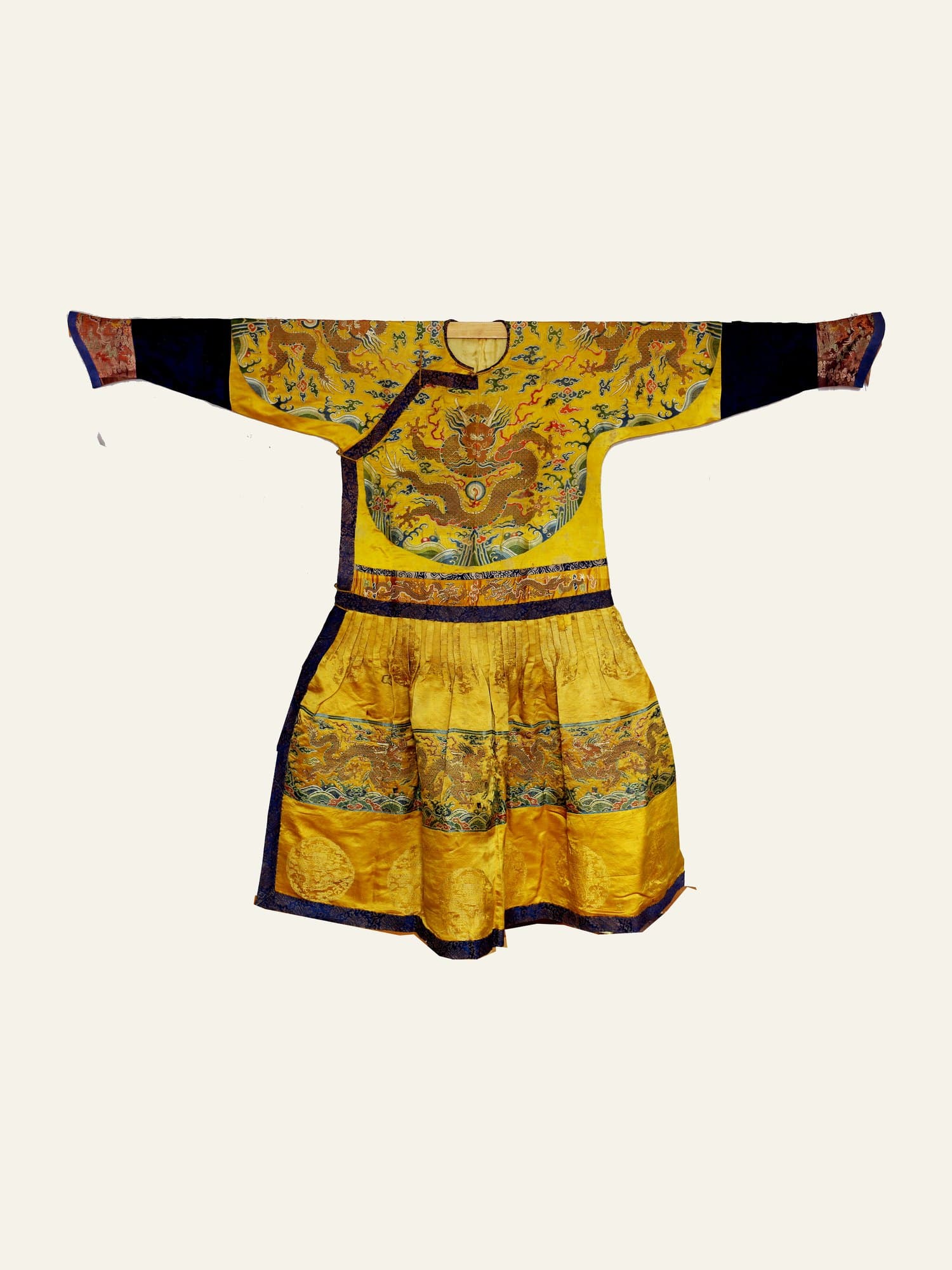
Chaofu Robe with Dragons and Clouds on a Yellow Ground
清代黄地云龙纹朝袍
Qing dynasty · Chaofu robe (formal court dress)