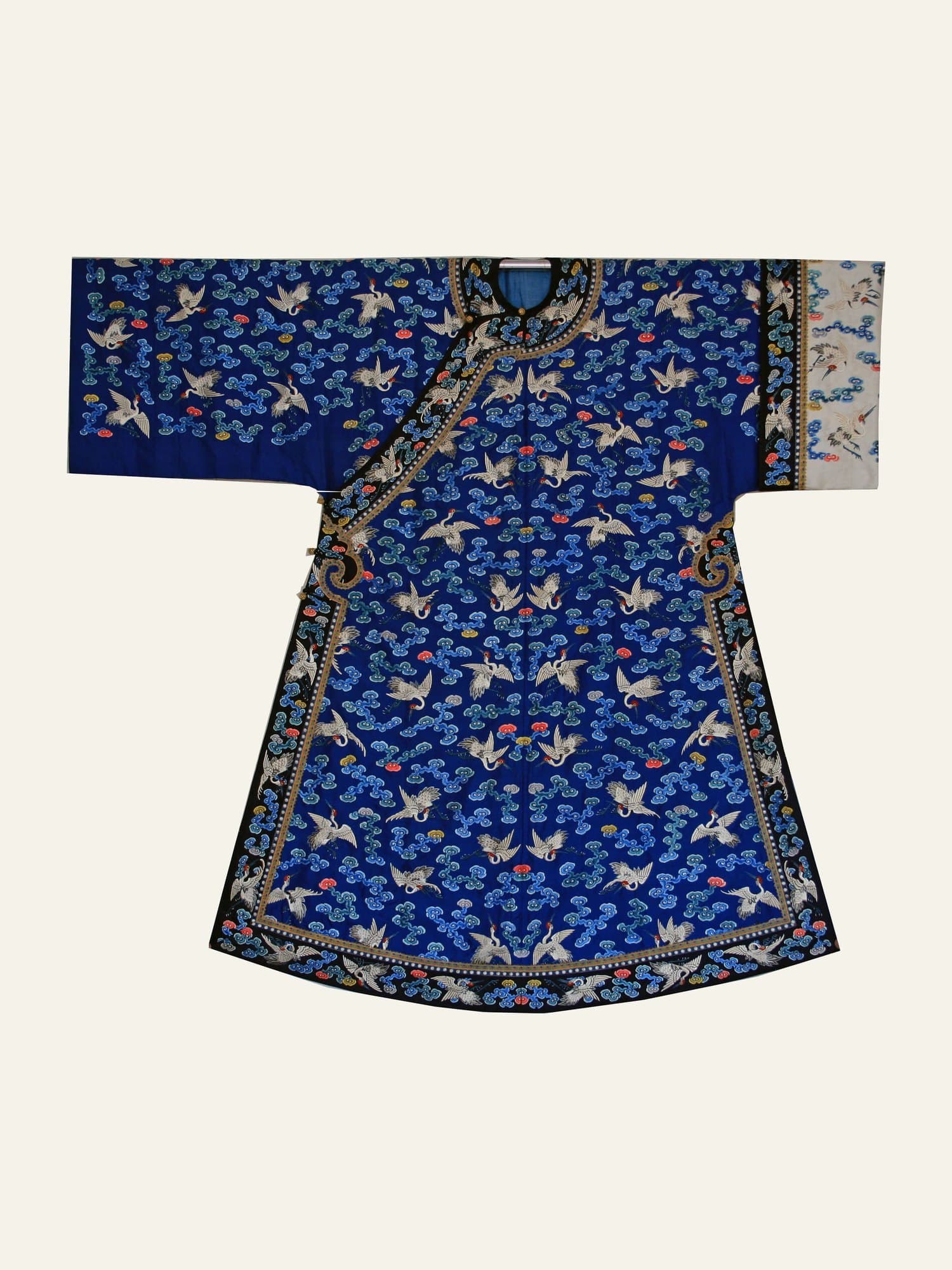
Butterfly
蝴蝶 · hudie
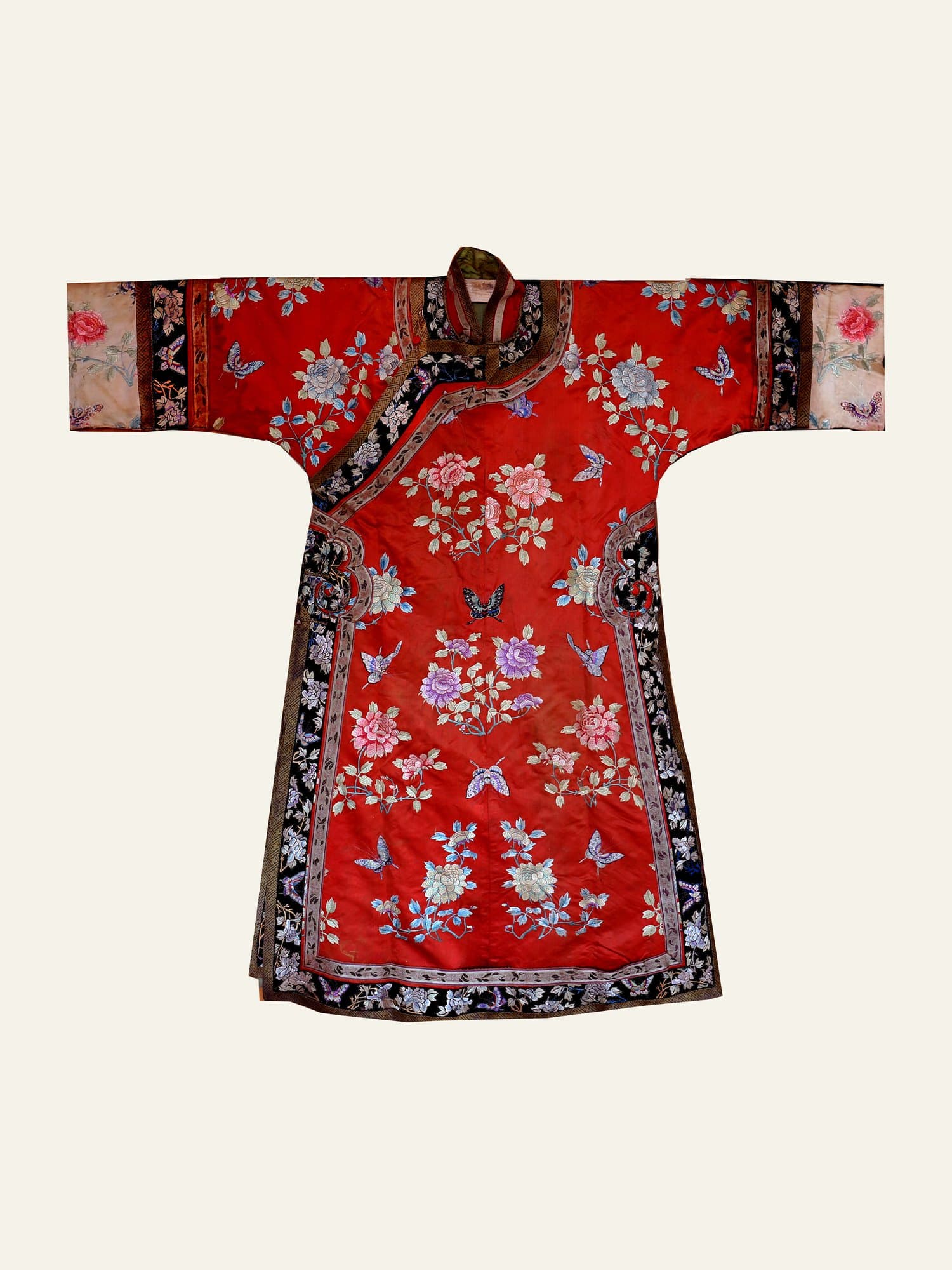
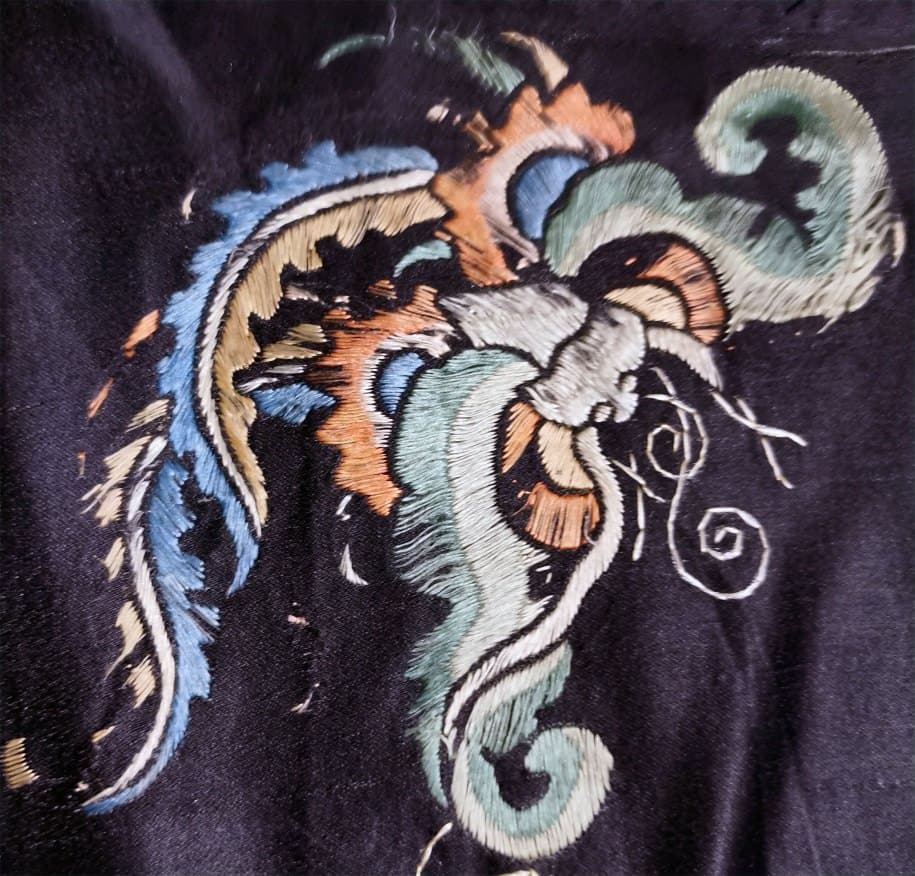
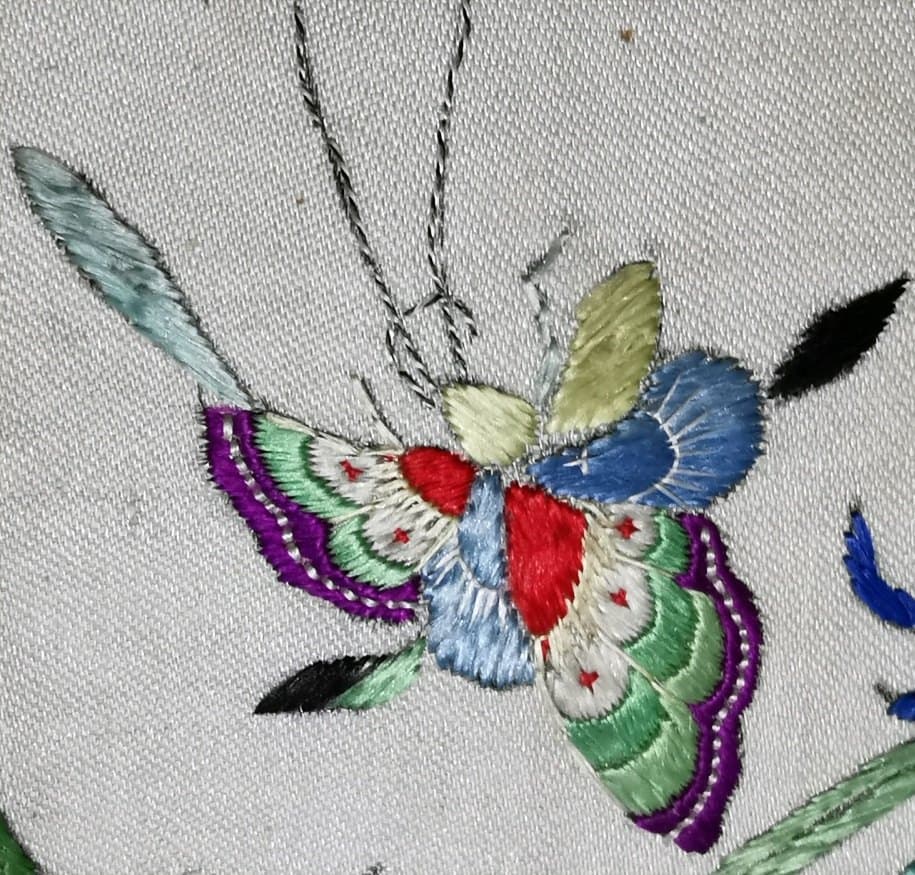
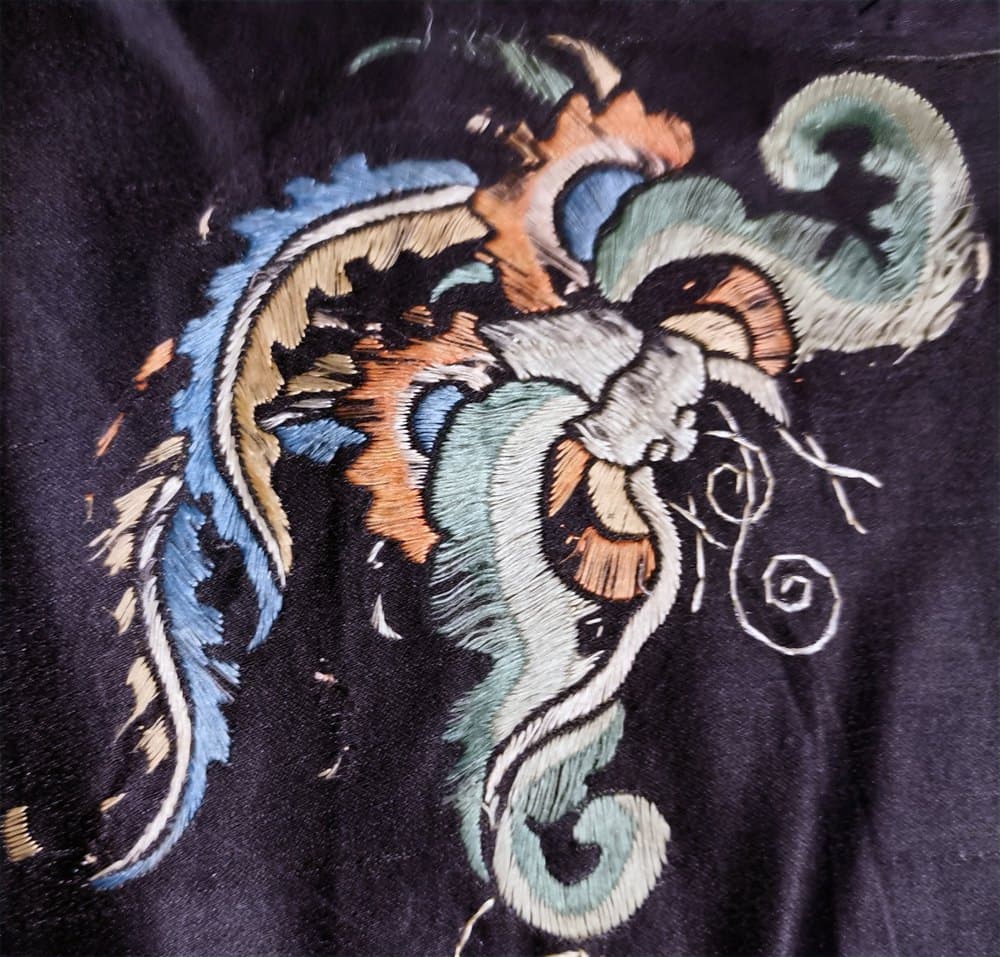
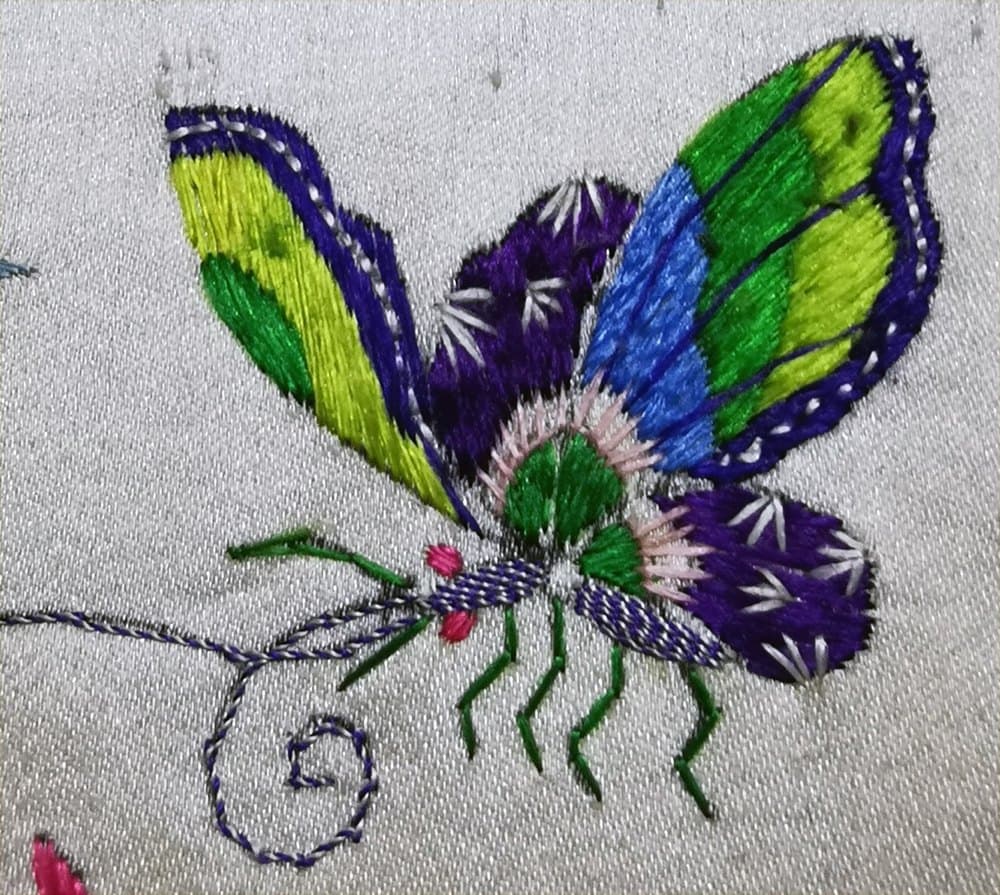
The butterfly is among the most frequent subjects on Qing women’s dress. Two compositional types can be distinguished: one with long trailing tails and coiling wings, far from naturalistic, common in Suzhou and Sichuan work; and one drawn from observation, its wing edges secured with dense short couching, characteristic of the Beijing style.
Historical development
The first type has two long tails and wings that coil in different directions. The work proceeds from the body outwards, the direction of the needle adjusted to each part while the stitches remain parallel to one another; the antennae are worked in stem stitch.
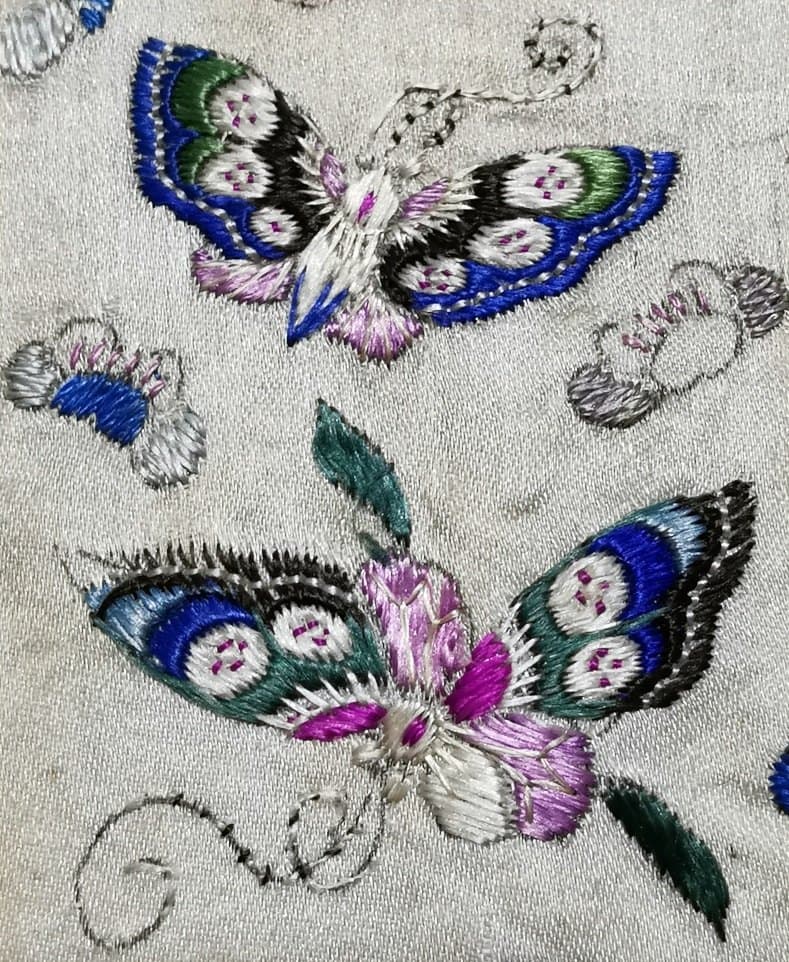
The second is closer to observation, and a single piece may carry many butterflies in different attitudes. The wings are filled row by row without reserved gaps and then patterned over in silk; the defining feature is the dense short couching along the wing edge.
Wings and trailing tails suit satin stitch, which gives both sheen and movement. In a group of flowers the central peony is often worked in seed stitch with the flanking butterflies in satin stitch — a pairing common in Qing embroidery.
Cultural meaning
The butterfly stands for good fortune. With flowers it forms “the butterfly in love with the blossom”; two facing butterflies make “a joyful meeting”; with a melon vine it yields a wish for unbroken generations.
It also carries the sense of longevity. In a “hundred butterflies” design the hundred means many, not a literal count.
Plates
The same motif as it appears on different objects, gathered for comparison. Dates and provenance for each example are to be established and added.
Long-tailed, coiling type
Butterfly (ii)
Beijing style, wing edge densely couched
Butterfly (iv)