Wave and Mountain Motif
海水江崖 · haishui jiangya
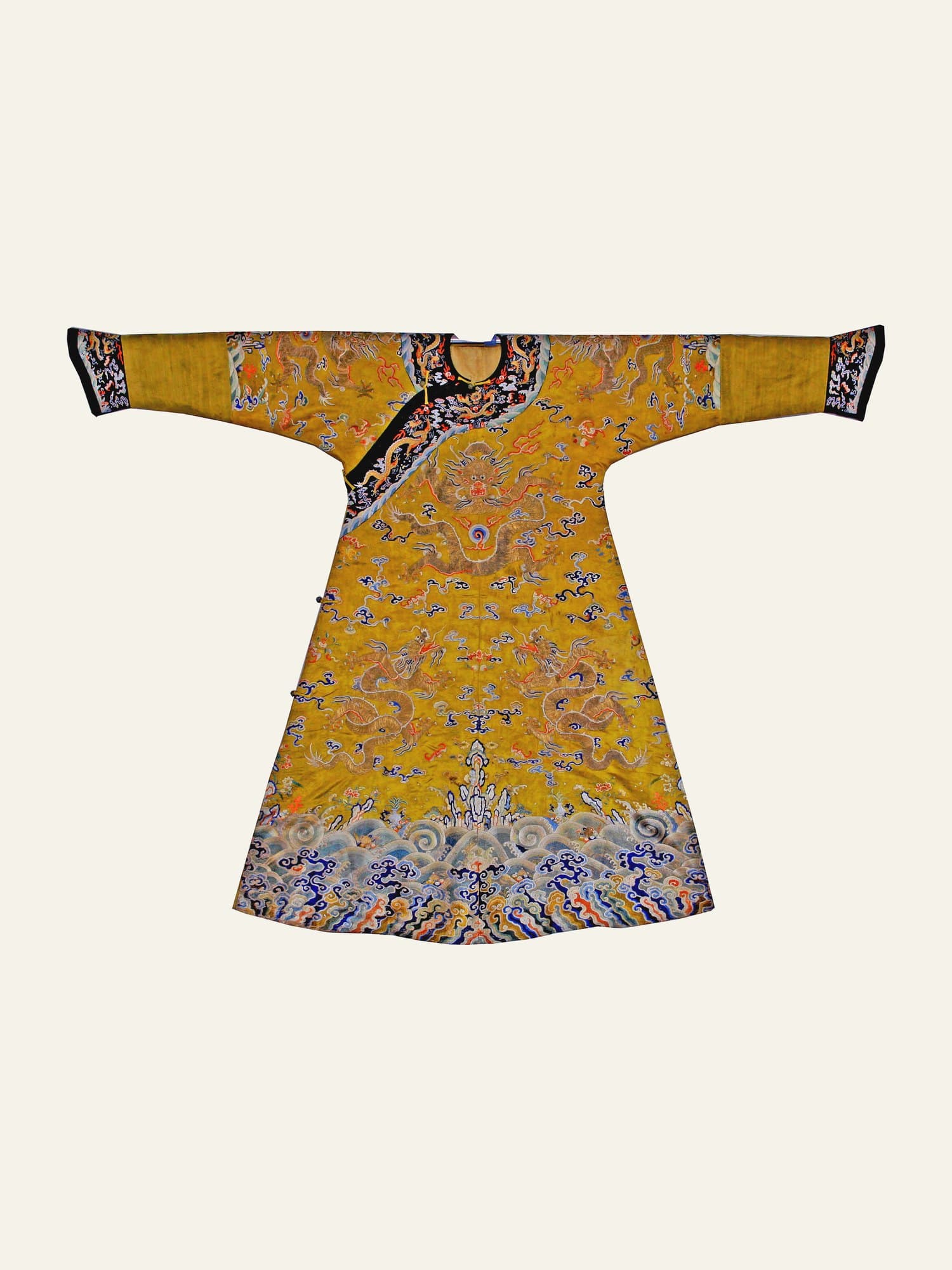
The wave-and-mountain border runs along the hem of a robe, built from vertical water, horizontal water and rock forms — among the most codified compositions in Qing dress.
Historical development
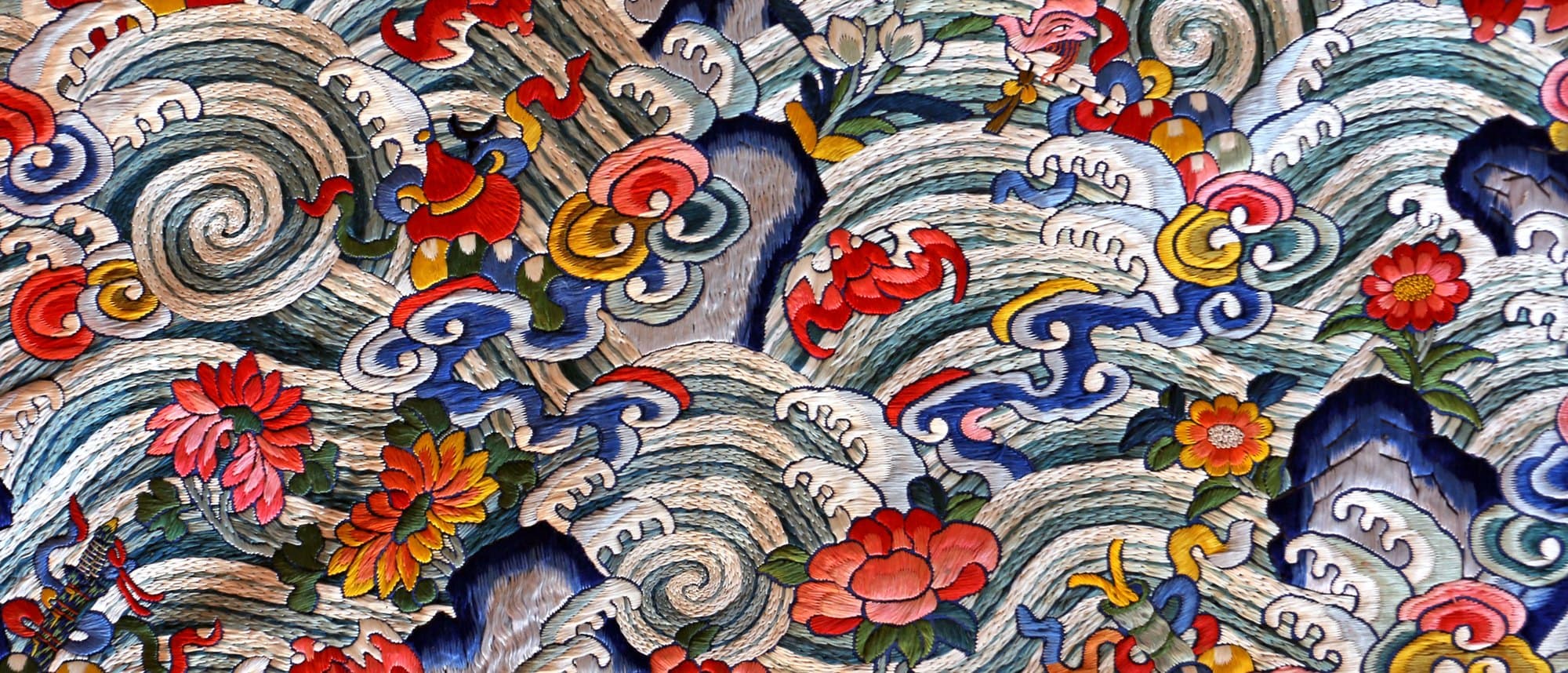
The lower band of vertical stripes represents standing water; above it curling waves, with rocks rising from the water. The proportion between these elements shifts over time — the band of vertical water grows noticeably taller in the later Qing.
The waves show a clear chronological tendency in stitch. Earlier examples use stem stitch: each needle enters beside the previous thread and advances by the same interval, producing lines like twisted rope, with gaps left between the rows so that depth registers and the surge of the water can be felt.
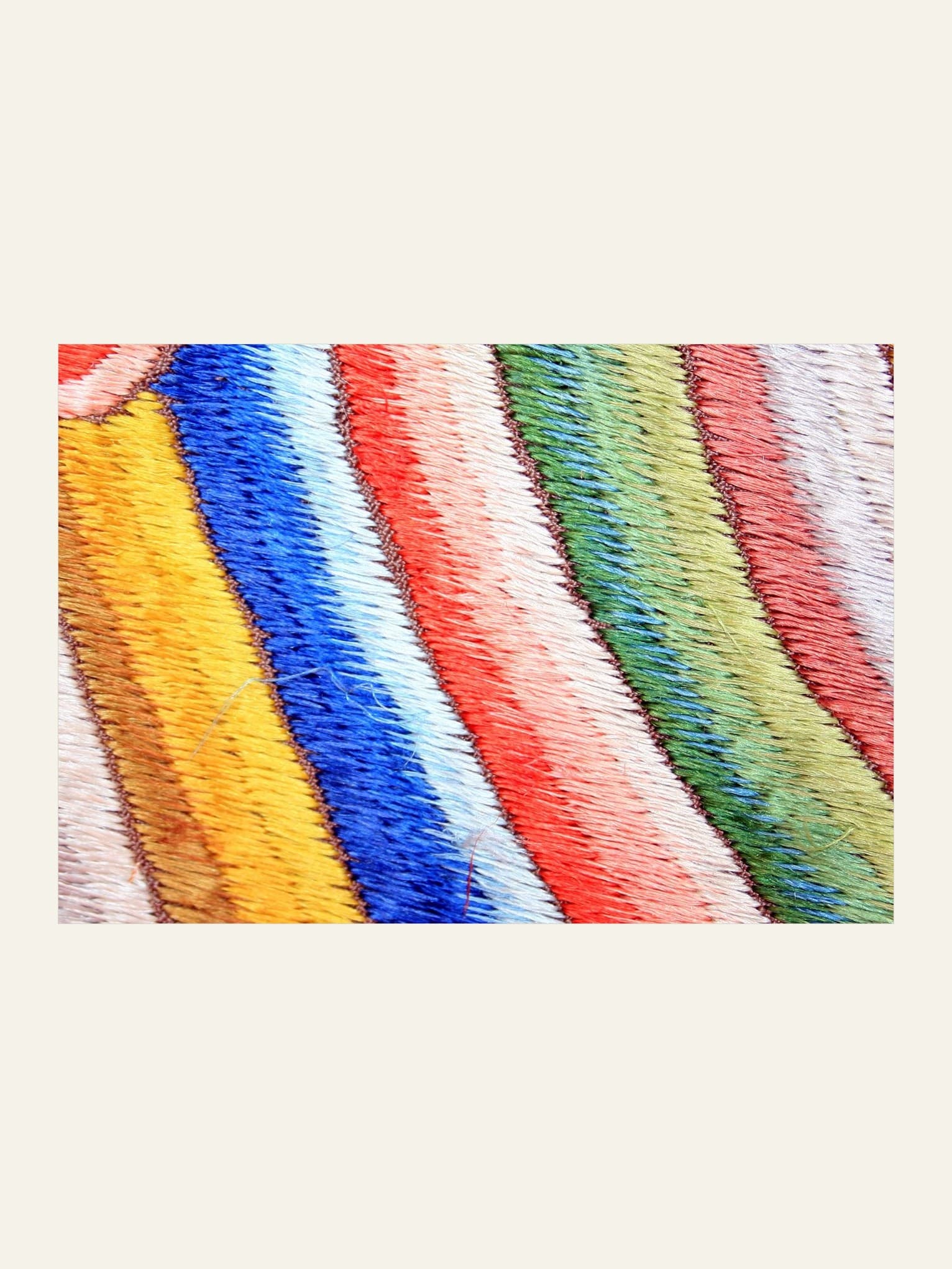
On late Qing dragon robes the water is almost always worked in satin stitch, the needle entering into the body of the previous stitch a third of the way along, with graded colour rather than reserved gaps carrying the sense of depth. Stem stitch gives the stronger relief, and belongs to the earlier practice.
This change can support a dating, but only alongside the other ornament on the garment.
Cultural meaning
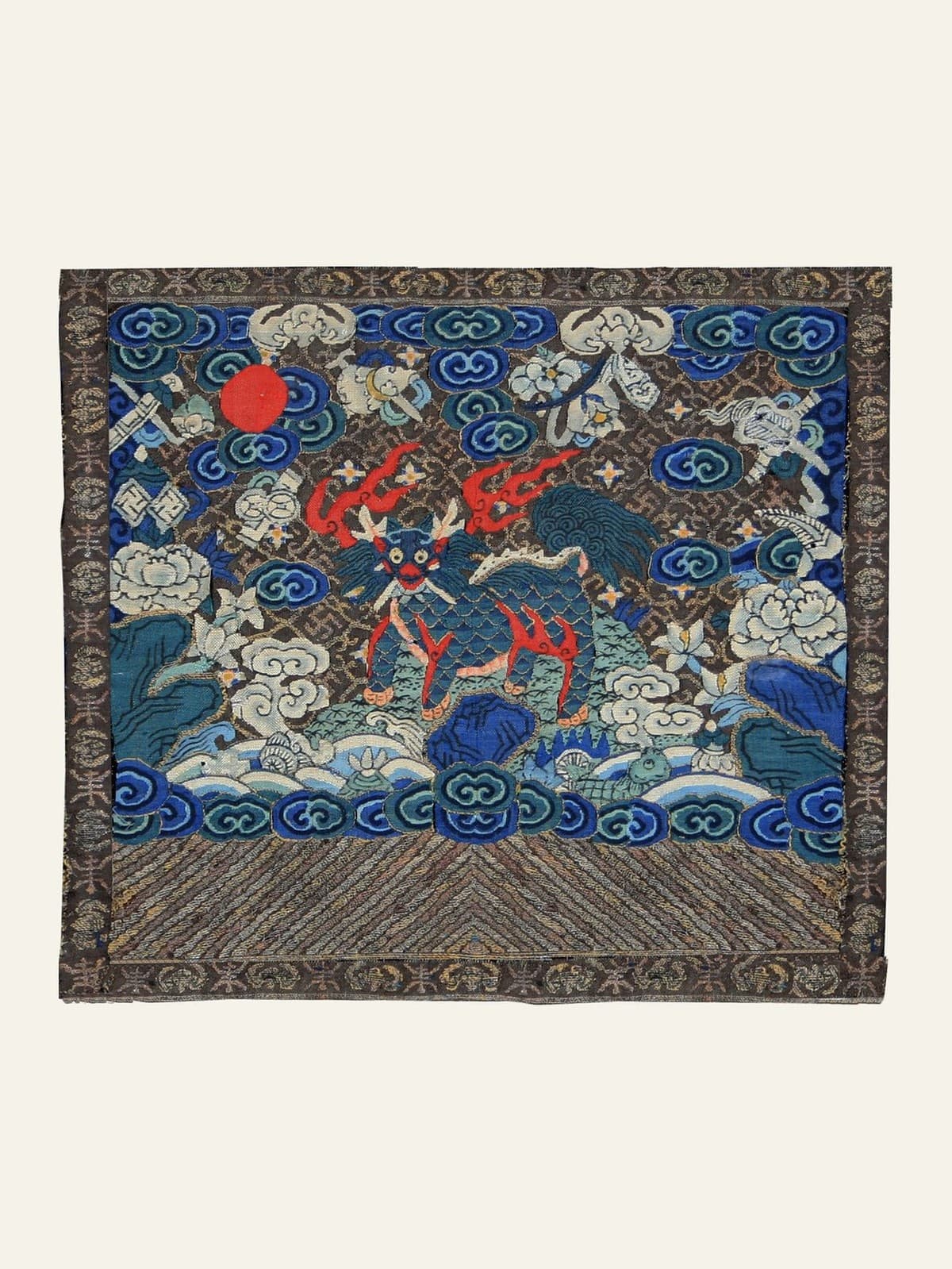
The border stands for the permanence of the realm; paired with dragons it completes a political image.
Plates
The same motif as it appears on different objects, gathered for comparison. Dates and provenance for each example are to be established and added.
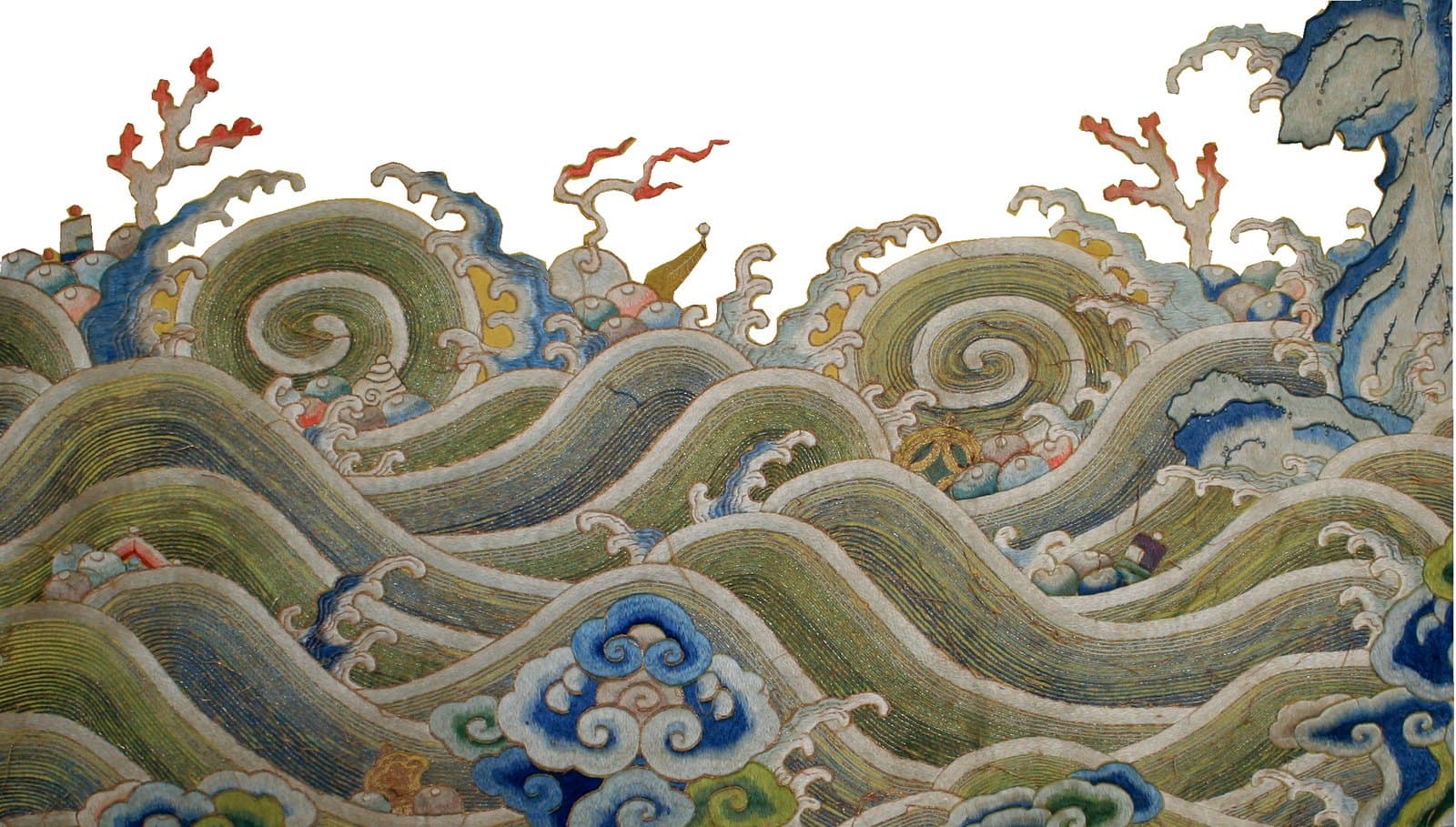
Curling waves with rocks rising from the water
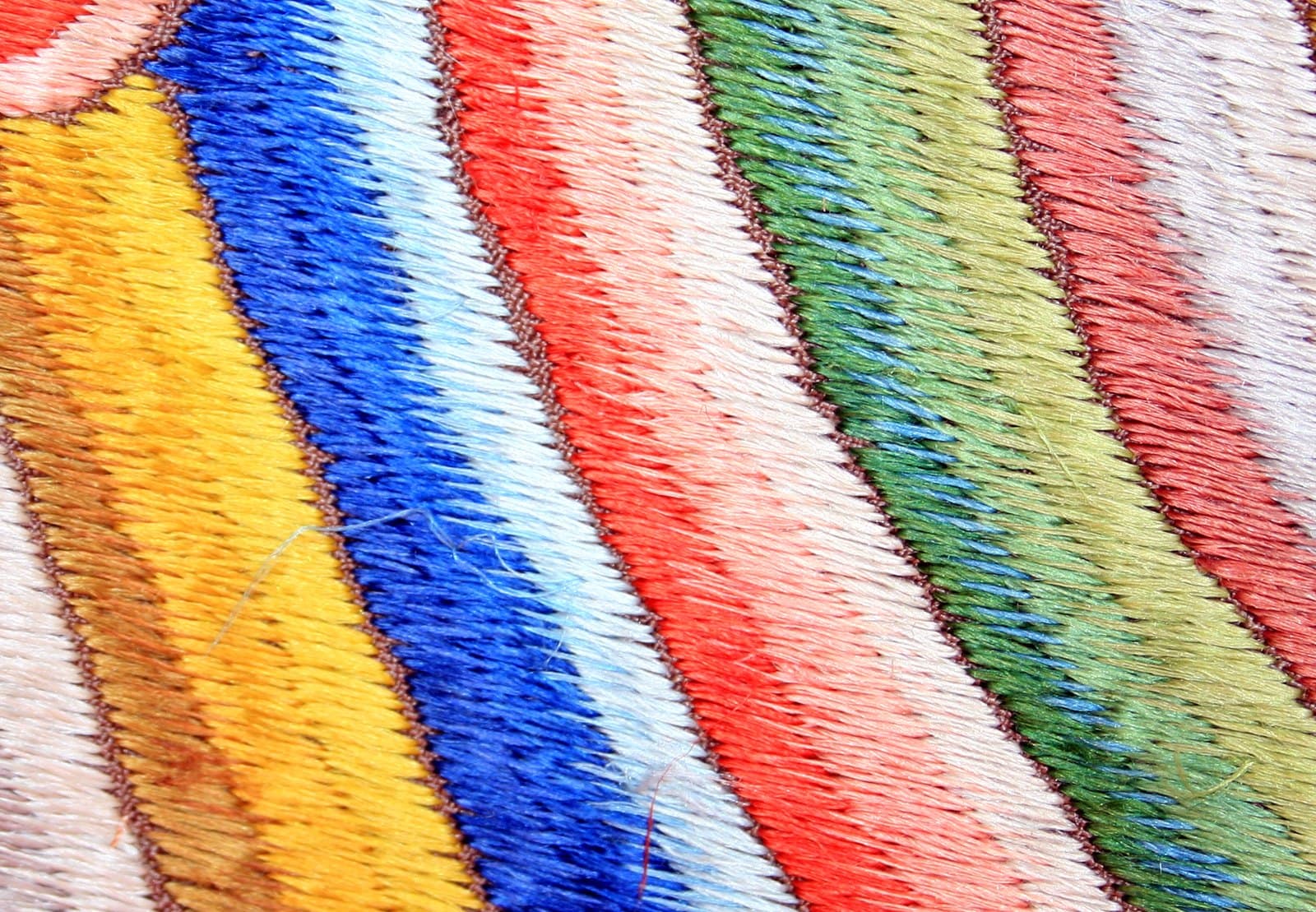
Wave-and-mountain border (ii)
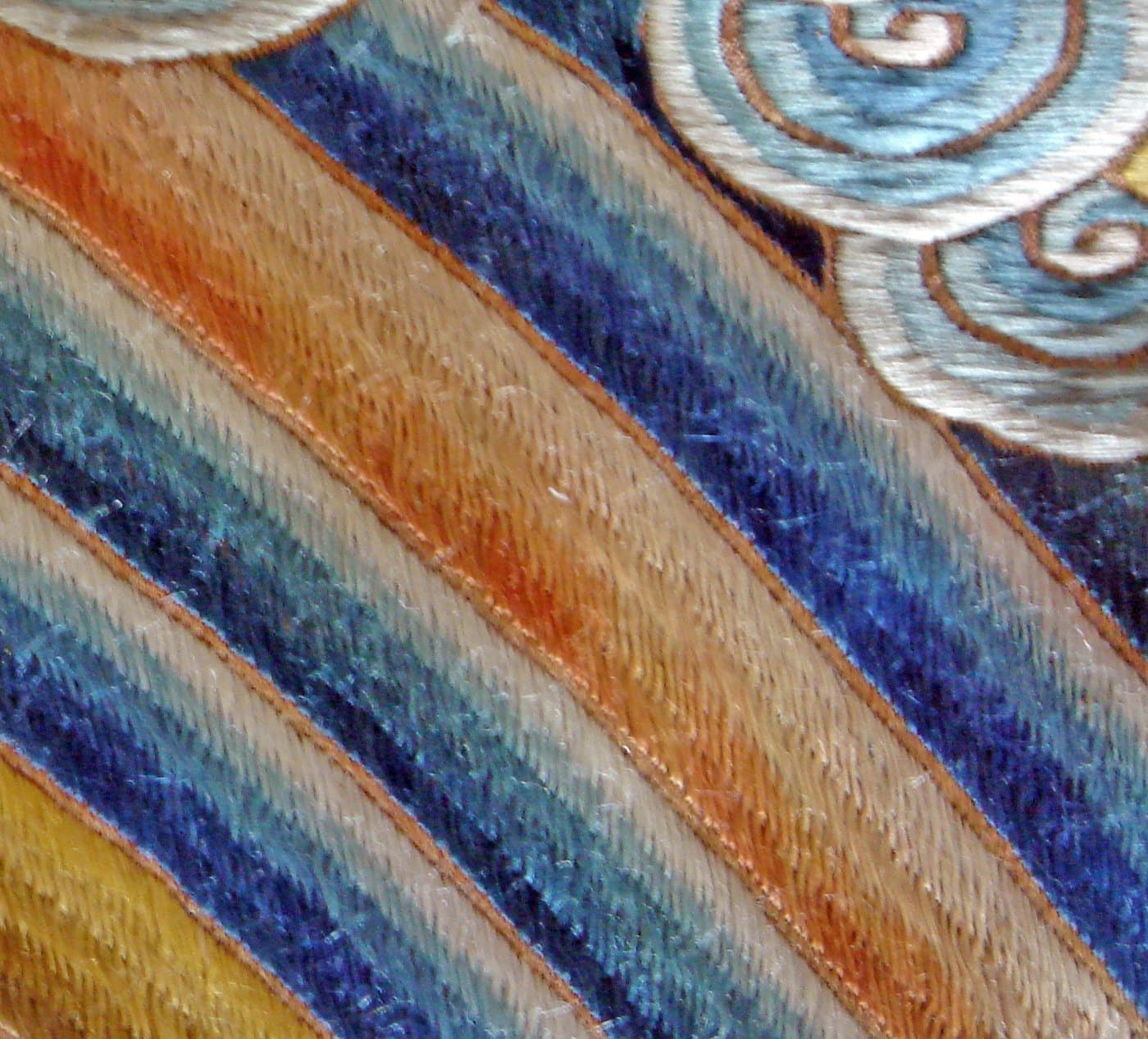
Curling waves above vertical water
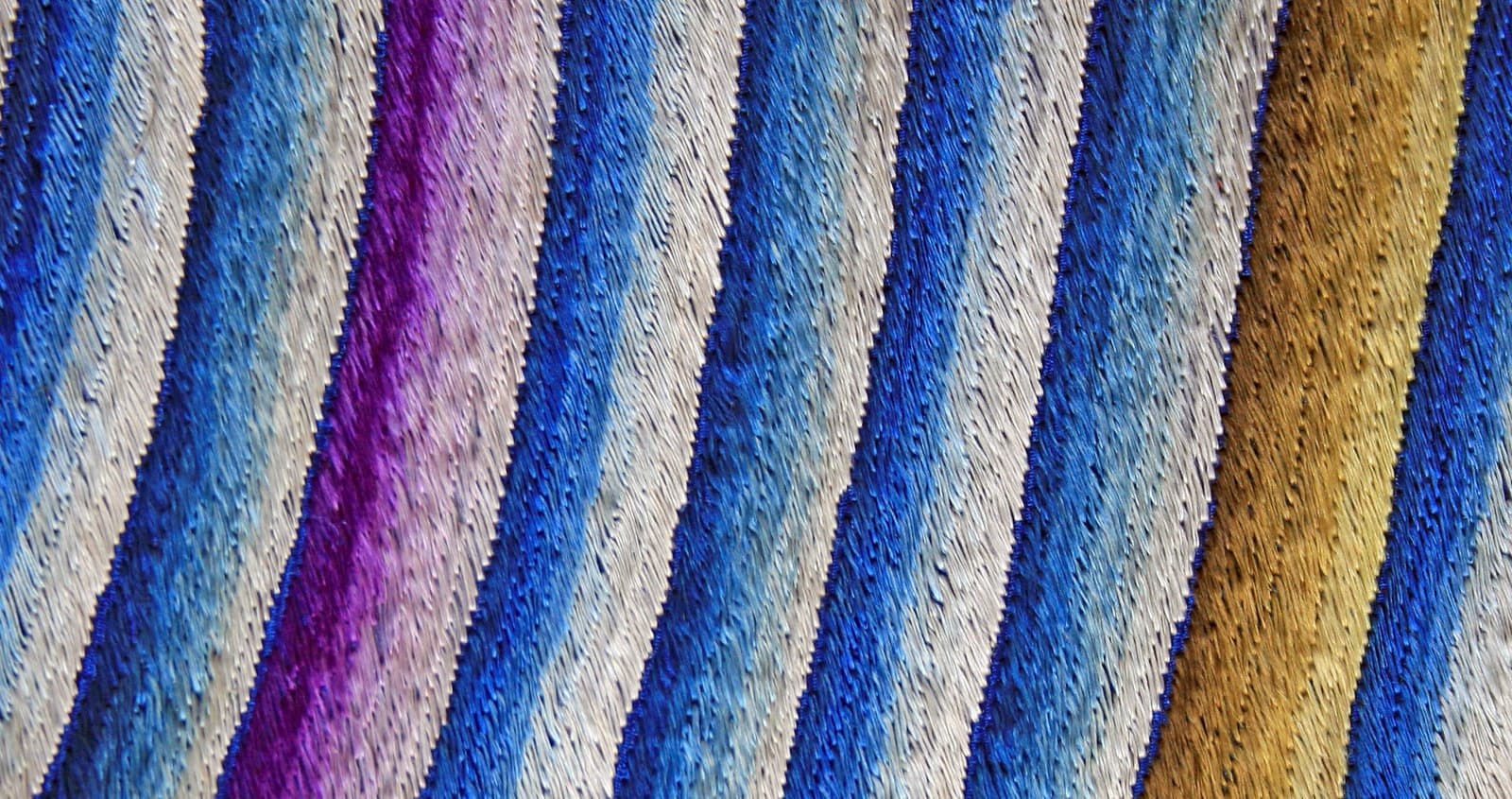
Stem stitch, gaps left between the rows
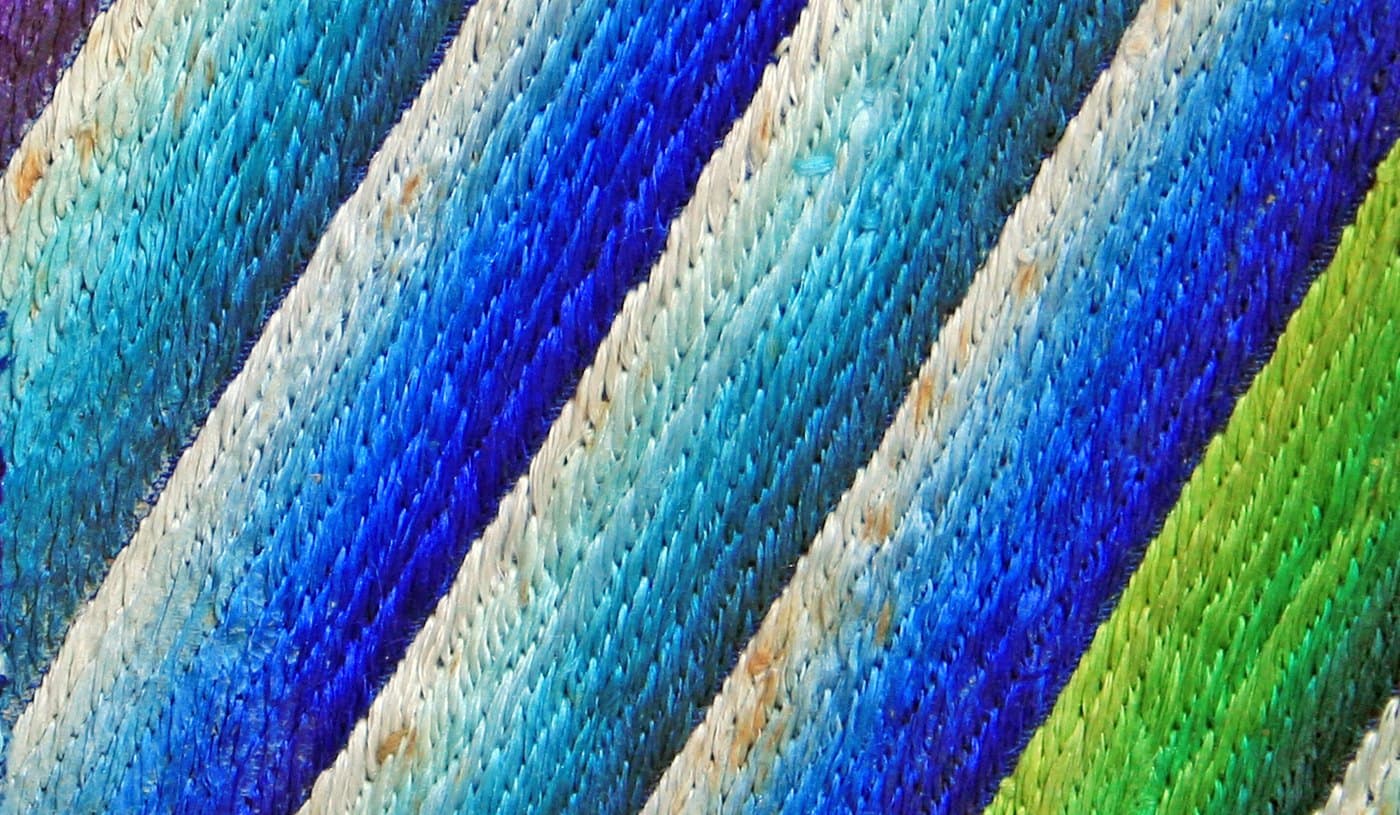
Vertical water (ii)